
One and done.
That’s what J.P. Morgan Global Research forecasts for the Federal Reserve’s hawkish shift moving forward: only one additional interest-rate hike to curb sticky inflation brought on the energy shocks of the Iran War and the AI supply-demand dynamic.
“Inflation continues to look supply-shock driven, and as such we don’t foresee a protracted hiking cycle extending into next year,” J.P. Morgan Chief U.S. Economist Michael Feroli said in a Sept. 25 research note.
J.P. Morgan sees the Fed raising rates once more later this year — a forecast that is consistent with the quarterly “dot plots” that Federal Open Market Committee members filled out in earlier in September to signal what they expect to be the path of rates going forward.
The unanimous 12-0 FOMC decision Sept. 16 of a 25 basis-point hike lifted the Fed’s benchmark Federal Funds Rate to a range of 3.75% to 4% and was widely expected by traders and Fed watchers.
The quarter-point raise was in line with forecasts from J.P. Morgan Global Research, which hard called for a quarter-point hike in September.
“The case for a hike is simply that core PCE inflation has been above 3% every month this year and has made little recent progress heading toward 2%,” Feroli said, referring to the Fed’s target for inflation.
Feroli said that Fed Chairman Kevin Warsh’s “repeated stern warnings on inflation intolerance [risked] institutional credibility absent some action to back it up.”
J.P. Morgan forecasts one final Fed rate hike ahead
The CME Group FedWatch Tool expects the likelihood of another quarter percentage point hike as 72.5% on Oct. 28 and the probability of at least one additional hike of 94.5% on Dec. 9, the last FOMC meeting of the year.
“For our part, we continue to look for one more hike at the December meeting, in line with the revised median FOMC expectations,” Feroli said. “Setting aside the midterms, a credible case for passing [on another hike] in October is that it takes time to observe the effects of the hike on the economy.”
However, this is unlikely to mark the beginning of a longer hiking cycle, he said.
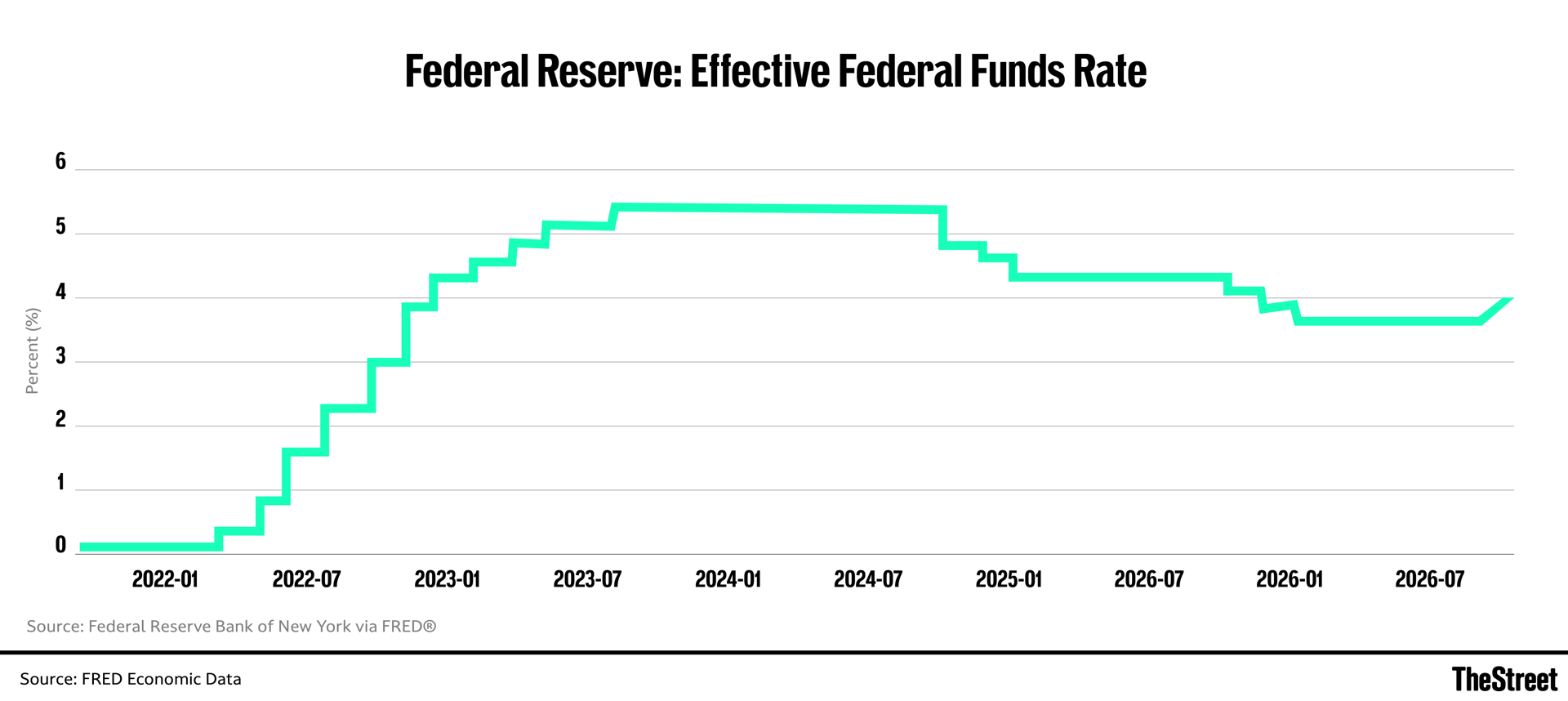
Tighter monetary policy targets price pressures
September’s 25-basis-point hike marked a renewed hawkish push to tighten monetary policy following persistent price pressures fueled, as I reported, by rising energy costs from the Iran War and related economic geopolitical shocks.
The hike was widely expected by traders and Fed watchers. The big surprise: Fed policymakers signaled in the quarterly “dot plot” that another rate hike could be coming before the end of the year and potentially more if stubborn inflation doesn’t ease.
The “dot plot” forecast, or Summary of Economic Projections, also released Sept. 16 showed a median year-end federal funds rate of 3.6%, consistent with one additional 25-basis-point hike from the current midpoint. Sixteen of 18 participating policymakers anticipate at least one additional rate increase before the end of the year.
The rate hike, the first in three years, was the result of months of public and private discussions by Fed policymakers who were trying to hold rates steady and at the same time allow inflation to return to its 2% goal.
How an interest-rate hike hits home
The September interest-rate hike sent ripples through the entire financial system with the most immediate pressure hitting short-term borrowing such as variable-rate credit cards and student loans.
Indirectly, it impacts fixed-rate mortgage rates which rely on Treasury yields plus corporate debt and capital investment.
The good news? Interest rates on savings accounts and CDs could see an increase.
Fed’s dual mandate requires a tricky balance
The Fed’s dual Congressional mandate: use interest rates and balance-sheet policy to keep prices stable and the labor market at full employment.
That’s tricky.
Related: October Fed rate hike hinges on two looming economic reports
- Lower interest rates support hiring but can fuel inflation. This risks fueling further inflation, potentially leading to an inflationary spiral.
- Higher rates cool prices but can weaken the job market. This increases the cost of borrowing and further stifles ecoFed officials drop hawkish clues about interest-rate hikes
Warsh’s task forces study his “regime change” promise
Warsh, who took over as Fed Chairman in May, quickly mandated five task forces of outside experts to conduct an independent review of the Fed’s policymaking process. He has said he expected to deliver their findings by year-end 2026.
However, this is not expected to alter J.P. Morgan Global Research’s baseline forecast for interest rates, the research note said.
“Overall, while the task forces are likely to generate recommendations aligned with Warsh’s preferences, any significant change to the Fed’s policy framework or interest rate outlook will require broader buy-in from the full FOMC,” Feroli said.
“The structure of these being the chairman’s task forces — rather than systemwide efforts — means that translating recommendations into actual policy may be gradual and subject to internal debate,” he added.
Inflation concerns fuel Fed’s hawkish outlook
Fed officials have been sending hawkish hints for weeks, and some ramped up concerns about inflation even after the September rate hike.
Economists expect August’s PCE price index, the Fed’s preferred inflation gauge, to rise 0.4% from July, with the core measure up 0.3% when it’s released Sept. 30. The Oct. 2 jobs report for September is forecast to show 100,000 new jobs and unemployment rising to 4.2%.
Fed Governor Lisa Cook said in a Sept. 28 speech that in the short term, AI appears to be adding inflationary pressures to the economy, postponing inflation’s return to the Fed’s 2% target.
“In coming months I expect to see continued pressure on inflation from the AI buildout, as discussed today, and from the pass-through of higher oil prices and supply chain disruptions associated with the conflict in the Middle East,’’ she said in prepared remarks. “The labor market appears to be well positioned to handle an increase in rates.”
Other policymakers, including Governor Michael Barr, Cleveland Fed President Beth Hammack, New York Fed President John Williams and Philadelphia Fed President, have expressed concern that policy might need to become more restrictive in the near future to bring inflation back to the 2% target.
Related: JPMorgan doubles down on diesel as record prices test inflation
