
A once-promising Japanese chipmaker has collapsed under mounting debt, a slowdown in electric vehicle (EV) sales, and a surge in supply from Chinese rivals. The company filed for bankruptcy protection last week, less than three years after its widely heralded launch in late 2022.
The firm was backed by Japanese government-linked financial institutions and focused on producing power semiconductors critical to power electronics markets, including electric vehicles (EVs), industrial equipment, and home appliances.
💵💰Don’t miss the move: Subscribe to TheStreet’s free daily newsletter 💰💵
With strong public support and a refurbished factory previously operated by a major U.S. chipmaker, the company appeared poised to become a key domestic player in an industry viewed as essential to Japan’s national security and economic development.
But faced with mounting debt driven by deteriorating electric vehicle demand and a flood of low-cost components from fast-growing Chinese rivals, the startup’s business model proved unsustainable.
Related: Chipmakers like Nvidia, AMD get a gift from Washington
Tokyo-based chipmaker JS Foundry, also known as JS Fab, launched in December 2022 with the backing of a fund run by the Development Bank of Japan and created by Mercuria Investment and Sangyo Sosei Advisory.
JS Foundry filed for bankruptcy protection with the Tokyo District Court last week, leaving behind an estimated $110 million in outstanding debt.
In a bid to minimize upfront costs, JS Foundry inherited its manufacturing facility, a 41-year-old fab in Niigata Prefecture, from U.S.-based On Semiconductor (ON) .
The legacy infrastructure proved inadequate for the demanding process requirements of silicon carbide (SiC) device fabrication — a notoriously capital-intensive industry — possibly compounding JS Foundry’s financial woes.
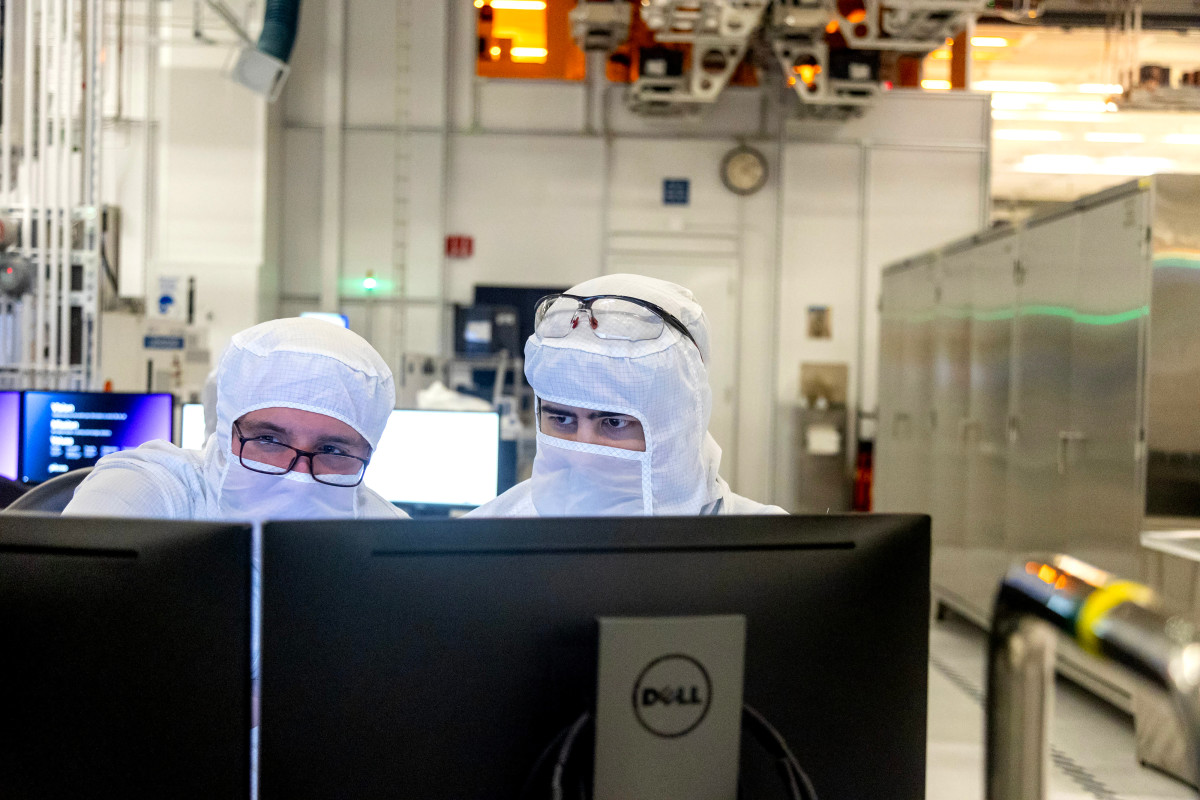 Semiconductor manufacturing is a notoriously capital-intensive industry.
Image source: Bloomberg/Getty Images
JS Foundry’s revenue plummets as key partnership ends and EV sales decline
JS Foundry’s revenue surged in 2023, with sales swelling to around 10 billion yen (nearly $68 million) in its first year. Yet in 2024, revenue plummeted to 2.6 billion yen (around $17.6 million).
This sharp decline followed the end of a production arrangement with On Semiconductor (stemming from On’s divestment of its Japan facility in late 2022).
More EV Stock News:
- Tesla robotaxi launch hits major speed bump
- Struggling semiconductor company gets second chance to avoid bankruptcy
- Tesla’s robotaxi rollout runs into trouble
JS Foundry’s cash flows turned steeply negative, and the planned disbursement of subsidies from central and local governments in the coming weeks would have arrived too late to cover its mounting financial obligations.
To make matters worse, the global downturn in EV sales hit the company especially hard. Rising interest rates, subsidy rollbacks, and underdeveloped charging infrastructure dampened enthusiasm for EVs, forcing automakers to slash chip orders.
JS Foundry struggles to keep up with competitors
Compounding JS Foundry’s financial woes, heavily subsidized Chinese chipmakers flooded the global market with affordable power semiconductor alternatives, making it clear that the startup lacked the necessary scale and vertical integration to compete.
Finally, JS Foundry attempted talks with overseas investors to form a capital tie-up that would have helped it enter the silicon carbide power semiconductor segment, a next-generation technology known for its superior power efficiency.
Related: Unexpected chip deal may reshape the semiconductor market
But those talks collapsed earlier this year, effectively cutting off JS Foundry’s last remaining viable path to survival.
JS Foundry’s collapse comes amid broader turmoil in the power semiconductor space. Rohm, another Japanese chip giant, recently reported its first net loss in over a decade, blaming underperforming power semiconductor investments.
Last month, U.S.-based Wolfspeed (WOLF) , previously known as Cree, filed for Chapter 11 bankruptcy. The move triggered major write-downs for Japanese chipmaker Renasas Electronics, which had extended financing to Wolfspeed. Renansas subsequently abandoned plans to start SiC production later this year.
In the end, JS Foundry’s demise serves as a cautionary illustration of the risks of investing in a capital-intensive market where geopolitics, macroeconomic volatility, and technological disruption can rapidly upend even the most promising, initially well-capitalized businesses.