
In 2018, Jeff Bezos stood in front of Amazon employees at an all-hands meeting in Seattle and told them the company would one day go bankrupt.
That quote resurfaced widely in late July 2026, almost exactly as Bezos appeared in a Fortune interview telling investors that Amazon’s chip business is on track to become one of the most durable things the company has ever built.
The timing was not planned. The juxtaposition was hard to ignore. Bezos stepped down as Amazon’s chief executive in 2021 but remains executive chair and one of the company’s largest individual shareholders.
When he makes a call about where Amazon is going, Wall Street pays attention, according to Fortune.
Bezos just added a fourth name to Amazon’s most exclusive list
The Fortune interview ran on July 28 alongside Amazon taking the No. 1 spot on the Fortune Global 500 for the first time. This ended Walmart’s 12-year run as the world’s largest company by revenue, and Amazon surpassed $700 billion in annual sales to get there.
“A few of our offerings have become durable pillars, things like Marketplace and Prime and AWS,” Bezos told Fortune. “What I see right now is that our chips business, our silicon business, is lining up to be our next pillar.”
More Amazon:
- Bank of America doubles down on Amazon shares after Prime Day
- Amazon’s $8.3 billion Prime Day sends Wall Street a warning
- Amazon Prime Day gives Wall Street a $22B reason to take notice
He called chips “the foundation upon which all of this AI sits” and said Amazon will launch its next-generation chip, Trainium4, in 2027.
The pillar framing traces back to Bezos’s 2014 shareholder letter, published in April 2015, where he outlined four traits of a “dreamy” business: customers love it, it can scale to enormous size, it earns strong returns on capital, and it can last for decades. AWS, Marketplace, and Prime have carried that label for years. Chips would be the fourth.
The push runs through Annapurna Labs, the Israeli chip startup Amazon acquired in 2015, which now designs AI chips under the Trainium and Inferentia brands. AWS positions both as lower-cost alternatives to Nvidia‘s processors at a moment when GPU supply has struggled to keep pace with AI demand.
The $20 billion chip business Amazon barely talked about until now
Amazon disclosed revenue from its data center chips for the first time on its Q1 2026 earnings call. The combined Graviton, Trainium, and Nitro lineup surpassed an annualized revenue run rate of $20 billion at that point, growing roughly 40% quarter over quarter and triple digits year over year.
By the Q2 2026 earnings call on July 30, Jassy said both the AI and homegrown chips units had each exceeded a $25 billion annual revenue run rate. The business holds more than $225 billion in multi-year customer commitments, as GeekWire reported.
About 1.4 million Trainium chips are deployed across three generations. That includes the 500,000-chip Project Rainier cluster, which went live in late 2025.
CEO Andy Jassy said Trainium2 delivered roughly 30% better price performance than comparable GPUs and largely sold out.
Trainium3 began shipping in early 2026. Jassy said it carries another 30% to 40% performance improvement over Trainium2. He has also said that if Amazon sold its chips externally the way merchant chipmakers do, the revenue would be roughly $50 billion per year.
Amazon’s silicon ambitions are backed by spending large enough to draw scrutiny on its own. On its Q2 2026 earnings call, Amazon raised its 2026 capital expenditure guidance to $220 billion, up from $200 billion, with AI, chips, and data center investment driving most of it, according to CNBC.
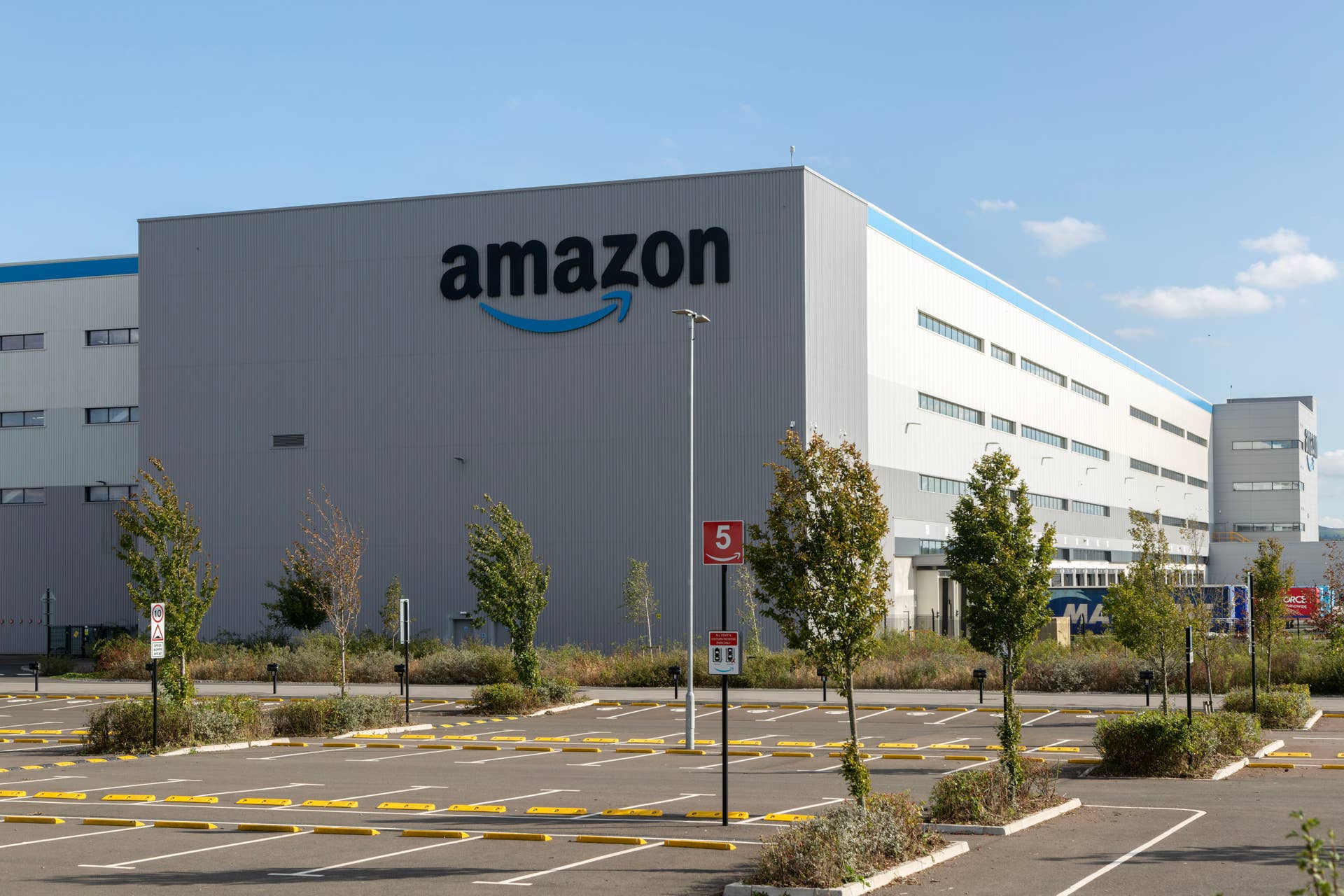 Bezos stepped down as Amazon’s chief executive in 2021 but remains executive chair and one of the company’s largest individual shareholders.
Geography Photos/Getty Images
Apple, OpenAI, and Meta are already testing the thesis
The chip push is not new, even if the pillar framing is. AWS launched its first Trainium chip in 2022. Since then, the strategy has gained credibility with each generation as the performance gap with Nvidia’s hardware narrows.
The early adopters are not small bets. Apple has been testing Trainium2 for its own AI workloads. OpenAI may expand its AWS relationship to draw on Amazon’s roughly 2 gigawatts of Trainium capacity rather than staying exclusively on Nvidia hardware. Meta signed a multibillion-dollar deal in April 2026 to use Amazon’s Graviton chips for AI.
Nvidia is not going away. Amazon still sells Nvidia GPU instances on AWS and will likely continue to for years. But every workload that runs on Trainium instead of Nvidia is revenue Nvidia does not collect. That is the direction Bezos is betting on with each new chip generation.
How the 2018 bankruptcy warning fits into the 2026 picture
The 2018 quote resurfaced in late July. It came from an all-hands meeting in Seattle. An employee asked Bezos what lessons Amazon had drawn from the collapse of retailers like Sears.
“I predict one day Amazon will fail. Amazon will go bankrupt,” Bezos said, according to CNBC, which obtained audio of the meeting. “If you look at large companies, their lifespans tend to be 30-plus years, not a hundred-plus years.”
Bezos did not stop at the warning. He told staff the answer was to obsess over customers, not competitors. Companies that turn inward, he said, start their decline. The remarks are eight years old, but went viral again in July 2026 because of what Bezos said the same week about chips.
Chips earning a seat next to AWS, Marketplace, and Prime will take years to confirm. Bezos said in 2018 that Amazon would eventually fail. In July 2026, he said its chip business could become one of its most durable.
Both things came from the same person. Wall Street is now deciding what to do with both.
Related: Jeff Bezos doubles down on AI message for American workers