
I remember watching the first Starship flight test from my phone right from the turf. It was supposed to be a glance. Instead, I ended up in the turf’s parking lot for a couple of minutes.
I spend most of my days analyzing markets, studying trade setups, and digging through financial news to find stories worth telling. But watching the largest rocket ever built made all that market noise feel strangely small.
That is, until you look at the money it takes to make the ambition possible.
SpaceX is now reportedly seeking $40 billion worth of Nvidia chips, and Jim Cramer said on Oct. 7 that it “could end up being Nvidia’s largest client at this pace.”
That sentence should make you pause if you are an investor paying attention to the AI infrastructure buildout.
In an earlier report, TheStreet noted that Goldman Sachs raised its price target to $230 from $220 on Oct. 7, reiterating a Buy rating. SPCX trades at $160 as of the Oct. 8 close, according to Yahoo Finance.
That target is approximately $5 above the stock’s all-time high of $225.64, reached on June 16, just four days after the IPO, according to TheStreet.
ALSO READ: SpaceX Latest News and Stories
Goldman’s $10 bump actually matters more than it looks
When SpaceX fell to $104.83 in early August, the original $220 Goldman target looked less like analysis and more like optimism. $104.83 low also marks the lowest price SPCX has reached since its launch.
The firm’s decision to raise that target now with shares at $160 and still well below the prior target, is more than a mechanical upward revision.
More SpaceX:
- Morgan Stanley doubles down on SpaceX stock for investors
- SpaceX analyst plots path to bold $100 billion claim
- JPMorgan resets SpaceX price target after earnings
“The $10 bump from $220 to $230 ratified their previous $220 figure, which means something with the stock at $167,” Cramer said. “Maybe there really is some rigor to this analysis.”
In other words, Goldman is saying its previous conviction was justified and extending it. For a stock as speculative and controversial as SpaceX, institutional validation at these levels carries weight.
SpaceX’s compute business is the part that changes everything
The original SpaceX investment thesis focused on Starlink subscriber revenue, reusable-rocket economics, and government contracts. Those remain important. But the thesis with the most asymmetric upside and the one driving Cramer’s Nvidia comment is compute.
SpaceX is already generating revenue by renting out excess computing power to companies including Anthropic and Google, according to Cramer, citing publicly available reports.
Reuters reported SpaceX is seeking $40 billion in new financing, $10 billion in bank loans and $30 billion in investment-grade debt, specifically to buy more Nvidia chips and expand this compute operation.
Related: Musk called Anthropic ‘evil’; SpaceX’s deal with it nearly doubled
Cramer connected the dots and said: “Musk can immediately monetize these chips. SpaceX could end up being Nvidia’s largest client at this pace. That’s fantastic news for both sides.”
Think about what that means. My TheStreet colleague Hillary Remy covered Nvidia CEO Jensen Huang‘s framework in early September. The idea was that companies buying Nvidia compute and renting it to others at a premium can generate extraordinary returns on the spread.
SpaceX, with its unique ability to eventually put compute into orbit at dramatically lower launch costs through Starship reusability, is building toward an orbital data-center model that terrestrial competitors cannot replicate.
Cramer has been defending SpaceX against critics who view it as an expensive retail-investor favorite trading at roughly 137 times next 12 months’ earnings-per-share estimates, according to FactSet.
His argument is that the multiple reflects several growth drivers simultaneously: Starlink, rockets, compute, and eventually orbital AI infrastructure. None of these is fully priced independently, let alone in combination.
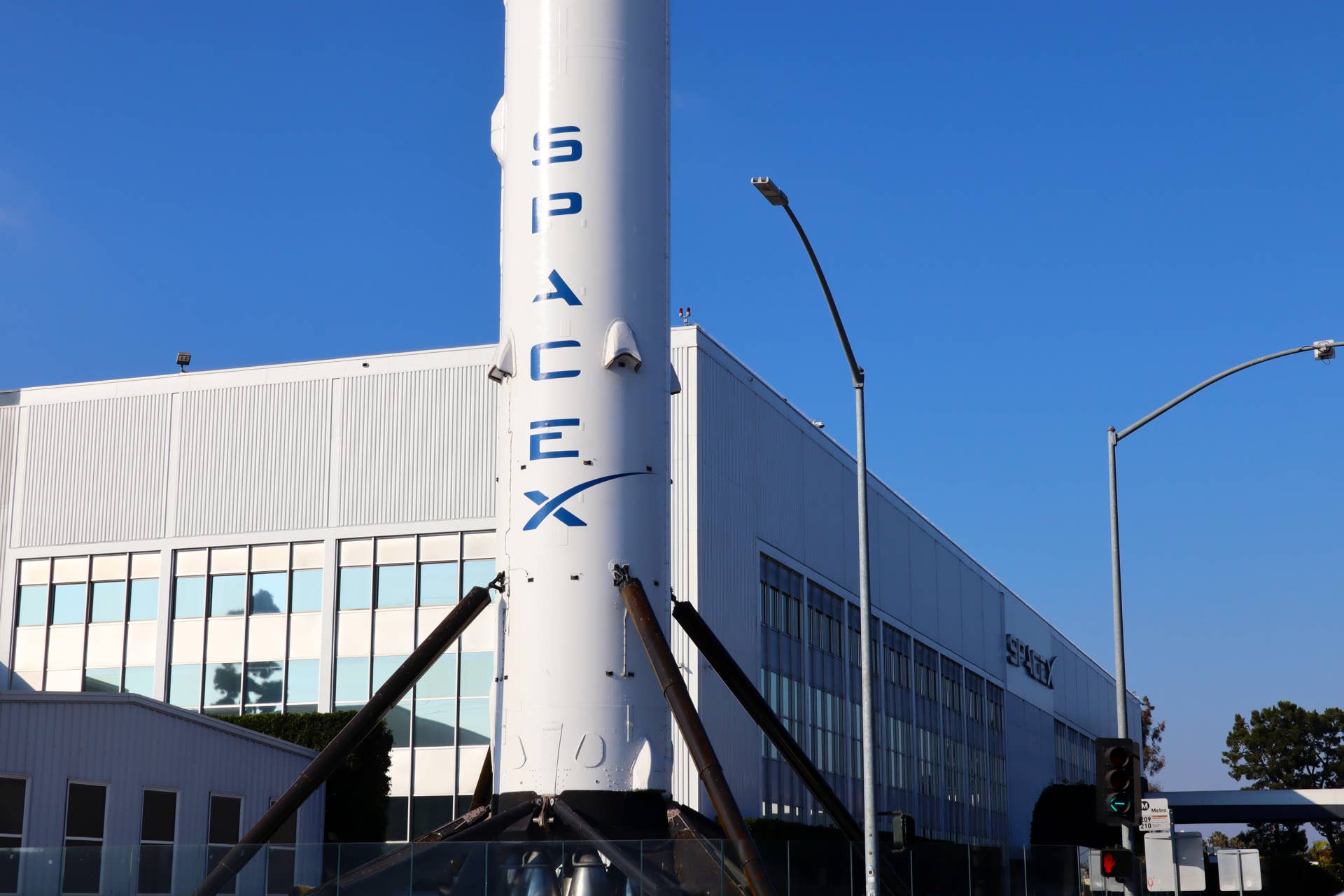 SpaceX is now reportedly seeking $40 billion worth of Nvidia chips.
Walter Cicchetti / Getty Images
Where Cramer stands, and why he still won’t buy SpaceX for his trust
Cramer still does not consider SpaceX appropriate for his Charitable Trust, the portfolio used by CNBC’s Investing Club, CNBC noted.
His reasoning is risk-adjusted: A stock at 137 times earnings with the lockup-unlock schedule (covered in my previous articles), significant capital needs, and execution timelines that span years requires a specific kind of conviction and risk tolerance.
“Club members, stay tuned, because it’s becoming more and more likely that SpaceX could come to fruition a lot earlier than Tesla ever did,” Cramer said.
He already owns Nvidia in the Club portfolio, so he is already benefiting from SpaceX’s chip buying, regardless of whether he ever adds SPCX.
If you can stomach the volatility and believe, as Cramer suggested, that Goldman’s $230 target is becoming increasingly justified, the gap between SPCX’s current price and that target is the market’s uncertainty about execution.
Flight 15, expected later in October, could provide the next signal that either narrows or widens that gap.
