
Jim Cramer just told CNBC viewers that Costco “is starting to look attractive again,” a notable shift after he trimmed his position in December on worries about slowing renewal rates and stretched valuation.
The change in tone comes right after Mizuho upgraded Costco to outperform, raised its price target from $950 to $1,000, and argued that recent softness in the shares has reset expectations, according to CNBC.
For retail investors, it’s a signal that one of the most valuation‑sensitive stock pickers on TV is willing to re‑engage with a name that had become “too hot” in 2025.
On CNBC’s “Squawk on the Street,” Cramer said he is a “short‑termer but a long‑term admirer of Costco” and that he “always enjoy[s] shopping there,” underscoring how much of his Costco thesis is about the in‑store experience as well as the numbers.
He also cited technician Larry Williams, who flagged Costco as one of his favorite technical setups heading into early 2026, a shift Cramer said “caught my attention because it has been dismal” on the chart.
When you hear Cramer talk that way, he’s essentially saying the stock has worked off some of its excess and might finally give buyers a better risk‑reward entry point.
What the Mizuho upgrade of Costco stock really says
Mizuho’s call is the catalyst that put Costco back on Cramer’s radar, and it’s worth unpacking what the firm actually likes.
Mizuho’s note, cited by CNBC, argued that about half of Costco’s recent U.S. warehouse openings are “fill‑ins” in already successful markets, a sign of congestion and “insatiable demand” rather than slowing growth.
In plain English, you don’t open extra outlets in the same city unless the parking lots are full and members are willing to drive out of their way to shop.
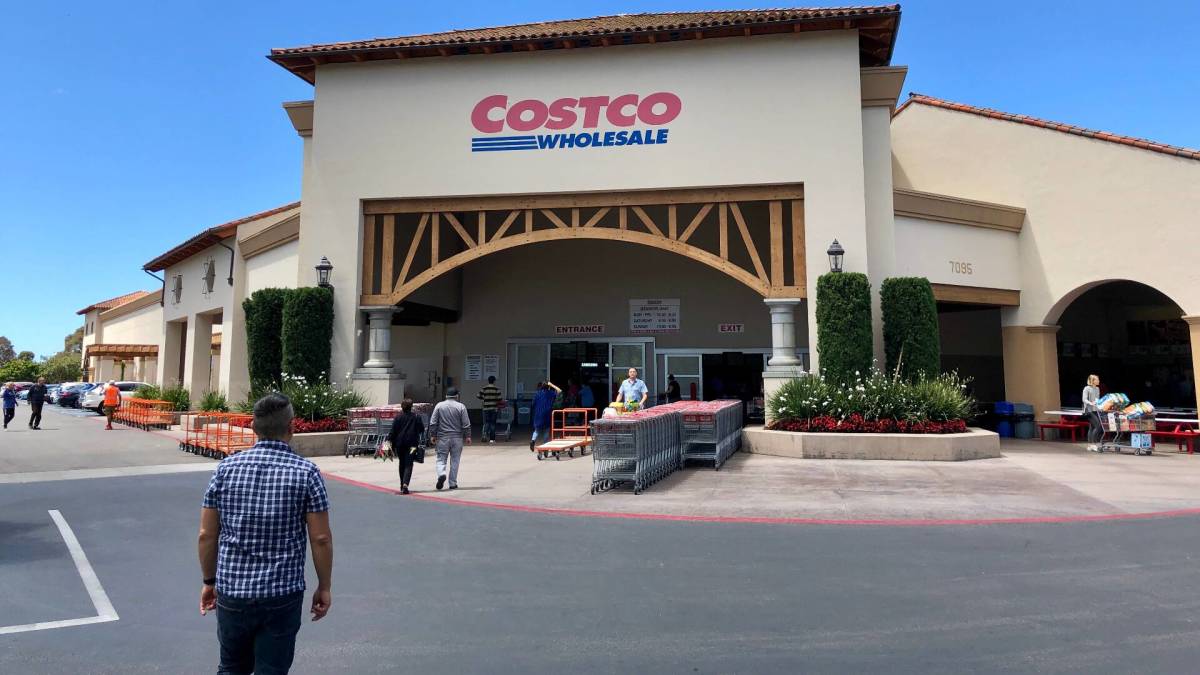 Jim Cramer sees fresh appeal in Costco stock.
Mizuho also highlighted a powerful mix shift: Premium “Executive” memberships grew two to three times faster than overall membership in the latest quarter, meaning more shoppers are choosing to pay up for higher rewards and stickier relationships.
That matches what analysts at Nasdaq have pointed out, with membership fee income growing faster than sales and acting as a steady, high‑margin annuity stream for the business.
In its note, Mizuho called that demand a “high‑quality problem,” because the main headache is handling traffic, not trying to lure people back into the club.
More retail stocks:
- You won’t believe what Coca-Cola just did with its coffee brand
- Costco reveals a new approach that could reshape the chain
- Shoppers furious at grocery chain’s new anti‑theft rule
- Costco makes bold promise on prices that affects all members
TD Cowen, which kept a buy rating on Costco in December, said membership-fee income already accounts for roughly 55% of the company’s EBIT, and a 1% change in that fee line has less than a 1% impact on earnings per share.
That tells you why both Mizuho and Cramer are willing to look past a modest dip in renewal rates, as long as overall memberships and fee dollars keep trending higher.
Related: Jim Cramer’s net worth: How much does ‘Mad Money’s’ stock-picking superhost make?
The Costco valuation problem you still have to solve
Even with the pullback in 2025, Costco is not a classic “value” stock. Costco’s forward price‑to‑earnings ratio sat in the low 40s, according to a December analysis on Yahoo Finance sourced from Zackswell. This is above a mid‑to‑high 20s average for large retail peers.
Globe and Mail’s coverage of Costco noted that the stock has routinely traded at a P/E of 40 to 50, which is what leaves “room for the stock to deflate on any miss or any negative sentiment.”
That premium is exactly why Cramer trimmed his position in mid‑December after Costco reported what he called a “mixed quarter,” with slightly lower renewal rates and more selective consumer spending.
“When you have a valuation that high, you really don’t have much margin for error,” he explained, adding that management now has to address renewal rates and spending patterns head‑on in the next quarter.
As an everyday investor, you have to ask yourself the same question: Are you paying tech‑stock multiples for a retailer that still has to prove it can re‑accelerate key metrics?
At the same time, Costco’s operating performance has remained solid. In its fiscal first quarter of 2026, net income rose to about $2 billion, up from $1.8 billion a year earlier, on an 8.2% increase in net sales and 6.4% comparable‑sales growth, according to an earnings call transcript published by Investing.com.
Digital sales jumped more than 20%, showing that Costco can add e‑commerce convenience without losing the in‑warehouse treasure‑hunt experience that keeps members renewing.
Related: History of Costco: Company timeline and facts
Membership metrics and what they mean for your portfolio
Membership is still the whole story with Costco, which is why the renewal‑rate wobble grabbed Cramer’s attention.
TD Cowen calculates that U.S. renewal rates slipped to 92.2% in the first quarter of fiscal 2026, down a few tenths of a point from earlier periods, largely because more digital sign‑ups have slightly lower renewals on the first cycle.
Cowen told clients that this mix shift, not any underlying loss of loyalty, explains the decline and that “a 1% change in membership fee income would result in less than a 1% change in EPS.”
Related: Costco quietly raised price of popular member item
One analyst called concerns about Costco’s three‑quarter renewal‑rate dip “overblown,” Barron’s reported in December. It argued that a roughly 39 times earnings multiple still offered long‑term investors an opportunity.
Yahoo Finance recently pointed out that paid memberships rose about 5% to more than 81 million, with Executive members up around 9% to nearly 40 million, reinforcing the idea that Costco’s core shopper is not walking away.
When I look at those numbers, I see a business whose “problems” are happening at the margins, while the base engine of fee income and traffic keeps humming.
Key Costco metrics investors should know:
- Global traffic growth: Roughly low‑single‑digit gains in visit frequency, with U.S. traffic up in the 2% to 3% range, according to Yahoo Finance.
- Comparable‑sales growth: Around 6% in the latest reported quarter, still solid for a brick‑and‑mortar retailer.
- Renewal rates: Tradingview’s report shows the U.S. and Canada at roughly 92 percent, down modestly from prior peaks but still near historical highs.
- Membership mix: Executive membership growth outpaces total membership by two to three times, lifting fee dollars per member.
Those are not the stats of a broken model. They’re indicators of a premium retailer that got priced for perfection and then finally had a year where the stock lagged the S&P 500 by close to 20 percentage points.
What Costco stockholders can do from here
When I look at Cramer’s shift on Costco, I see a pattern any long‑term investor will recognize: A great company simply got ahead of itself on price, then slowly came back to earth while the underlying business kept putting up good numbers.
CNBC’s Investing Club has been open about that tension, with Cramer saying on earlier calls, “We own it, we’ve owned it forever, we’re going to continue to own it,” even as he trimmed on valuation fears in 2025.
If you’re deciding what to do with Costco now, here’s how I’d frame it in your portfolio:
- Long‑term holders can keep Costco and selectively add on dips.
- New buyers are betting earnings and fees will justify Costco’s valuation.
- Valuation‑sensitive investors may wait for a deeper pullback or earnings stumble.
Costco has rarely been the stock that makes you rich fast; it’s the one that quietly compounds for years if you let the membership flywheel and cautious expansion strategy do their work.
With Cramer back on the bullish side and multiple analysts arguing that renewal worries are more noise than signal, the question now is whether you’re willing to pay a premium for that kind of slow, steady wealth builder in your own portfolio.