
JPMorgan Chase just planted a massive $2.93 billion flag in perhaps one of the hottest corners of the market.
The big bank’s investment arm disclosed a whopping multibillion-dollar stake in Eli Lilly (LLY) in its fresh 13F filing, making it the stand-out addition in its power-packed portfolio.
The pertinent move has everything to do with the GLP-1 revolution.
Eli Lilly, in particular, has ridden the weight-loss wave into a class of its own.
For perspective, over the past few months, it briefly crossed the $1 trillion market cap threshold, CNBC reported, with Mr. Market going all-in on the ubiquitous obesity and diabetes industry reshaping global health care.
Over the past six months, Eli Lilly stock has rewarded investors handsomely, delivering a 58% gain.
However, since I last covered Eli Lilly on Dec. 20, 2025, it’s down about 3%.
At the same time, Lilly has been delivering multibillion-dollar quarters, powered by surging demand for Mounjaro and Zepbound.
Moreover, market estimates peg the obesity drug market at $100 billion by 2030, with Lilly dominating it.
So clearly, JPMorgan’s multibillion-dollar allocation aligns with what appears to be a major structural shift in medicine and consumer behavior.
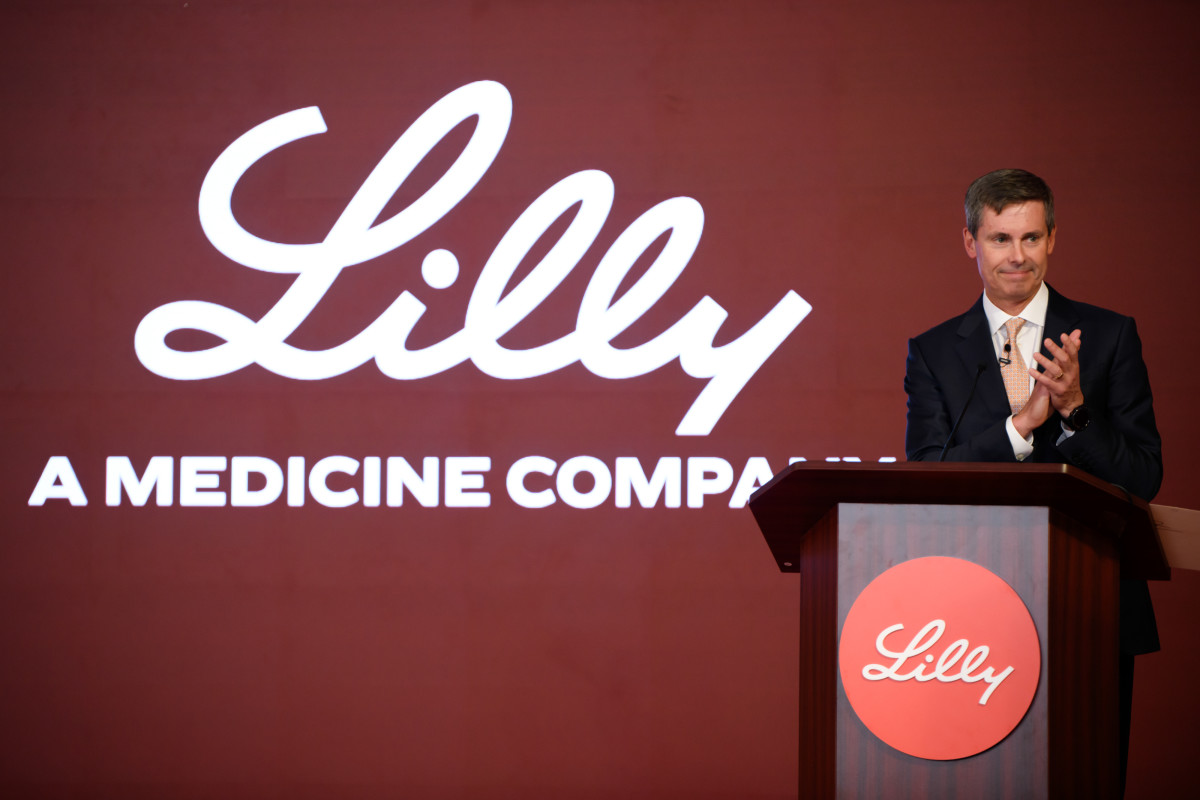 JPMorgan disclosed a $2.93 billion stake in Eli Lilly in its latest 13F filing.
Photo by Bloomberg on Getty Images
Inside JPMorgan’s 13F activity
- Market value: $1.59 trillion (prior: $1.67 trillion)
- Inflows (outflows) as percentage of total MV: 6.26%
- New purchases: 638 stocks
- Added to: 2,643 stocks
- Sold out of: 605 stocks
- Reduced holdings in: 3,425 stocks
- Top 10 holdings concentration: 26.3%
- Turnover: 15.6%
- Turnover (alt): 5.5% Source: WhaleWisdom
Dominating the weight-loss gold rush
The GLP-1 engine has been humming along exceptionally well, and Eli Lilly’s results clearly reflect that.
In Q4 2025, Eli Lilly generated an eye-popping $19.3 billion in sales, up 43% year over year, and posted $7.54 in adjusted EPS, beating expectations by a comfortable margin.
More Wall Street
- Top analyst bets these stocks will boost your portfolio in 2026
- Billionaire Dalio sends 2-words on Fed pick Warsh
- Bank of America sends quiet warning to stock market investors
Mounjaro brought in nearly $7.4 billion, while Zepbound added roughly $4.3 billion.
As we look ahead, things are only going to get more lucrative, with Lilly guiding to $80 billion to $83 billion in sales and $33.50 to $35.00 in EPS, leaning heavily on the relentless demand for obesity and diabetes treatments.
GLP-1/obesity-drug market growth estimates
- Goldman Sachs expects the global anti-obesity drug market to jump to roughly $95 billion by 2030, spearheaded by GLP-1 therapies.
- JPMorgan forecasts the broader GLP-1 market to rise to $100 billion by 2030, split between diabetes and obesity demand.
- Morgan Stanley projects that the obesity-drug market could reach nearly $150 billion by 2035.
Market share gains reinforce the story.
Zepbound overtook Novo Nordisk’s Wegovy in U.S. prescriptions at multiple points last year, according to Reuters, and some sector snapshots showed Eli Lilly holding more than half of the U.S. obesity-drug market in 2025, BioPharma Dive reported.
For perspective, that incredible lead is far from accidental.
Head-to-head trial data from SURMOUNT-5 showed that tirzepatide (Eli Lilly’s dual-action GLP-1 drug) posted superior weight loss when pitted against semaglutide at 72 weeks.
Lilly also benefits immensely from brand equity.
Mounjaro dominates the lucrative diabetes market, while Zepbound anchors the obesity space, and prescribers have become a lot more comfortable with a specific molecule across both lanes.
JPMorgan’s biggest buys and sells
Top buys (largest value)
- State Street SPDR S&P 500 (put): $7.10 billion
- JPMorgan BetaBuilder: $4.14 billion
- iShares U.S. Treasury: $3.53 billion
- Eli Lilly: $2.93 billion
- Amphenol: $2.35 billion Source: WhaleWisdom
Top sells (by % change)
- Meta Platforms: 0.59%
- Vanguard S&P 500 ETF: 0.54%
- Microsoft: 0.44%
- iShares Core S&P 500: 0.41%
- Oracle: 0.33% Source: WhaleWisdom
13F holdings summary (percentage of portfolio)
- Nvidia: 5.34%
- Microsoft: 4.49%
- Apple: 3.85%
- Amazon.com: 2.32%
- Broadcom: 2.04% Source: WhaleWisdom
Hedging moves and tech tilt
Outside of Eli Lilly, JPMorgan’s 13F essentially reads like a robust portfolio that’s tailor-made for both offense and defense.
Perhaps the biggest headline is the bank’s massive $7.1 billion put option on the S&P 500 (SPY), WhaleWisdom noted.
As the index hovers near record highs, it feels more like an institutional-scale insurance, protecting against a broad market drawdown. With a $1.59 trillion equity book, risk management becomes imperative.
On the growth side, JPMorgan added $4.14 billion to its BetaBuilders ETF lineup, leaning heavily on broad stock-market exposure through low-cost index vehicles. Additionally, it allocated $3.53 billion into a U.S. Treasury ETF, locking in attractive yields while ensuring flexibility.
On the tech side, JPMorgan bet big on Amphenol, adding $2.35 billion to its stake in the popular connector and sensor maker.
Amphenol has been a highly rewarding “picks and shovels” player in AI data centers, fiber, and high-speed connectivity.
The company has posted eye-catching 40% organic revenue growth in recent quarters, reported Investing.com, driven by strong demand for AI infrastructure, and has seen a tremendous 71% stock market gain over the past nine months.
Meanwhile, trims in Meta, Microsoft, and Oracle mostly look like profit-taking, not retreat. Nvidia, Microsoft, Apple, Amazon, and Broadcom still account for nearly 18% of the portfolio.
Related: Goldman Sachs delivers contrarian take on the economy