
Billions of dollars and a clear vision for the Artificial Intelligence infrastructure race may not be enough when a single rural county can bring the entire plan to a fall.
Kevin O’Leary, the Shark Tank investor and chairman of O’Leary Ventures, is confronting that scenario across northern Utah’s Box Elder County.
His proposed Stratos Hyperscale Data Center would span 40,000 acres. But its scale has sparked protests, led to two withdrawn water permits, and triggered calls from Utah’s top legislator to shrink it by three-quarters.
O’Leary spent weeks dismissing the opposition as misinformation, but rising political pressure forced him to back down. At a Washington AI Network gala, he admitted he had “no choice” but to scale back the project, NBC News reported.
Utah’s Senate president tells O’Leary to cut the Stratos project by 75%
Utah Senate President J. Stuart Adams, a Republican, sent O’Leary a formal letter demanding that the project shrink from 40,000 acres to approximately 10,000 acres.
Adams also demanded stricter conservation commitments, including a requirement to dedicate excess treated water to the Great Salt Lake and protect nearby wildlife habitats.
Adams said public opposition helped prompt his letter, showing how local backlash can drive resident engagement and produce meaningful accountability, KSL TV reported.
“Utah can pursue economic opportunity while protecting our water, air, wildlife, and communities,” Adams said in a statement accompanying his demands.
How the Stratos project won approval and lost public trust
Box Elder County’s three-member commission unanimously approved the Stratos project on May 4 after the Military Installation Development Authority, known as MIDA, endorsed it.
MIDA, a quasi-governmental state entity, framed the campus as a strategic asset that would support Hill Air Force Base and strengthen Utah’s military readiness infrastructure.
More AI:
- Micron sits at the center of a red-hot chip rally
- IBM CEO sends blunt message on AI and quantum computing
- Anthropic CEO makes shocking admission about AI
The approval process moved faster than meaningful public scrutiny, and residents who discovered the plan only after the commission vote responded with sustained protests.
At full buildout, the campus would cost investors more than $100 billion, with developers estimating up to $108 million in annual revenue for Box Elder County.
Environmental groups flagged the project’s staggering resource needs, including up to 9 gigawatts of electricity, more than double what Utah currently consumes statewide, Utah Clean Energy noted.
Two separate water rights applications were withdrawn after formal protests from residents and advocacy organizations, raising deeper questions about the project’s viability.
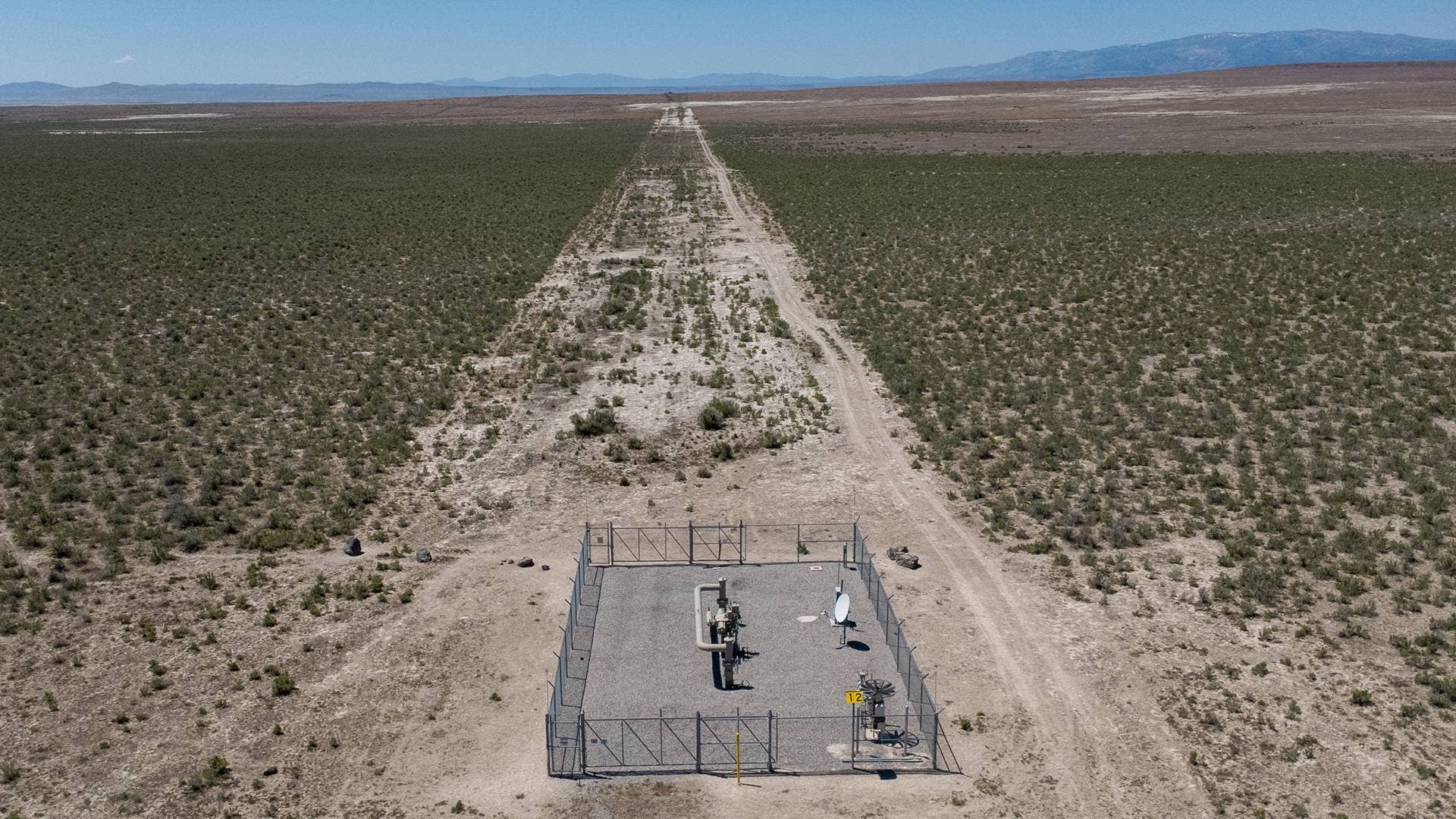 Stratos secured approval with promises of economic growth, but sparked public backlash over massive power demands, water concerns and limited scrutiny.
Natalie Behring/Getty Images
O’Leary blames political calculations and foreign interference for the opposition
O’Leary has responded to the growing resistance by framing it as a coordinated campaign driven by misinformation and funded by foreign interests linked to China.
He told NBC News that Adams issued the demand letter primarily for political reasons, in remarks made weeks before Adams faces a contested Republican primary.
“I know he did it for political reasons,” O’Leary told the outlet, adding that both he and Adams needed to confront the public’s concerns directly.
The only foreign interest in this data center is Kevin from Canada. It’s insulting to Utahns across the state to say that any opposition or protest to this data center is the work of a foreign government.
O’Leary went further by accusing Alliance for a Better Utah, one of the most prominent opposition groups, of receiving dark-money funding from Chinese sources.
O’Leary offered to cut the project size by about half, but his proposal still exceeded the 10,000-acre limit requested by Utah Senate President Adams.
Stratos fight exposes a growing tension in AI infrastructure nationwide
The Utah standoff reflects a much larger national pattern, where surging AI demand is colliding with the physical limits of local power grids and water systems.
Power demand for data centers in the United States is projected to climb from 31 gigawatts in 2025 to 66 gigawatts by 2027, according to Goldman Sachs Research.
That trajectory would push data centers from roughly 4% of total peak summer demand to more than 8% within two years.
Water is an equally pressing factor, with U.S. data centers consuming an estimated 66 billion liters in 2023 alone, according to the Lawrence Berkeley National Laboratory (LBNL) research.
Hyperscale data centers alone are expected to consume between 60 and 124 billion liters annually by 2028, and the same LBNL report projects total U.S. data center direct water use could double or even quadruple from the 2023 baseline
For Box Elder County’s 60,000 residents, these statistics are deeply relevant, with ranchland, water access, and a rural way of life at stake.
Governor Spencer Cox responded with an executive order mandating additional environmental review, and state legislators voted to launch a separate study on data center impacts.
Even in a business-friendly state, the Stratos episode shows that AI infrastructure ambitions can outrun the willingness of the communities expected to absorb their environmental costs.