
Some records are better left unbroken.
Nobody wants the record for most times left at the altar, or to put it into 2025 terms, no worker wants to wear the crown of “person laid off the most in the past year.”
In retail, however, a bleak 2024 set the table for an even darker 2025.
Following a spike in stores closures in 2024, closures are expected to escalate further this year to approximately 15,000, Coresight Research, the leading research and advisory firm specializing in retail and technology, shared in a January press release.
Coresight shared a number of other data points as well:
- U.S. store closures totaled 7,325 in 2024, the highest number of store closures seen since 2020, when Coresight Research tracked almost 10,000 closures.
- Store openings totaled 5,970 in 2024, the highest number of store openings since 2012, when Coresight Research began tracking this data.
- Store openings will remain steady with about 5,800 stores opening nationwide this year.
- Overall, store closures outpaced openings in 2024 with a net loss of 1,355 stores (as of January 10, 2025). Source: Coresight Research
And while June numbers showed closures at “only” 6,000 year to date, a little off the predicted pace, even 12,000 closures for the full year would be a record.
“Last year, we saw the highest number of closures since the pandemic. Retailers that were unable to adapt supply chains and implement technology to cut costs were significantly impacted, and we continue to see a trend of consumers opting for the path of least resistance,” said Coresight Research CEO Deborah Weinswig.
Consumers want it all, and the easy availability of the internet gives it to them.
“Not only do they want the best prices, but they also have no patience for stores that are constantly disorganized, out of stock, and that deliver poor customer service,” she said.
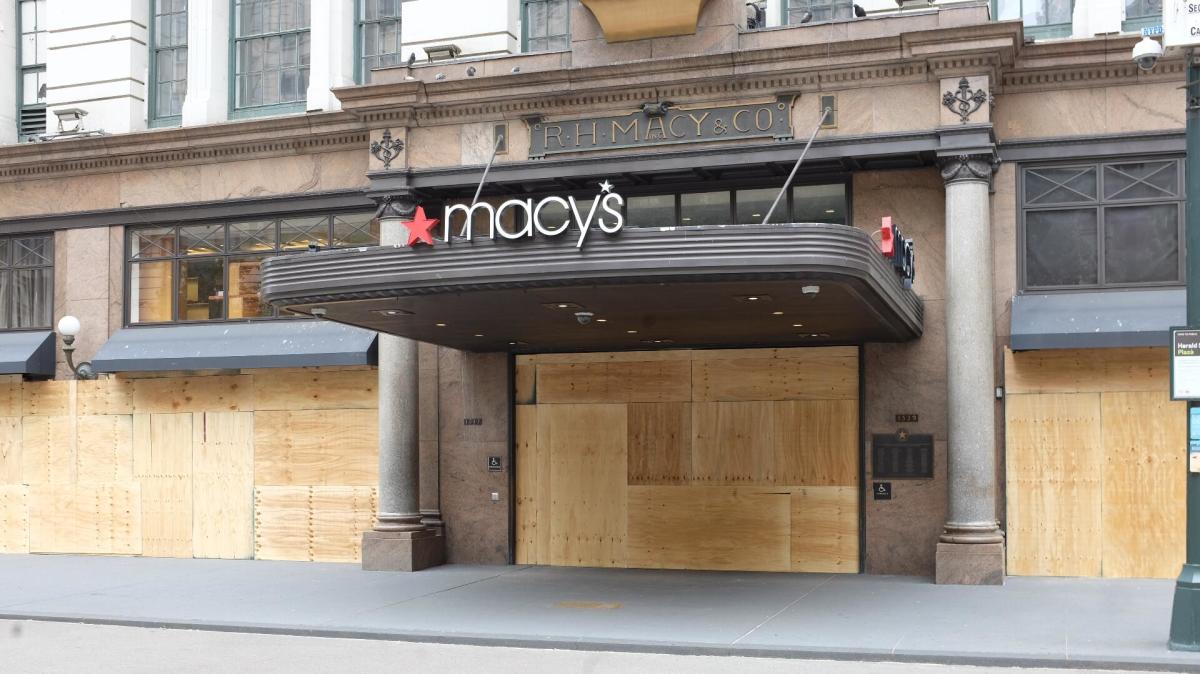 Macy’s will continue to close more locations in 2026.
Shutterstock.
The internet has raised standards for stores
While only about 16% of retail sales are made online, according to Census.gov, the internet remains an option for most sales.
As someone who has covered retail for over 30 years, I’d prefer to support local stores because I’d like them to still be there when I need something immediately. In reality, however, just this week I ordered a guitar and various accessories for that instrument online.
That’s defensible, because there’s no Guitar Center or other similar music store within 10 miles of our home.
More Retail:
- Costco sees major shift in member behavior
- Retail chain shuts all locations as legal changes hit industry
- Lululemon struggles to reverse concerning customer behavior
- T-Mobile launches free offer for customers after major loss
What’s harder to defend is the AAA batteries I ordered on Amazon when the gas station is a mile away, or Target and Publix, roughly a mile-and-a-half away, would have had that item near the checkout lanes.
Yes, on one level, I’m being lazy, but my local Target often has long lines, as does Publix, since neither chain really caters to people buying one item. The gas station, a Circle K with excellent scan-and-go checkouts, does, but its price would be much higher.
I’ve covered retail since before Amazon reshaped shopping and through the post-Covid reset, and I’ve never seen store closures happen this quickly or on this scale.
Bad service forces customers online
“Businesses around the world risk $3.8 trillion in sales due to bad customer experiences – a figure $119 billion higher than last year. New research from Qualtrics, based on World Bank data and the 2025 Consumer Trends Report, highlights the impact of customer experience on loyalty and spending.
- More than half (53%) of consumers say they will cut spending after a bad customer experience, and admit that one in 10 (12%) of their brand interactions doesn’t live up to expectations.
- The industry sectors most at risk of cuts in spending after a bad experience are fast-food brands (66%), department stores (65%), online retailers (64%), auto dealers (63%), mobile phone providers (59%), and parcel delivery services (56%).
- Customers also report their biggest customer experience pain points are service-delivery issues (selected in 46% of bad experiences), communication problems (45%), and employee interactions (39%). Price (37%), quality (35%), and after-sales support (21%) are less of an issue, but remain red flags for brands.
“Customers want to be kept up to date on what’s happening with their orders, know they can trust they’re going to get the product and service they’ve been promised, and see value from their purchase – and they’re rewarding brands that do it well,” said Isabelle Zdatny, customer loyalty expert at Qualtrics.
Big-name retailers have already shared plans for 2026 closures
A number of major retailers have already shared plans to close stores in 2026. In many cases, the companies are waiting until leases end to shut down underperforming locations.
The list includes:
- Macy’s (department stores): Macy’s has confirmed the closure of 66 underperforming stores as part of its “Bold New Chapter” strategy, and it plans to close approximately 150 total locations by the end of 2026 to focus on stronger stores and invest in customer experience,” according to Macy’s investor relations.
- Kroger (grocery stores): Kroger announced plans to close about 60 underperforming supermarkets across the U.S. over the next 18 months as part of a strategic effort to streamline operations, improve profitability, and reinvest in customer experience, according to AP News.
- Saks Off 5th (luxury outlet retailer):: Saks Off 5th has confirmed it will close select store locations in early 2026 as part of an optimization of its retail footprint, with closures planned in multiple states, KTVU FOX 2 San Francisco reported.
- REI (outdoor co‑op): REI confirmed it will shutter three stores in 2026 beginning with a location in Paramus, New Jersey in Q1, followed by closures in New York City’s SoHo and Boston later in the year, as it adapts its operations to market shifts, according to Retail Dive.
- Carter’s: Carter’s, Inc. will close approximately 150 underperforming North America retail stores over the next three years, with about 100 closures expected during fiscal 2025 and 2026, as part of a cost-structure realignment and productivity improvement initiative detailed in its Q3 2025 earnings report, the children’s retailer shared in its third-quarter earnings report.
- Newell Brands / Yankee Candle (specialty retail): Newell Brands plans to close 20 Yankee Candle stores in the U.S. and Canada starting January 2026, part of a broader productivity and efficiency plan, reported TheStreet.
- Target & Ulta Beauty partnership ending: The shop-in-shop partnership between Target and Ulta Beauty, which operates in about 600 stores, will conclude in August 2026, according to a joint press release.
Related: US’ second-oldest department store chain considers Chapter 11