
Micron Technology (MU) broke ground on a new memory fab in July 2026 that will cost $9.3 billion and still not produce a single chip until 2028. That gap, years between shovel and shipment, is the real story behind every headline about the AI memory shortage.
No amount of capital spending shortens the physics of concrete curing and clean room certification.
Lam Research (LRCX), the equipment maker that builds the tools inside those fabs, picked a different lever to pull.
On August 13, the company announced it will invest more than $3 billion over the next five years to expand its global network of research labs, not its factories, according to a press release. The bet is that speed inside the lab can partly offset the years lost building outside it.
Related: Hidden AI chip supplier poised to blow past Wall Street targets
Micron’s shortage exposes the real bottleneck
The memory industry’s supply problem has never really been about willingness to spend. Micron’s chief business officer told an industry forum this year that the company can only fill up to two thirds of some customers’ medium term orders, according to CNBC.
Samsung has separately warned that shortages could persist through 2028 because new fab capacity takes more than three years to reach volume production.
That timeline is the constraint Lam is aiming at. Its equipment does not build fabs, it fills them, supplying the etch and deposition tools that turn a blank wafer into a working chip.
If Lam can shorten how long it takes to develop and qualify a new process technology, that compresses part of the multi year runway customers like Micron and Samsung are racing against.
Micron is proud to work with Lam as we advance memory and storage solutions,
That endorsement is notable because Micron has the most to lose from a slow ramp. The company’s own Idaho fabs will not reach volume production until 2027 and 2028, so faster tool qualification shortens the stretch where Micron is turning away AI customers it cannot fully supply.
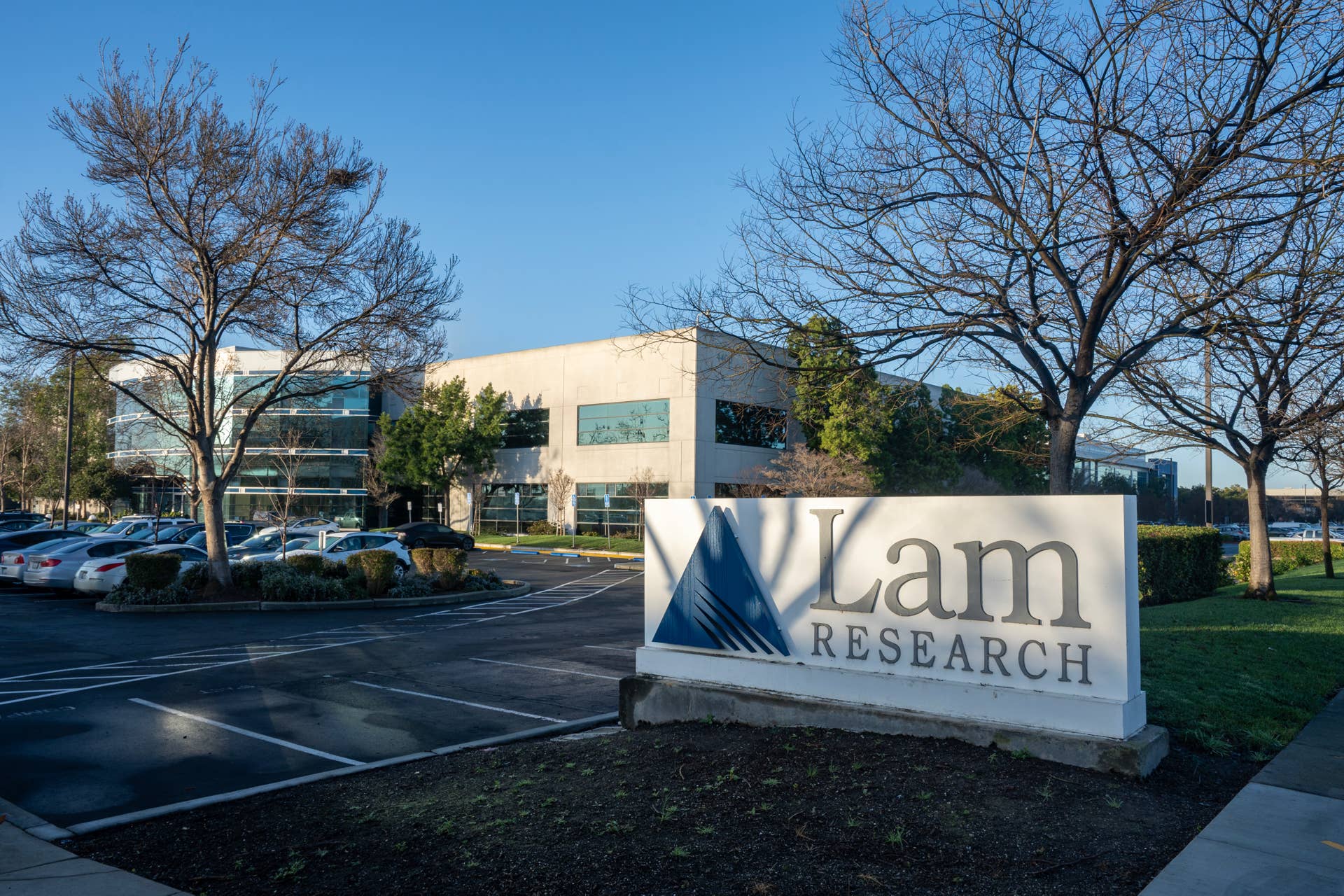 Lam Research is investing $3 billion in R&D labs to speed up chip development timelines as Micron and Samsung face memory shortages through 2028.
Lam is betting on speed, not size
Lam’s plan adds lab capacity across the United States, Asia and Europe, expanding a network that already runs more than one million experiments a year.
The company says the expansion should lift experiment capacity by more than 50%, and in some customer projects, its integrated lab model has already cut process development time by up to two and a half times.
That last figure matters more than the headline dollar amount. A process that once took a year to move from concept to production readiness can, in Lam’s telling, now take under five months in the right circumstances.
For customers burning cash on partially built fabs, shaving months off qualification timelines is worth more than a modest tool discount.
“Our ability to increase velocity throughout the R&D process has become a decisive advantage,” said Tim Archer, Lam’s chief executive.
Wall Street already likes the setup
Lam’s announcement landed after Thursday’s closing bell, on a stock that had already been consolidating near a 12 month high following a blowout fiscal fourth quarter. Shares carry a Strong Buy consensus from 35 analysts tracked by StockAnalysis.com, with a price target implying roughly 9% upside from current levels.
Investors are not simply rewarding Lam for spending money. They are rewarding it for spending money on the one input, time, that rivals cannot easily replicate.
Applied Materials and ASML both run their own research networks, but neither has framed a capital plan explicitly around cutting years off the industry’s slowest bottleneck.
Independent analysts see the same pressure building. John West, chief analyst for semiconductor equipment at Yole Group, said in the release that the industry needs to “innovate faster, compress development cycles” to keep pace with AI demand, echoing what Samsung and Micron have both told investors this year.
More Tech:
- Intel’s $20 billion stock sale has surprising upside
- Al boom mints new winners you’ve never heard of
- Apple’s next iPhone battle just got more complicated
The equipment race is becoming a time race
For most of the last decade, equipment makers competed on precision and throughput, how small a feature they could etch and how many wafers they could process per hour.
We are still seeing the extraordinary results of that traditional race today. Recently, IBM unveiled a groundbreaking advancement by introducing the world’s first sub-1 nanometer (0.7 nm) chip technology.
Utilizing a revolutionary 3D “nanostack” transistor architecture, this new chip can pack nearly 100 billion transistors onto a surface the size of a fingernail.
However, Lam’s lab investment signals a different axis of competition emerging underneath the AI buildout: how fast a discovery in one lab becomes a deployable process everywhere else.
That shift matters beyond Lam and Micron. Every company building AI infrastructure is ultimately hostage to how quickly the physical supply chain beneath it can move, and capital has stopped being the scarce resource in this cycle. Time has taken its place.
If Lam’s bet works, the next memory shortage will not necessarily be shorter because more factories got funded.
It will be shorter because the technology inside those factories got figured out faster, and that distinction is the one investors should be watching as the rest of the equipment sector decides whether to follow Lam’s lead.
Related: BofA downplays China’s threat to Micron’s AI business