
The fight against global warming took a big hit this week, after a satellite project backed by everyone from Elon Musk to Jeff Bezos to Google and the New Zealand Space Agency went off the rails.
MethaneSAT is a satellite space mission launched as a joint venture between the U.S. nongovernmental organization Environmental Defense Fund and the New Zealand Space Agency.
Didn’t know New Zealand had a space agency?
Related: SpaceX and Blue Origin have a powerful new space race rival
Well, the South Pacific island nation is just one of nearly 80 countries with an active space program.
Obvious heavyweight programs include NASA, the China National Space Administration, and Russia’s Roscosmos. Still, lesser-known programs like the Bolivian Space Agency also have celestial ambitions.
However, fewer than 10 globally have had a successful launch, according to Space Insider.
France, Germany, and Canada have never launched successfully, but the UK Space Agency and Japan Aerospace Exploration Agency have.
While UKSA and JAXA have had successful launches, they haven’t had a lunar landing like the China National Space Administration and the India Space Research Organization have.
So there are levels to the space race.
The most significant recent development has been the emergence of private space exploration companies like Elon Musk’s SpaceX and Jeff Bezos’ Blue Origin.
Those two companies helped launch the MethaneSAT satellite in 2024.
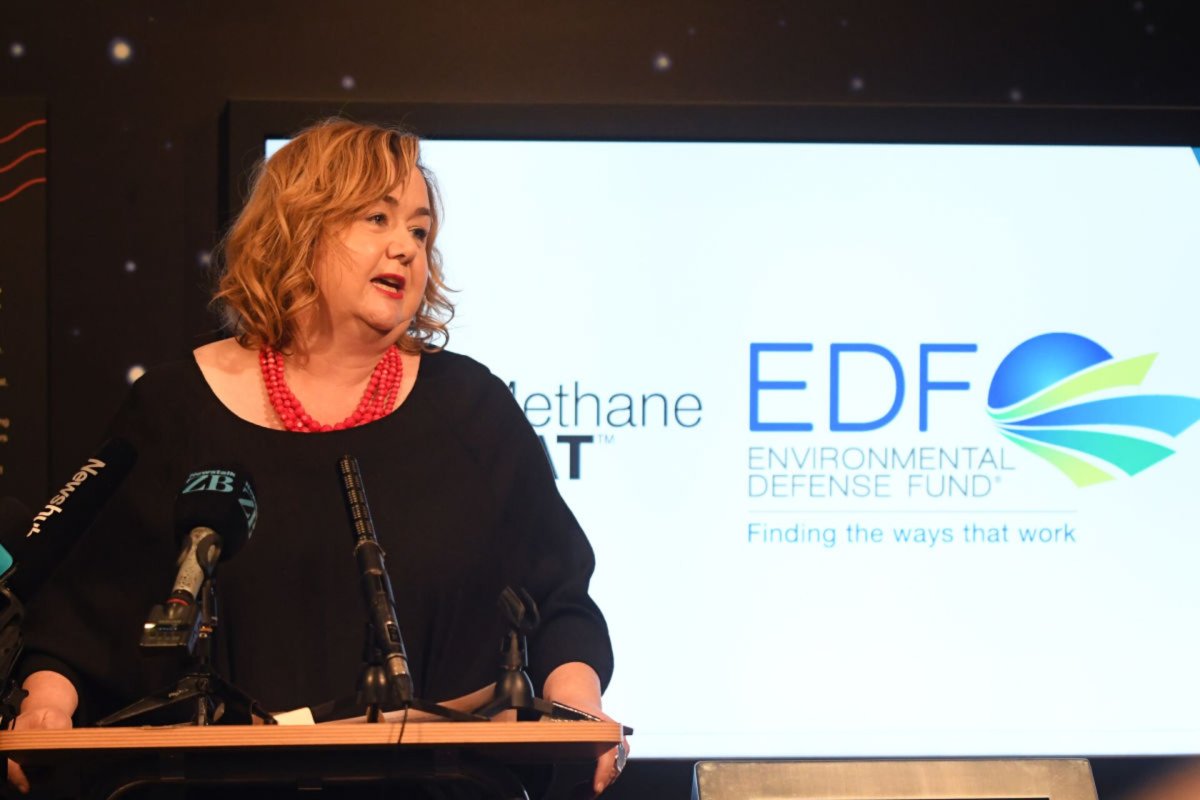 The Environmental Defense Fund has been planning the MethaneSAT mission since at least 2019.
Image source: Rodriguez/Getty Images
Google and Jeff Bezos’ collaborative project is lost in space
The MethaneSAT satellite was launched aboard SpaceX’s Transporter 10 rocket in March 2024.
The $88 million Earth observational satellite was designed to monitor and study global methane emissions, one of the main contributors to global warming.
Unfortunately, on July 2, MethaneSAT said the satellite “lost power and that it is likely not recoverable,” according to the Financial Times.
Meanwhile, the Environmental Defense Fund told FT that the data and insights already collected from the mission will be released soon.
More than a dozen satellites are collecting methane emission data around the globe.
Related: SpaceX faces a surprising rival Tesla is already battling
Some environmentalists claim that energy companies have incorporated numerous tricks to hide their true emissions. Still, the MethaneSAT hardware could detect relatively small methane leaks over mid-sized areas.
The Bezos Earth Fund, Jeff Bezos’ philanthropic endeavor, said it would provide $10 million in funding to the EDF to support the project.
Bezos Earth Fund gave the EDF a three-year, $100 million donation in 2020.
Meanwhile, Google provided the AI computing capabilities needed to crunch the data.
The democratization of space is starting to increase competition
American companies like SpaceX and Blue Origin have dominated the private space race, but recently, a couple of foreign competitors have joined the fray.
France recently invested 717 million euros ($825 million) in Eutelsat during this week’s 1.35 billion-euro ($1.55 billion) funding round.
Eutelsat merged with British firm OneWeb in 2023. The company now has more than 600 satellites in low Earth orbit, making it the world’s second-largest satellite operator behind SpaceX and its nearly 8,000 satellites.
“The race is on. That’s why we have to take a position now and invest now. Otherwise, the whole market will be occupied and France and Europe will depend on other powers in the future,” French President Macron said, according to local reports.
More on SpaceX:
- Cathie Wood makes a bold prediction about Elon Musk’s SpaceX
- Elon Musk, SpaceX have an exploding rocket ship problem
- Elon Musk’s SpaceX plans raise major red flags for regulators
On the other side of the globe, Japanese carmaker Honda is testing its own reusable rockets.
On June 17, Honda R&D Co., the research arm of Honda, conducted a successful launch and landing test of its reusable rocket.
The 20-foot-long capsule landed safely back within about 14 inches of its target touchdown point after rockets pushed the almost 3,000-pound payload nearly 889 feet off the ground for 56 seconds of flight.
It was Honda’s first launch and landing test, and according to the video, it was a smashing success.
“We are pleased that Honda has made another step forward in our research on reusable rockets with this successful completion of a launch and landing test,“ said Honda CEO Toshihiro Mibe. “We believe that rocket research is a meaningful endeavor that leverages Honda’s technological strengths.“
While SpaceX uses its rockets to build out Starlink and takes government contracting jobs, it is unclear how Honda plans to commercialize this technology.
The company does say that it expects to be able to achieve a suborbital launch with its rockets by 2029.
Related: Elon Musk’s Starlink is the key to avoiding U.S. tariffs