
Small businesses get a lot of attention during campaign season.
You don’t have to search long for a soundbite of a politician calling small businesses the “backbone of our economy” or the “lifeblood of America” or some other metaphor.
While some argue that the giant omnibus bill that was passed earlier this month provides relief to small businesses through tax breaks, evidence shows that tariffs, President Donald Trump’s primary economic agenda, have done immeasurable harm to small businesses.
Related: Another luxury car maker is taken down by US tariffs
More than 97% of the companies that import goods are small businesses with fewer than 500 employees, according to the U.S. Chamber of Commerce. Nearly half of those small businesses had fewer than 50 employees.
Those small businesses were responsible for a third of the total value of goods imported.
Big businesses also import a lot of goods, but they often have more flexibility when it comes to shifting supply chain strategies. This is not the same for small businesses.
“For many small business importers, even a small increase in tariffs can have a profound effect on their bottom line,” the Chamber of Commerce report states. “These businesses typically operate with tight profit margins and limited financial flexibility.”
This dynamic is also being played out in the auto space, where luxury automakers have been more aggressive with their strategy to combat tariffs, while non-luxury automakers, like small businesses, are forced to be more cautious.
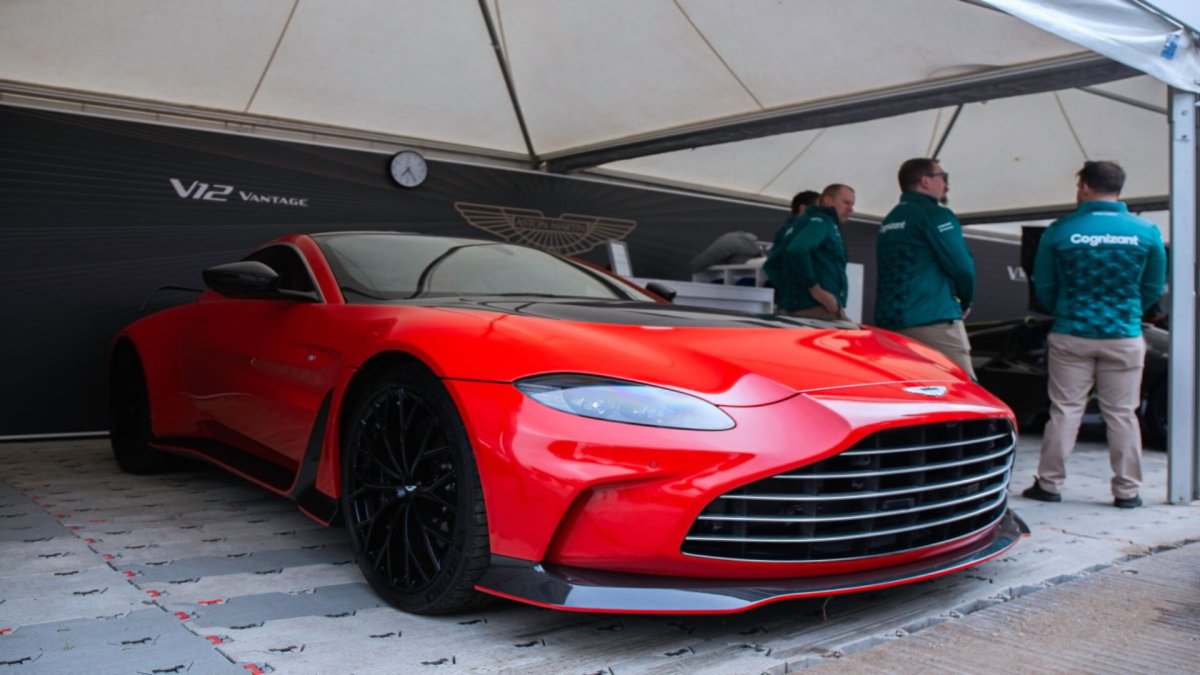 Aston Martin has an aggressive plan for tariffs.
Image source: Lucy/Getty Images
Luxury automakers are taking aggressive counter-tariff measures
President Trump has been very clear that he doesn’t want automakers to raise prices due to his tariffs.
General Motors, Ford, and Stellantis, the three domestic manufacturers, have all agreed to those terms, usually blaming regular seasonal price adjustments for any increases.
Foreign companies with large manufacturing footprints in the U.S. have also acquiesced to the president’s wishes, while also attributing the minimal price increases to seasonality.
But luxury automakers don’t seem to be toeing the same line.
Aston Martin
British luxury automaker Aston Martin (makers of the iconic James Bond car) plans to raise prices on some of its cars and limit shipments to the U.S.
Ferrari
Italian marque Ferrari says it will raise prices as much as 10% on most of its models, even models that have already been sold. Ferrari sales contracts allow the company to adjust pricing due to changing economic conditions, according to Reuters.
Mercedes-Benz
German luxury automaker Mercedes-Benz recently reported a 9% second-quarter sales decline that it blamed on tariffs. But Mercedes has a significant manufacturing presence in the U.S., and in response ,it plans to add production capacity at its Alabama plant.
Jaguar Land Rover
Jaguar Land Rover announced that it was pausing U.S. shipments from the UK in April before restarting them after the the U.S. and UK announced they had reached a deal on the framework for a tariff deal.
BMW Group
BMW Group, which includes BMW, Mini and Rolls-Royce, initially stated that it would absorb tariff costs, but it has since said that it will raise prices on the 2 Series that it builds in Mexico.
Meanwhile Mini is delaying bringing its Chinese-built electric Aceman crossover and convertible Cooper to the U.S. due to the tariffs.
Related: 1 in 5 new car shoppers are committing a big financial blunder