
Oracle (ORCL) has been looking to break into the AI big leagues for years, and Wells Fargo’s latest note just gave it an endorsement that effectively flips the narrative.
The ‘Big 4’ bank slapped an Overweight rating along with a $280 price target on the stock, pointing to a massive 35% upside from its current price.
The big reason behind the upgrade, analyst Michael Turrin argues, is that Oracle sits on nearly $500 billion in AI infrastructure deals from OpenAI, xAI, Meta, and TikTok.
💵💰Don’t miss the move: Subscribe to TheStreet’s free daily newsletter💰💵
The glaring headline-maker is its staggering 4.5-gigawatt, $300-billion-plus OpenAI compute deal.
That contract alone is enough to cement Oracle’s positioning from“alternative cloud provider” to “AI hyperscaler in training.”
Even if a fraction of that pipeline materializes, Oracle’s role in the lucrative AI economy might look dramatically different by the end of the current decade.
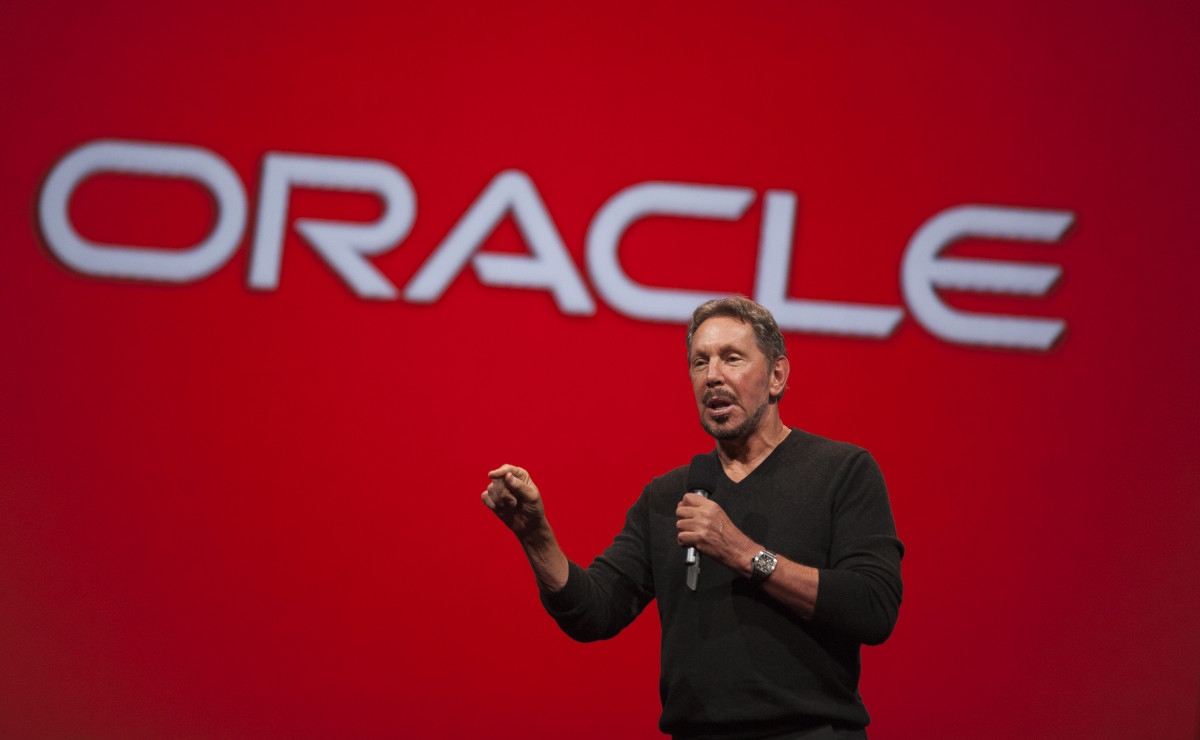 Wells Fargo just handed Oracle a $280 target and flagged nearly $500 billion in AI deals
Photo by Kimberly White on Getty Images
Wells Fargo thinks Oracle’s AI business is bigger than anyone realized
Turrin’s bullishness goes beyond Oracle’s marquee AI infrastructure deals.
More AI Stocks:
- Is Nvidia’s AI boom already priced in? Oppenheimer doesn’t think so
- Windows president told ‘Stop this nonsense. No one wants this’
- Michael Burry turns up heat on anti-AI bet
- AI plays expanding role in predicting natural disasters
- Morgan Stanley revamps Nvidia’s price target ahead of big Q3
- Cathie Wood buys $16.2 million of sinking AI stock
He argues that Oracle is finally putting OCI (Oracle Cloud Infrastructure) in the same weight class as the leading hyperscalers.
OCI’s robust design, which is tailor-made to handle high-bandwidth networking and GPU-dense clusters, gives it a major edge over other cloud providers in AI deployment.
When OpenAI picked OCI in growing its Azure footprint, CEO Larry Ellison talked explicitly about the engineering angle:
In that same vein, he also said that the “race to build the world’s greatest large language model” is driving “unlimited demand” for Oracle’s Gen2 AI infrastructure, underscoring its effectiveness in training LLMs at scale.
That’s why Turrin sees Oracle’s cloud share surging from nearly 5% currently to the mid-teens by 2029, a move that seemed virtually impossible a few years ago.
Related: Morgan Stanley reveals eye-popping price target on Nvidia stock
Additionally, Turrin feels that Oracle’s AI momentum might spark a software chain reaction. Once customers train models on OCI, it’s natural for them to keep their data, analytics, and apps within that ecosystem, which sets off a flywheel effect.
Top 3 cloud providers (global infrastructure share)
- Amazon Web Services (AWS): 29%–30% share of the current global cloud infrastructure spending.
- Microsoft Azure: 20% share, solidly in the second spot, while gaining slowly on AWS.
- Google Cloud: 13% share, and remains the fastest-growing of the big three, and is now nearly 4x the size of Alibaba Cloud.
Together, the ‘Big 3’ account for 63% of global cloud infrastructure spend.
How big is the cloud market?
According to Synergy Research Group, Global cloud infrastructure services sales shot up to nearly $330 billion in 2024, with quarterly spending at $100+ billion run-rate,skyrocketing 60% in just two years.
Related: Bank of America unveils surprise 2026 stock-market forecast
Broader public cloud is generating nearly sales of $730–$800 billion in 2025, nearly double by 2030 (18% to 19% CAGR).
With AI-driven demand in the mix, we could see cloud expansion go back into the mid-20% range.
Oracle’s 2025 AI deals that moved the market
The easiest way to gauge how quickly Oracle’s AI story is scaling is to look at the contracts themselves. Here are a few of the 2025 wins that are big enough to reshape the cloud pecking order.
- OpenAI — $300 billion: A whopping five-year cloud deal that’s reportedly topping $300 billion, along with a 4.5-GW Stargate build-out.
- OpenAI + SoftBank — $500 billion: A massive $500 billion, 10-GW Stargate expansion plan positions Oracle as the key cloud partner powering the next wave of AI infrastructure.
- Meta — $20 billion: Meta is looking to negotiate a $20 billion, multi-year agreement to train and deploy Llama models on OCI.
- TikTok / ByteDance — expanding AI spend: ByteDance is ramping AI-heavy workloads on OCI, a small but meaningful slice of Oracle’s cloud revenue.
The risks no one should ignore
Turrin is bullish on Oracle, but he isn’t glossing over the risks.
The one that stands out is perhaps customer concentration.
OpenAI accounts for nearly 60% of Oracle’s pro forma RPO, which means that essentially one partner is anchoring its multiyear AI narrative.
If OpenAI delays deployments or has to cut down on capacity, Oracle will have to absorb the lion’s share of that shock.
Moreover, there’s the margin problem.
AI compute is capital-intensive, but it’s also low-return.
GPU-heavy workloads usually carry 30–40% gross margins, a far cry from Oracle’s lofty 5-year gross margin at 75%. Moreover, Wells Fargo forecasts corporate margins to drop to 50% by FY29 as AI infrastructure grows.
Throw in the debt risk, and the stakes rise even more.
It’s natural to expect the enormous multi-gigawatt buildouts to push Oracle’s leverage higher, complicating an already murky picture.
Here are some financial ratios that offer more insight into Oracle’s debt picture:
- Debt-to-equity remains elevated (4.36), comfortably over its long-term median (2.13), showing the aggressiveness with which Oracle has levered up compared to its core business.
- Cash-to-debt sits at just 0.10 (0.54 long-term median), which means Oracle holds significantly less liquidity when pitted against its obligations than it historically has.
- Capex-to-operating cash flow at 1.27 shows Oracle is spending a lot more than it generates, a sharp reversal from its 10-year median of 0.14 and a clear sign the AI buildout will lean heavily on external financing.
Source: GuruFocus
Related: This defense-AI stock is up 50 percent in 6 months: It’s not Palantir