
SpaceX went public on June 12, raising $75 billion in the largest IPO in U.S. history and pushing Elon Musk‘s net worth past $1 trillion.
The achievement set off a fresh wave of criticism about billionaire wealth, most of it focused on whether one person should be allowed to accumulate that kind of money while millions of Americans struggle to pay for healthcare.
Mark Cuban entered the debate on June 13 with a post on X that took the argument in a different direction.
Rather than attacking or defending Musk, he made a structural point about how stock markets actually work and who funds the fortunes sitting at the top.
Cuban’s stock market argument and how it connects to Musk
Cuban posted in response to a message that sarcastically described capitalism as a system where one man becomes a trillionaire while everyone else goes without healthcare. His reply started with a direct observation about how Musk got there.
“The reason anyone gets insanely rich is almost always because of the stock market. It’s certainly how Elon Musk did,” Cuban wrote on X.
More Wall Street:
- HSBC doubles down on stock market message for 2026
- Citi quietly resets S&P 500 price target for the rest of 2026
- Jim Cramer has a stark message on the stock market for 2026
The post went further. Musk’s wealth grew because tens of millions of Americans chose to put money into companies they believed could make them wealthier over time, through retirement plans, brokerage accounts, mutual funds, and ETFs. The billionaire at the top and the 401(k) holder at home are, in Cuban’s telling, participants in the same story.
“And the reason they get rich from the stock market, is because 150m Americans decided they wanted to own shares of stocks directly, or through their retirement plans, or through other approaches as a way of building their net worth and trying to create a better life for themselves,” Cuban wrote.
Why the 150 million investor figure matters to this debate
About 150 million Americans own stock, whether they think about it daily or not. Gallup put ownership at 62% of U.S. adults as of 2025, a number that counts 401(k) plans, IRAs, mutual funds, and individual shares. A lot of that exposure gets built one paycheck at a time through a workplace retirement plan.
“One Hundred Fifty Million Americans. About 60% of adults. Effectively believing that Elon Musk and many billionaires could make them wealthier and help them achieve a better life,” Cuban wrote.
The gains from that ownership are heavily concentrated. The wealthiest 10% of Americans hold roughly 87% of all stock market wealth, according to Federal Reserve data. The bottom 50% own about 1%. Cuban acknowledged the imbalance. His argument was that even at that scale, ordinary investors have real skin in the game, and their exposure shapes what happens when anyone tries to rearrange who sits at the top.
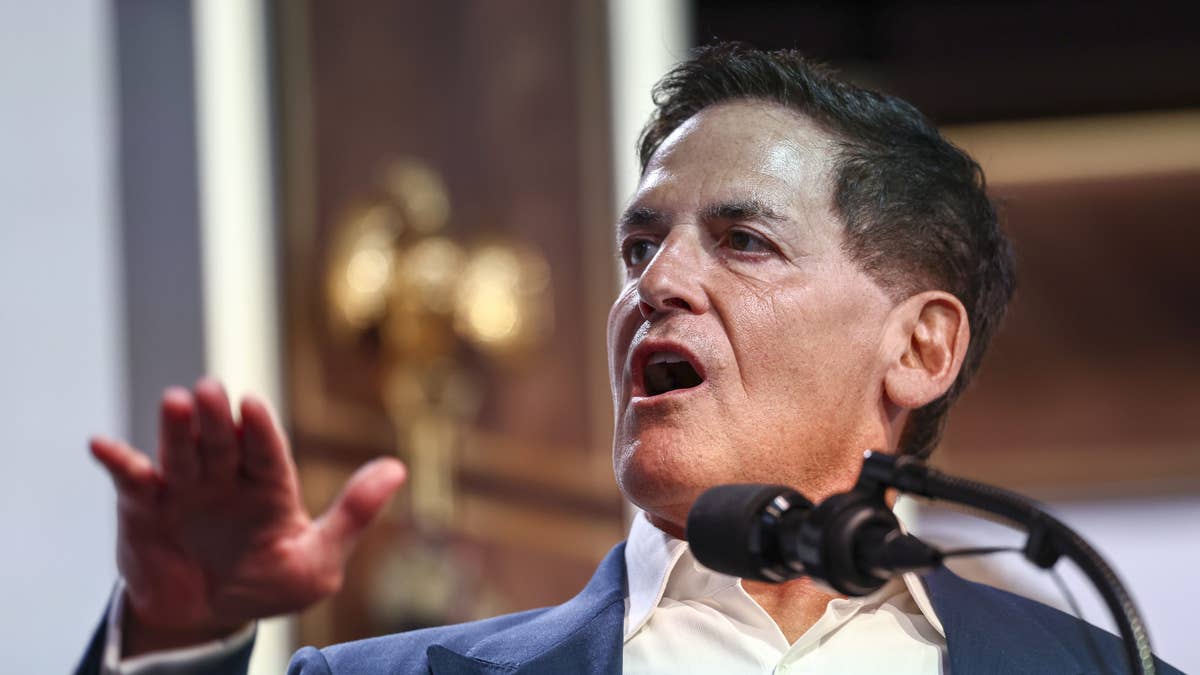 Mark Cuban entered the debate on June 13 with a post on X that took the argument in a different direction
Scalzo/Getty Images
The depression warning Cuban included in his post
Cuban addressed the people who want to bring billionaire fortunes down by force. What would that actually require, he asked. His answer focused on the 150 million people caught in the middle.
“If you want Elon Musk, and most billionaires to no longer be that rich, convince those 150m to sell their stocks, funds, ETFs whatever,” Cuban wrote.
“Of course you would wipe out the net-worth of most of those people, and everyone else’s savings, as the markets crashed and brought down the economy and created the worst depression we have ever seen,” he added.
After the 2008 financial crisis, U.S. stock ownership dropped from above 60% to around 52% as households absorbed losses and stepped back from markets.
The recovery took more than a decade, driven largely by low-cost index funds and automatic enrollment in workplace retirement plans. A forced or coordinated exit from markets would hit retirement accounts and household savings long before it reached the billionaires.
What the SpaceX IPO tells investors about Cuban’s point
The SpaceX debut made Cuban’s argument concrete. Retail investors placed orders totaling more than $100 billion for SpaceX shares before the stock began trading.
Ordinary investors, not just institutions, flooded into the offering. Musk’s $1 trillion net worth grew from exactly those decisions, made by millions of people who thought his companies could deliver.
The same search is running now across artificial intelligence, robotics, and biotech. Investors keep pouring capital into founder-led companies on the same basic logic: that the right bet, held long enough, compounds into something significant.
Most of those bets lose. Some of them turn a rocket company into the most valuable IPO in history and make one person the world’s first trillionaire.
Cuban’s point is not that the system is fair. It is that the fortunes at the top and the retirement savings of ordinary Americans run on the same engine. Pulling that engine apart to get at the billionaires takes down a lot more than the billionaires.