
Mark Cuban has become a billionaire who also has complicated political views he’s willing to share. People on the right see him as a left-wing activist, but he’s more against extreme right-wing positions than he is an actual die-hard liberal.Most importantly, the “Shark Tank” billionaire does not have one strict philosophy.He has dedicated much of his life to making drugs more affordable for Americans, but he has done so as part of a for-profit venture. Cuban has also been willing to anger anyone on either side of the aisle.In a recent post on X, the former Twitter, he takes a shot at White House AI Czar David Sacks.
Related: Intel announces a drastic decision to fix its struggling business
“Hey @DavidSacks, my one request is that we make it illegal for AI models to offer advertising. And, we need to really examine referral fees as well,” he posted.”The last thing we need is to have algorithms designed to maximize revenue driving LLM (large language model) output and interactions. They are already recommending brands and we don’t know if they are getting paid for it. We need to have learned our lessons from algos in social media,” he added.
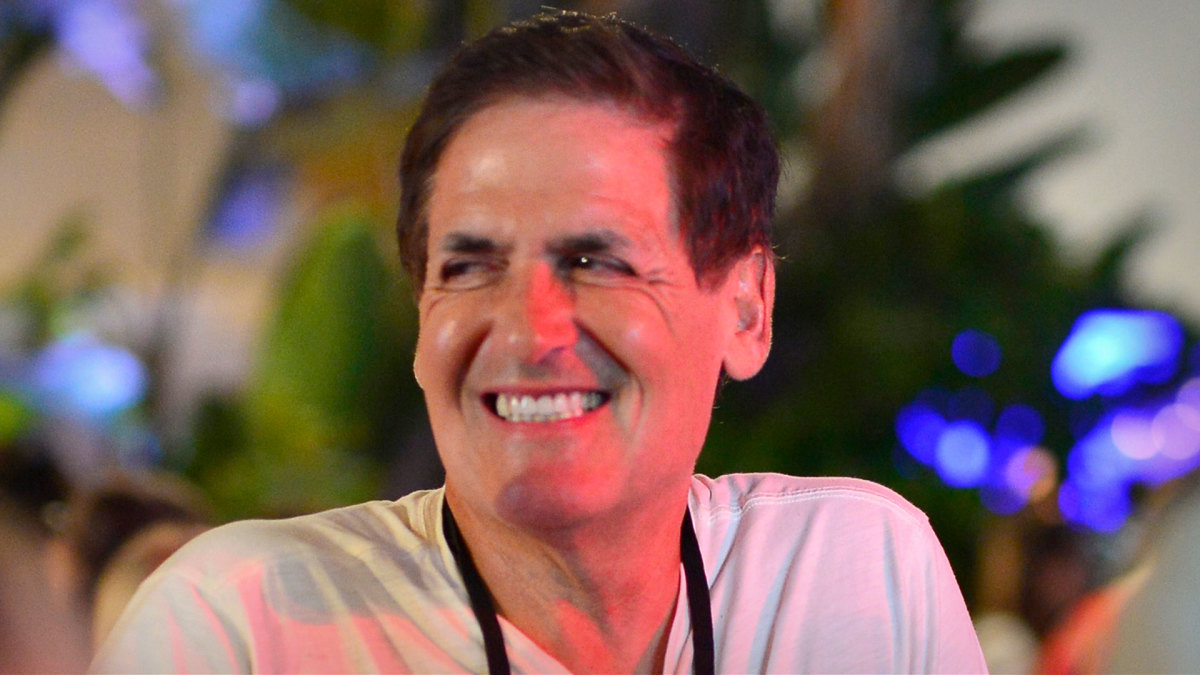 Billionaire Mark Cuban wants it to be illegal for AI models to offer advertising.
Image source: Jerod Harris/Getty Images for Vox Media
Cuban takes strong stand against AI ads
Not every internet personality agreed with Cuban. Jordi Hayes, an online talk show host, took issue with the billionaire.
“Mark Cuban is promoting a policy that would almost certainly make the best AI inaccessible for low-income Americans and lead to greater wealth inequality over time,” Hayes posted on X, the former Twitter.
Most of the comments responding to Hayes were surprisingly reasonable by internet standards.
“Just subsidize the free tier by charging everyone a tad bit extra like they are now. Mark’s concern is advertisers trying to control output in any way, which will eventually lead to what we have now with pharma and their control of content,” Bob posted.
More Experts:
- Stocks and Markets Podcast: Prairie Operating CEO on energy business
- Dave Ramsey warns Americans on Social Security
- Legendary fund manager reveals new trades after S&P 500 rally
Others believe that ads are essential to ensure access.
“There’s also the fact that ads based content (including LLMs) makes it more accessible for a larger part of the internet who can’t pay subscription fees for everything,” Lucas Dickey added.
Kris Richens had perhaps the most measured response.
“When AI is clearly identified, it’s a tool, like any other ad platform. But as soon as it blurs the line with authentic human interaction, it enters a grey area that feels less like marketing and more like digital puppetry. We need to uphold AI transparency to build digital trust, not erode it,” he wrote.
Cuban believes AI will have free tiers
While Cuban called out a White House official, the debate around his comment was surprisingly non-partisan.
The billionaire did make it clear that he believed free AI isn’t going anywhere, although it will change.
“My guess is that the free version will stay free for a while, then most likely it will be bundled with phone and broadband carriers, and phone manufacturers. There is a winner take all attitude among the biggest models, so they will try to get their basic versions everywhere they can, on every device they can and upsell to subscriptions,” he posted.
Cuban did double down on the idea of AI ads needing full transparency.
“Because AI will be part of everything we do, we will want to trust that its responses are not biased towards maximizing revenue. Let’s let political candidates spend money to weight responses about their race in their favor? Maybe put out to bid which candidate the model will favor? Or put out to bid the weights for training data as it relates to a product or service. You pay us enough and we will train on your data to the exclusion or minimization of your competitors,” he shared.
Some posts did take issue with Cuban’s use of the word “illegal” when it comes to AI ads.
“People’s intuitions about banning things go into overdrive when AI is involved. They demand far stricter tradeoffs (safety over consumer value, transparency over efficiency) than they’d apply elsewhere, yet rarely explain why AI is so vastly different as to justify this,” wrote Tamay Besiroglu.
Related: Mark Cuban says AI will end 1 essential job as we know it