
It makes sense that entrepreneur, investor, and TV personality Mark Cuban is a partial owner of the Dallas Mavericks—its name embodies how he lives and works.
Just as “maverick” refers to an independent thinker or someone who doesn’t follow the herd, Cuban amassed his nine-digit fortune through his signature blend of passion, resilience, and pure, unconventional hustle.
From smart investments in internet startups—Cuban co-founded Broadcast.com in 1995 and sold it to Yahoo! for $5.7 billion in 1999—to his belief in contrarian plays, such as buying the struggling Dallas Mavericks in 2000, which he transformed into NBA Championship titleholders before selling his majority stake in December 2023 for $3.5 billion (he still remains in full control of operations as minority stakeholder), Cuban has a significant track record of visionary success.
@Mark Cuban shares the moment he decided to buy the @Dallas Mavericks #markcuban #sharktank #dallasmavericks #mastclass
How did Mark Cuban make his money?
Back in 2008, Cuban wrote on his weblog, Blog Maverick, that “the first step to getting rich requires discipline.” He asked his readers, “If you really want to be rich, you need to find the discipline; can you?”
He encouraged people to live as frugally as possible so that they could save as much money as possible. “Instead of coffee, drink water. Instead of going to McDonald’s, eat Mac and Cheese,” He told them to cut up their credit cards, because “if you use a credit card, you don’t want to be rich.”
Cuban has credited his disciplined lifestyle for allowing him to save money and affording him both the resources and mindset to build his empire.
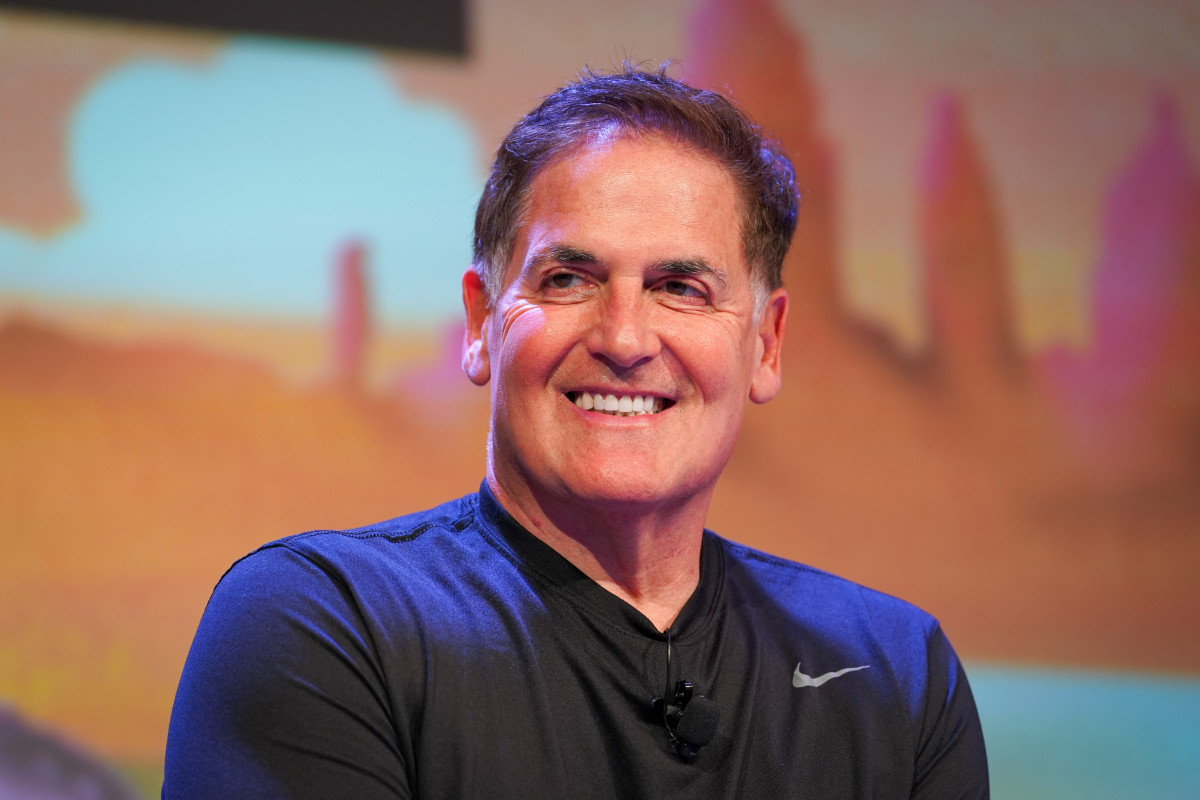 Mark Cuban is often asked for his investment advice; here he speaks at the 2025 SXSW Conference and Festival in Austin, Texas.
Julia Beverly/WireImage
Mark Cuban’s 5 biggest takeaways for investors
For investors who strive to be like Cuban, he offers five key lessons he’s learned so far in life:
1. Live ‘like a student’
Not surprisingly, one of Cuban’s most consistent messages is simply not to spend money you don’t have.
Even after he started making money, Cuban continued to pinch pennies, visiting grocery stores after midnight because that’s when they lowered the prices of chicken and French fries; he also lived with roommates, and even took over the lease of an abandoned car he found on the side of the road to avoid paying for a new one. He reasoned that when you have control over your expenses, you can build wealth faster.
For investors, this translates to having ample cash reserves. Cuban admitted to MSN that he keeps a “large part” of his portfolio in cash so that he can buy at a discount when the markets turn. Holding cash allows you to both survive downturns and take advantage of opportunities when others are panicking.
2. Get out of debt
Cuban is famously anti-debt, but there was a point in his 20s when he, too, had outstanding credit card balances and fielded calls from collection agencies. “You have to hustle the most when you think it’s the darkest,” he revealed during an interview on the Pardon My Take podcast.
Cuban regained control over his finances through tons of sweat equity—he bartended at night while working in sales during the day. His sales gigs paid off handsomely, leading to his formation of AudioNet (later known as Broadcast.com), his biggest entrepreneurial success. “Once you learn how to sell,” he revealed, “you can always start a business, [because] you’re an entrepreneur at heart.”
He advises people to pay off—and then get rid of—their credit cards, which can sport interest rates as high as 15%–20%. He believes that using debt to finance your lifestyle or fund speculative investments is one of the easiest ways to destroy your wealth—or prevent you from building any at all.
3. Invest in what you know
Yahoo! acquired Broadcast.com from Cuban for $5.7 billion (or 14.6 million company shares) in April 1999. He considers himself lucky to have sold his Internet startup before the dot-com bubble burst—but he didn’t just sit back and count his money.
Instead, he understood that the tech sector was overheating and reached out to Goldman Sachs, which helped him hedge his position through options. One year later, when Yahoo! shares plummeted, his strategy “worked out perfectly.”
Cuban says that one of the biggest mistakes investors make is buying into a trend without understanding its underlying business. He encourages investors to do their homework, and if they can’t clearly explain how a company makes money, who its customers are, and why it has a competitive advantage, then they probably shouldn’t invest in it.
4. The best investment is yourself
Cuban always dreamed of being his own boss, and in an interview with the Kelley School of Business, he said that he challenged himself by taking advantage of all of the resources Indiana University offered: “Not just in the classroom, but the libraries, the city, the profs. I knew someday I wanted to run my own business, so everything I did was geared toward getting there.”
So before investing in stocks or startups, Cuban urges people to put their money in something with an even greater ROI—themselves. He believes that knowledge leads to agility, which can offer the highest long-term benefits. Investors should constantly hone their knowledge base, which will lead to greater earning capacity, more capital to invest, more resilience during downturns, and greater risk tolerance when opportunities arise.
5. It’s less about timing than it is about finding quality companies
Although Cuban famously sold Broadcast.com at the top of the dot-com bubble, he doesn’t promote market timing. And he doesn’t recommend speculative investments, either.
In a 2010 interview with Forbes, when asked what he’d buy in the stock market with $100,000, he reiterated that he’d use that money to pay off any debts; “What I have left I put in the bank.” That way, he’d have it ready for whenever he uncovered the next good investing opportunity.
More on wealth building:
Don’t get us wrong—Cuban believes in the stock market, but he thinks one must be smart about what they invest in. Above all, he says that investors who manage risk, stay disciplined, and do their homework are the ones who will compound wealth in the long term.
Mark Cuban’s net worth in 2025
According to Forbes, Mark Cuban has an estimated net worth of $6 billion in 2025. Other online sources, like Celebrity Net Worth, peg his wealth even higher, at $6.5 billion. It is difficult to estimate his total wealth because a number of his companies are privately held.
Mark Cuban’s business story
Cuban learned his lessons at an early age. Born in Pittsburgh, Pennsylvania, on July 31, 1958, by the age of 12, the enterprising young businessman was selling garbage bags door-to-door. At age 16, he drove newspapers from Cleveland to Pittsburgh so that readers could still obtain the news while workers at the Pittsburgh Post-Gazette were on strike.
He started college a year early and ultimately graduated from Indiana University’s Kelley School of Business, a school he selected because it had the least expensive tuition among any top-10 business school. Cuban owned a variety of business ventures during college, including running a bar and offering disco lessons at a sorority. He even funded his junior year tuition through a chain letter.
Cuban’s first major business was MicroSolutions, a consulting firm he sold to Compuserve for $6 million in 1990—he took home $2 million himself.
In addition to Broadcast.com, which Cuban co-founded with his college friend, the pair also started a production company, 2929 Entertainment, which owns Landmark Theatres.
Cuban’s most recognizable investment was his majority stake in the Dallas Mavericks in 2000s, but other notable ventures include founding CostPlus Drugs in 2022, which provides low-cost generic prescription drugs directly to consumers, and purchasing the entire town of Mustang, Texas because a friend needed to sell it, even though he admitted to the Dallas Morning News that, “I don’t know what if anything I will do with it.”
Cuban is especially popular today because of his role on Shark Tank, where he has appeared since 2011. On the show, his direct style and willingness to invest his own money have made him a fan favorite. He counts Tower Paddle Boards, the nut butter company Nuts ‘N More, SAT prep company, Prep Expert, and Ten Thirty-One Productions among his favorite—and most lucrative—investments.