
Every few months, someone in tech says something that shifts how Washington thinks about AI. Sometimes it’s a Senate hearing. Sometimes it’s a leaked memo. Sometimes it’s a CEO who decides the moment is right to say something nobody else has been willing to say publicly.
On July 28, that person was Mark Zuckerberg. He gave the Financial Times an interview and made a case about Chinese AI that puts him directly at odds with where the Trump administration appears to be heading, according to CNN.
The same day, he published an opinion piece titled “The AI Future Is for Everyone” in The Wall Street Journal, making the same argument. A Beijing startup had just released a model that made his timing feel deliberate.
Zuckerberg says banning Chinese AI won’t work
The U.S. government should not block Chinese models to gain an edge in the AI race, Zuckerberg told the Financial Times, according to CNN.
Banning Chinese AI would not be “an effective solution,” Zuckerberg said. His alternative wasn’t complicated. U.S. companies should figure out what’s slowing them down and fix it.
He also pushed back on the cybersecurity argument for restrictions, saying open models actually help because more people can spot and fix vulnerabilities when the code is accessible.
More Mark Zuckerberg:
- Mark Zuckerberg says infinite money won’t make him quit his job
- Mark Zuckerberg makes a move on a new billion-dollar market
- Mark Zuckerberg admits mistakes in leaked memo after Meta layoffs
Zuckerberg did not stop at China policy. He also took aim at rivals seeking tighter industry rules, warning against what he called regulatory capture by dominant AI labs. Dominant firms shaping the rules that govern smaller competitors, he suggested, would choke off the same competition Washington claims to want.
His op-ed in The Wall Street Journal echoed these ideas; he pushed a vision built on individual empowerment and open models people can run on their own hardware. Meta has increasingly positioned itself as the open-source counterweight to Anthropic and OpenAI, both closed-model developers Zuckerberg avoided naming directly.
Kimi K3 and Alibaba raise the stakes
The center of the debate is Moonshot AI, whose Kimi K3 model has drawn attention for its coding capabilities since launching on July 16.
Moonshot says K3 packs roughly 2.8 trillion parameters, making it the first open-weight system to approach the 3 trillion parameter mark, with a 1 million-token context window built for long coding sessions, Fireship shared.
That scales well past DeepSeek’s 1.6 trillion-parameter model and Alibaba’s own prior 397 billion-parameter release.
Benchmarks put K3 just behind Anthropic and OpenAI’s best models overall, but ahead of Claude Fable 5 on LMArena’s blind coding evaluation.
Chip stocks sold off hard. People started saying “DeepSeek moment” again. Moonshot had to pause new subscriptions because the servers couldn’t keep up.
Alibaba-backed Moonshot is not working alone. Days after Kimi K3 landed, Alibaba previewed its own Qwen 3.8 Max model, claiming it trails only the top American system, Adi Insights & Innovations noted. Its shares climbed as much as 5.4% in Hong Kong trading on July 30 on the news, according to Seeking Alpha.
Nvidia and Micron felt it immediately.
The whole bull case for American chip stocks rests on the idea that frontier AI stays expensive and American companies control the supply chain for it. A free, open-weight model from China that performs close to the top closed systems pokes a hole in that. Investors noticed before any orders were actually canceled.
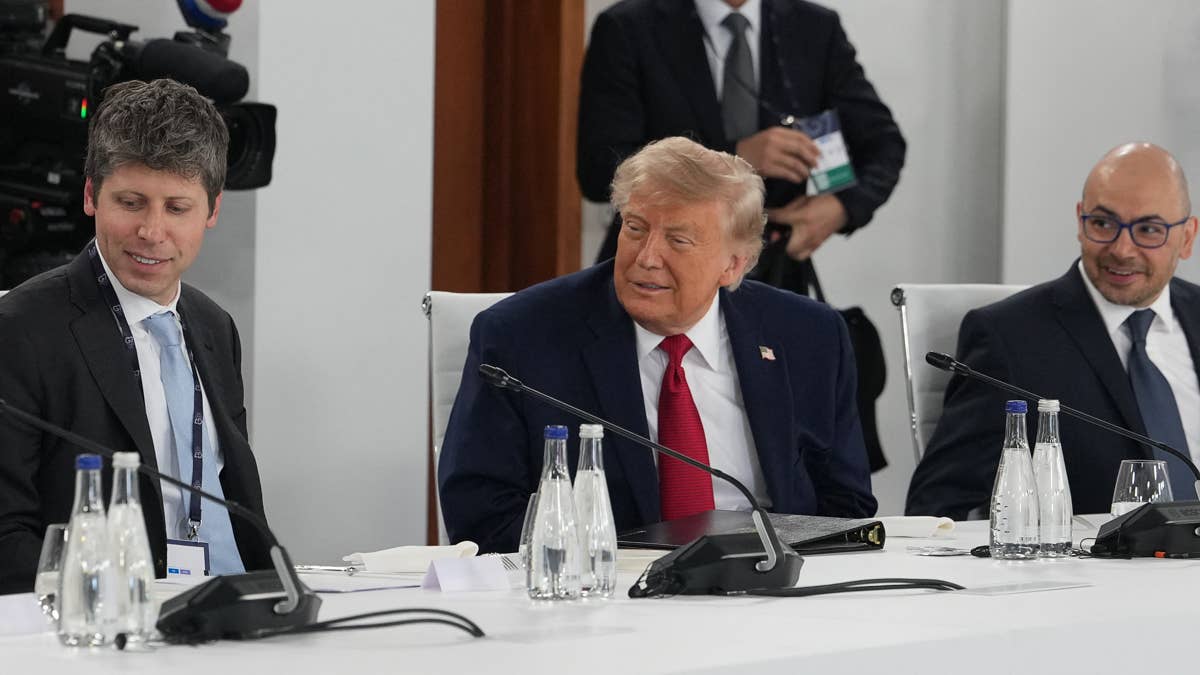 Zuckerberg took aim at rivals seeking tighter industry rules.
Julia/Getty Images
Washington weighs sanctions over Moonshot AI
Moonshot’s rise has intensified debate in Washington over whether Chinese developers are copying U.S. models or genuinely closing the gap through their own research.
Treasury Secretary Scott Bessent has threatened sanctions, and White House science and technology chief Michael Kratsios accused Moonshot of large-scale distillation against American systems, as TheStreet reported.
Kratsios went further, alleging that Moonshot acquired Nvidia GB300-equipped servers and accessed similar systems in Thailand, hardware banned from sale to Chinese firms under existing export rules.
GB300 chips belong to Nvidia’s Blackwell generation, the same silicon Washington has fought to keep out of Chinese hands. Moonshot has not publicly responded to either allegation.
Zuckerberg is not alone on these restrictions. Nvidia CEO Jensen Huang made a similar case days earlier, telling reporters the Chinese models are excellent and should be used, as TheStreet reported. More than 50 companies, including Meta and Microsoft, signed a letter opposing open-weight bans on July 24. Neither OpenAI nor Anthropic signed it.
Microsoft CEO Satya Nadella backed the same position in writing the same day, arguing open-weight models remain essential to a healthy AI ecosystem, a stance reported in a broader look at how Microsoft took sides in the policy fight just days before its own fiscal earnings.
What it means for Nvidia and Micron
The market reaction has been swift and uneven. Semiconductor stocks entered bear market territory after Kimi K3’s debut, with the Philadelphia Semiconductor Index falling more than 20% from its June peak, erasing roughly $3.3 trillion in market value, according to Bloomberg.
Strategists have warned it could fall further as investors reassess how much pricing power American chipmakers really hold.
Not every read on the memory side is bearish. Bank of America has stayed bullish on Micron. It argues that cheaper, competitive open models such as Kimi K3 could expand overall AI demand rather than shrink it, since businesses running models privately still need memory capacity to do it.
Zuckerberg is betting on openness. Washington hasn’t decided yet. And until it does, more models like Kimi K3 keep coming.
Related: Mark Zuckerberg, Microsoft CEO just made major AI decision