
I don’t allow my children to play video games. They don’t have smartwatches, iPads, or smartphones.
And yet, nearly every child in my son’s class has either a phone or a smartwatch. Is it hard to say no and explain that he can’t have something every other kid has?
💵💰Don’t miss the move: Subscribe to TheStreet’s free daily newsletter💰💵
Honestly, no — only because we believe that’s the right thing to do.
I am not trying to be too strict or rigid. I support providing them with basic knowledge of technology, but there should be balance.
Related: TSA bans these common children’s toys from airplanes
They should be able to play — really play — outside in the mud, or inside with simple non-electric toys. It’s then they actually use their mind, start to be creative, and feel the excitement of creating or discovering something new.
“Playing is essential for human brain development, much more than cognitive functioning. Much more important than learning facts. It’s play that helps the brain develop. We know that this is a scientific fact,” explains Gabor Mate, a Canadian physician and an expert on trauma, addiction, stress, and childhood development.
Today it seems harder than ever to foster kids’ healthy development, as we are surrounded by technology. And toy producers keep pushing upgrades that seem not only unnecessary, but sometimes even scary.
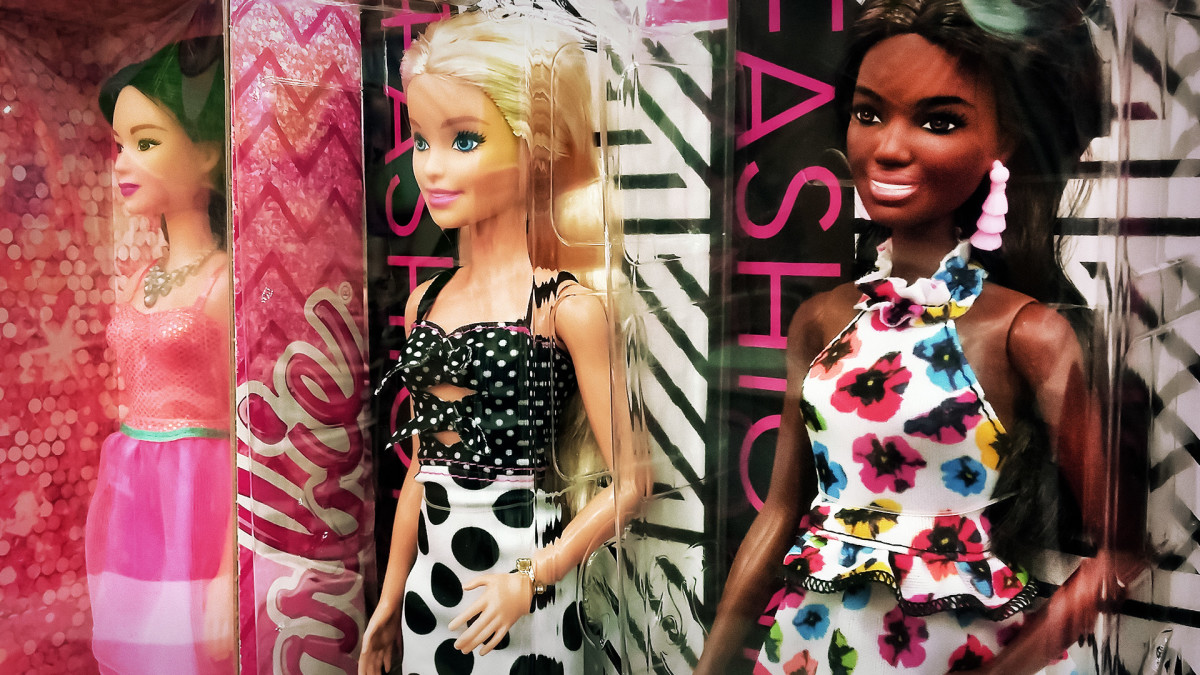 Barbie maker Mattel’s recent partnership with OpenAI is raising concerns among parents and experts on child welfare.
Image source: Shutterstock
Iconic toy giant’s partnership with OpenAI
Barbie maker Mattel (MAT) has been making toys for 80 years, during which it has become one of the leading global toy manufacturers, and the creator of franchises cherished by kids and families around the world.
On June 12, the toy giant unveiled a strategic partnership with OpenAI, the company behind ChatGPT. The idea behind the collaboration is to “bring the magic of AI to age-appropriate play experiences, with an emphasis on innovation, privacy, and safety,” reads the press release.
Related: Iconic toy store chain closing stores once again
This begs the question — is there such a thing as safe interaction between a child and a chatbot? I sincerely doubt it.
“Each of our products and experiences is designed to inspire fans, entertain audiences, and enrich lives through play,” Mattel Chief Franchise Officer Josh Silverman said. “AI has the power to expand on that mission and broaden the reach of our brands in new and exciting ways. Our work with OpenAI will enable us to leverage new technologies to solidify our leadership in innovation and reimagine new forms of play.”
Entertain, inspire, excite, bring new forms of play? Do children really need new forms of play?
More Retail:
- Huge retail chain suddenly closing hundreds of stores
- Major retailer scores huge benefit from Joann bankruptcy
- Home Depot, Target, Ulta and more strike back at retail crime
From my experience, you can just give children a little bit of sand, water, small branches, and some rocks. It would make them more than happy, playing for hours. More importantly, it would force them to be creative and develop their own exciting games.
Experts warn about the potential damaging effects of ChatGPT-powered toys
I am not alone in my concerns about the idea of ChatGPT-powered toys. Child welfare experts and advocacy groups such as Public Citizen are starting to warn about the potential dangers of this collaboration, writes The Independent.
“Children do not have the cognitive capacity to distinguish fully between reality and play,” Public Citizen Co-president Robert Weissman stated.
Weissman noted that risks include “real damage” to children, undermining social development and impacting the their ability to form peer relationships.
Even adults have been known to have dangerous “relationships” with AI chatbots. Why?
Aarhus University Psychiatry Professor Søren Dinesen Østergaard explains that “the correspondence with AI chatbots such as Chat is so realistic that one easily gets the impression that there is a real person at the other end.”
Now imagine the still-developing child’s brain in that position.
OpenAI CEO Sam Altman recently said his company focuses on safety measures to protect vulnerable users.
Related: Wendy’s adds old-school toys to take on McDonald’s Happy Meal
Another important question for parents and caregivers: Is it worth it? Are there any actual benefits of ChatGPT-powered toys for children, or just potential risks?
What’s more, if simple iPads and smartphones are known to threaten children’s development, what about a more powerful toy?
Remember, playing is an important part of growing up and helps your child explore the world.
While Mate did not comment on Mattel or its OpenAI collaboration, he talked about the general dangers of children’s dependence on technology.
“We’ve deprived our children of play. This [showing smartphone] is not play,” Mate said. “These kids with their iPads at one year old have been robbed of their capacity to play. And the companies design these gadgets to make these kids addicted.”
Mate concludes with the words of his friend, an endocrinologist, saying, “What we have here is hacking of the American mind.”
There are still no details on exactly how OpenAI’s technology will be integrated into Mattel’s new toys, but hopefully, it ends up being one of those experiments that gets scrapped before it even starts.
Related: Classic toy store chain files Chapter 11 bankruptcy