
When it was first founded in 1940 as a burger joint selling 15-cent sandwiches, it was hard to imagine that McDonald’s (MCD) would eventually grow into the world’s biggest fast-food chain.
But McDonald’s has carefully curated its offerings over the years, sticking to a robust menu of classics while finding ways to introduce new items that resonate with customers.
💵💰Don’t miss the move: Subscribe to TheStreet’s free daily newsletter💰💵
While McDonald’s has enjoyed staying far ahead of the competition for some time, that lead has certainly come with some challenges as well.
One of its biggest was the release of the 2004 documentary “Super Size Me,” in which indie filmmaker Morgan Spurlock ate McDonald’s three times a day for 30 days and experienced weight gain and worsening health.
The press the film drummed up caused McDonald’s revenue to dip that year, and six weeks after the film’s release, it removed its Super Size options from its menu.
Related: McDonald’s menu finally brings back most-wanted fan favorite
But the tarnish didn’t last long. McDonald’s continued to grow in the aftermath, proving it was capable of navigating even the harshest headwinds, which it was certainly forced to face again when the Covid pandemic hit in 2020.
Now it will need to batten down the hatches, as new trends are starting to affect its bottom line — not to mention customers’ perception of the brand.
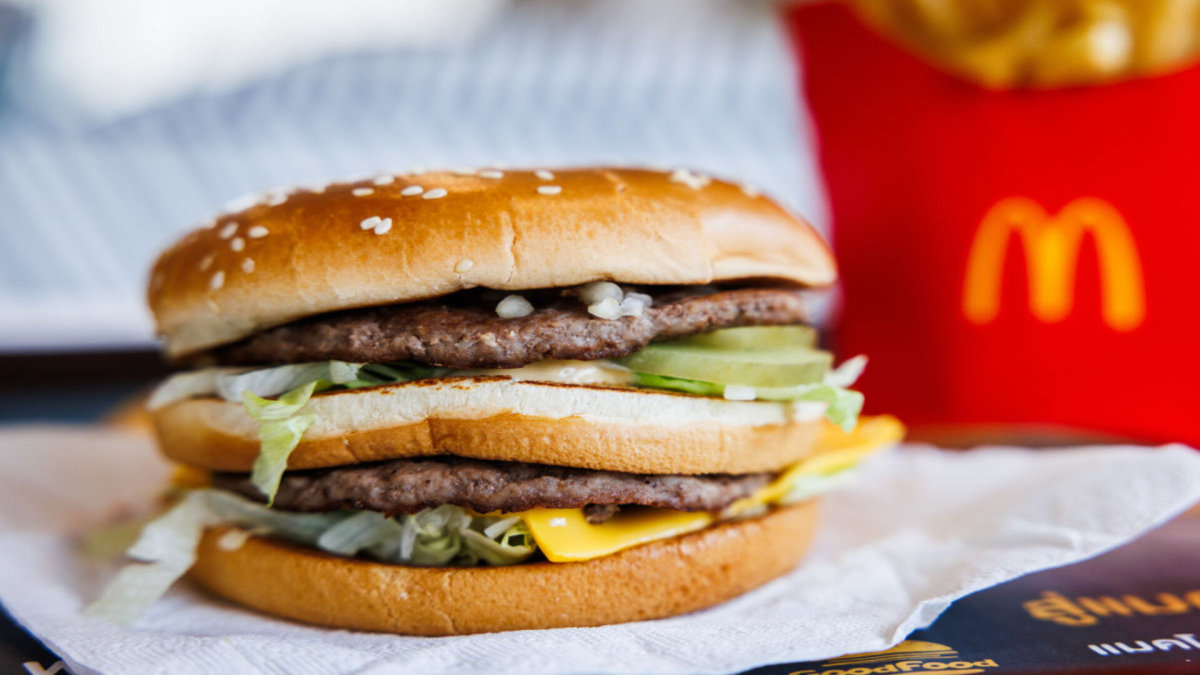 The famed Big Mac is having a bit of a crisis.
Image source: Lauren DeCicca/Getty Images
McDonald’s falls down
On June 10, finance broker Redburn Atlantic downgraded McDonald’s from a buy to a sell rating, making a concerning prediction about customer behavior in the current climate.
“As more Americans turn to GLP-1 drugs like Ozempic to lose weight, McDonald’s could see as much as a $428 million annual impact to revenue, representing about 1% of system sales,” Redburn analysts Chris Luyckx and Edward Lewis wrote in a note.
More Restaurants
- Beloved Mexican restaurant closing iconic location after 63 years
- Major restaurant chain quietly closes several locations
- Iconic restaurant closing its doors after 32 years
“A 1% drag today could easily build to 10% or more over time, particularly for brands skewed toward lower-income consumers or group occasions.”
Related: McDonald’s analyst grills new stock price target on McCrispy reaction
Redburn Atlantic is not the only business to knock McDonald’s down. The fast-food giant has also earned hold-equivalent ratings at Morgan Stanley, Loop Capital, and Erste Group.
McDonald’s worst quarter since Covid
McDonald’s reported troubling news during its first earnings call of 2025, including the second quarter of sales declines in a row.
The company earned $1.87 billion in net revenue in Q1, which is a decline from $1.93 billion made in the same period of 2024.
Same-store sales also dropped by 3.6%, the biggest drop the fast-food chain has seen since the pandemic. McDonald’s has also seen a pullback in business from lower-income customers who are curtailing unnecessary spending.
McDonald’s has adjusted its strategy to handle the tone of the current climate, rolling out big changes to its value menu in January with a focus on app-exclusive offers.
But as McDonald’s prices have risen 40% since 2019, for some, it’s still simply too expensive to eat there.
CEO Chris Kempczinski addressed the elephant in the room on a call with analysts, saying, “geopolitical tensions added to the economic uncertainty and dampened consumer sentiment more than we expected.”
However, Kempczinski remained positive, saying in a release that while consumers are “grappling with uncertainty,” he remains optimistic in the company’s “ability to navigate even the toughest of market conditions and gain market share.”
Related: McDonald’s announces major store change to win back customers