
When I first read that Mercedes-Benz would replace every high-voltage battery pack in more than 12,000 EQB electric SUVs, I knew this recall was different from the usual software patch story.
In formal filings, Mercedes told the National Highway Traffic Safety Administration that “a risk of fire of the high-voltage battery cannot be ruled out” in certain EQB vehicles because of “deviations in the supplier production process” at its battery partner.
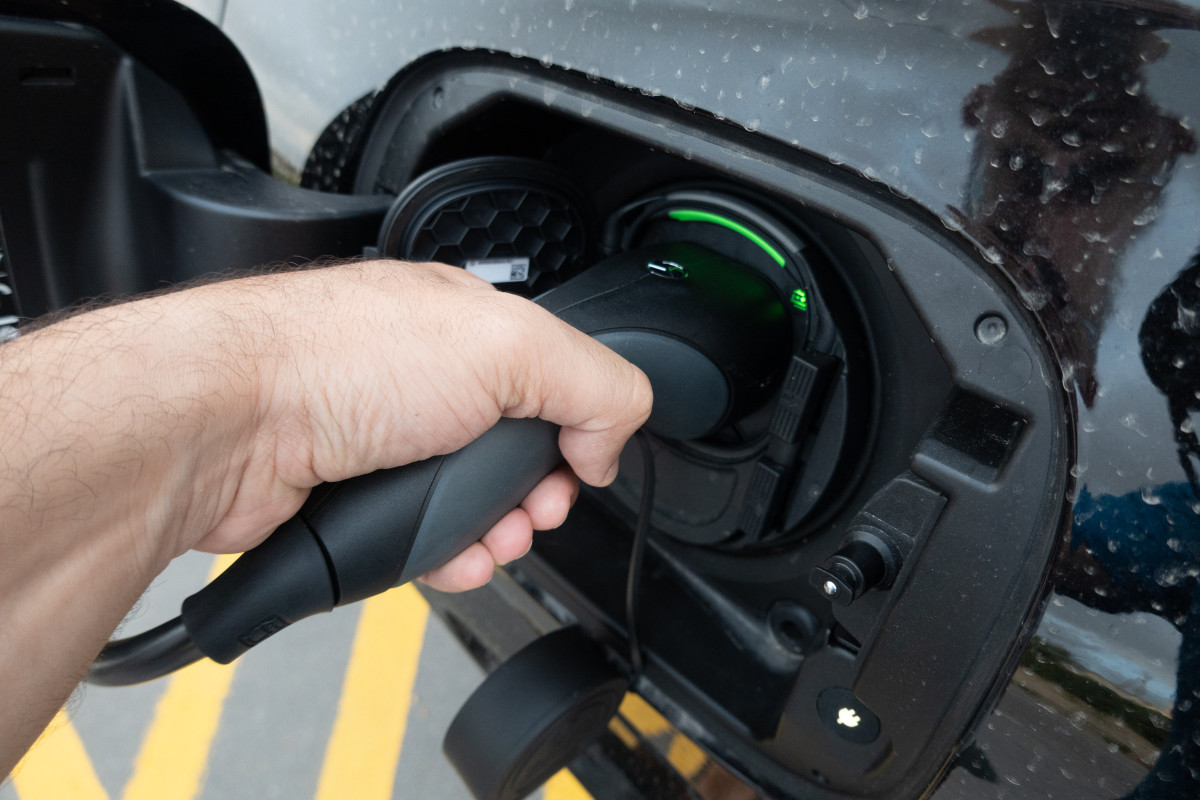 Mercedes will replace the EQB’s high-voltage battery because it poses a fire risk.
Photo by NurPhoto on Getty Images
What the recall involves and who is affected
Here is what is happening with the EQB recall, in plain terms:
- Affected vehicles
2022–2024 EQB 300 4Matic and EQB 350 4Matic.
2023–2024 EQB 250+.
- The defect
Certain early production battery cells from supplier Farasis Energy are “less robust” and can develop internal short circuits under stress.
An internal short in a high-voltage cell “might lead to a thermal event” and increase fire risk while parked or driving.
- Interim safety advicefor owners
Park outside and away from buildings and other cars.
Limit charging to a maximum of 80% state-of-charge until the pack is replaced.
- Final fix Dealers will replace the high-voltage battery pack in each affected EQB with a more robust unit at no cost to owners.
More Automotive:
- Tesla investors may miss game-changing move
- Key auto parts and services company files Chapter 11 bankruptcy
- Top-rated analyst drops curt 8-word take on Tesla stock
Mercedes is aware of at least two fire incidents in the United States tied to the issue. Vehicles produced after July 31, 2024 use revised supplier processes that are not part of the recall, according to Drive Tesla Canada.
How the defect started upstream in the supply chain
The root cause of this recall sits upstream in the battery plant, not in the dealer service bay. The key phrase is “deviations in the supplier production process,” which affected certain cells produced by Farasis Energy in Ganzhou, China, according to NHTSA’s detailed recall report. Those deviations left some cells more vulnerable to stress over time and at high state-of-charge, which is why the risk rises when the pack is heavily charged.
Mercedes told regulators that “battery cells from an early production period may be less robust against stress factors over time,” and that under specific production and use conditions “an internal short circuit of a battery cell in the high-voltage battery might lead to a thermal event,” as seen in the Washington Times’ summary of the filing.
Related: White House hands environmentalists a win with latest EV rule change
To understand how those supplier “variations” can turn into a multi-country recall, I spoke with Enosh Levi, vice president for product management at Lumana, a company that builds AI-powered visual quality systems for factories. He told me this is exactly the kind of problem his team tries to catch before a pack ever leaves the plant.
“If the root cause was a deviation in the supplier’s production process, that’s exactly where AI-powered video intelligence could have helped,” said Levi, who works with manufacturers on computer-vision-based quality controls. He told me Lumana would deploy cameras across critical battery assembly steps and train AI models to understand what “correct” execution looks like, from component placement to weld alignment and enclosure sealing.
The goal is continuous verification, not just end-of-line checks, according to Levi. “If a step is skipped, performed incorrectly, or falls outside of normal parameters, the system would flag it in real time before the unit moves further down the line,” he said. In his view, that kind of automated oversight lets manufacturers isolate defects, pause production if needed, and keep bad batches from scaling into full-blown recalls.
What AI can and cannot do in battery testing
I also asked Levi how a system like Lumana’s fits alongside traditional battery testing, which still relies heavily on lab-based diagnostics and accelerated aging. He was careful to draw a line between the two.
“Lumana wouldn’t replace electrochemical inspections or accelerated-aging tests,” Levi told me, adding that “those require specialized lab equipment and battery diagnostics.” He said the company’s value is in making sure every manufacturing step leading up to those tests is executed exactly as designed.
“If cell stacking, sealing, welding, or handling procedures deviate from the specification, our AI models can detect them in real time and flag them before those cells move forward,” he said. Levi told me many long-term stress weaknesses can be traced back to “small process inconsistencies,” and he described Lumana as an “always-on, intelligent set of eyes ensuring procedural integrity across the production floor.” In that framing, the lab tests still matter, but they are no longer the only safety net.
Why software-only fixes were not enough for EQB
One of the more striking pieces of this story is that Mercedes had already tried to fix the same defect with software. The company previously launched campaigns 25V050 and 25V894 that used software updates to monitor battery behavior and limit charging levels, as highlighted by the Washington Times.
NHTSA later warned those affected vehicles “feature battery cells that are considered ‘less robust’” and that the issue arises from “deviations in the supplier production process,” despite earlier attempts to manage the risk via code, according to Forbes.
In the latest filing, Mercedes told NHTSA that the effectiveness of the existing software update “cannot be fully confirmed for all affected vehicles” and explicitly labeled the earlier campaigns as “failed remedies,” according to the Washington Times. That is unusually blunt language for a recall document.
Related: Toyota’s $26 billion deal could be hurt by latest activist move
I asked Levi what would have pushed him to move earlier from software monitoring to full hardware replacement if his systems had been in play. “If software remedies were failing, the key signal wouldn’t just be battery telemetry — it would be recurring real-world patterns,” he told me.
He said Lumana could connect cameras at dealerships and service centers, identify EQB vehicles via license plate recognition or visual attributes, and then track repeat visits after a software update. “If the same VINs or model cohort consistently return within a short window after a ‘fix,’ that recurrence rate becomes a clear operational threshold that something systemic hasn’t been resolved,” Levi said. When those repeat incidents rise above an expected baseline, he told me that is a strong indicator the issue may be hardware-related rather than software-correctable, and a trigger to push for full pack replacement sooner.
What owners are being told to do right now
For EQB owners, the recall has immediate, practical consequences. NHTSA’s recall notice instructs owners to park their vehicles outside and away from structures and to limit charging to 80 percent until the high-voltage battery is replaced.
If I owned one of these SUVs, I would:
- Run my VIN through NHTSA’s online recall tool to confirm coverage.
- Follow the outside-parking and 80 percent charging guidance until the replacement is done.
- Call my dealer and ask when they expect to have replacement packs in stock and how they plan to schedule appointments.
What this means for future EV buyers
From my perspective, the EQB recall is not just a Mercedes story. It is part of a pattern where EV makers discover that software tools and traditional sampling are not always enough when something goes wrong at the cell level. GM’s earlier Bolt EV recall and other battery campaigns have shown the same thing.
Levi told me there are three questions he believes every EV shopper should ask before putting a family into a new electric vehicle.
“First, shoppers should ask: How does the manufacturer verify that every battery is built exactly to specification?” he said. He told me buyers should listen for details about real-time quality controls, visual verification and traceability systems, not just vague assurances.
“Second, ask: What does your battery testing and stress-validation program look like?” Levi said, pointing to high state-of-charge testing, accelerated aging and clear escalation paths for anomalies.
“Third, understand the brand’s recall history and response speed — not whether issues have ever occurred, but how quickly patterns are identified and resolved,” he told me.
When I look at the EQB recall through that lens, I see a painful but important reset. Mercedes and Farasis clearly missed something in early production. Once real-world incidents made that visible, though, the company moved from software to hardware and accepted the cost of doing it right. If other automakers use this as a cue to tighten supplier oversight and invest in earlier detection tools, this episode could ultimately make future EVs safer, even for drivers who never buy a Mercedes.