
A New Mexico jury ordered Meta (META) to pay $375 million in civil penalties on March 24. The verdict found the company willfully violated state consumer protection laws by misleading the public about the safety of its platforms and failing to protect children from predators on Facebook and Instagram.
It is the first time a U.S. state has prevailed at trial against a major tech company over claims it harmed children. The verdict came after a six-week trial in Santa Fe. Jurors found Meta liable on all counts, including for willfully engaging in “unfair and deceptive” and “unconscionable” trade practices.
Meta said it plans to appeal. “We respectfully disagree with the verdict and will appeal,” a company spokesperson said. “We work hard to keep people safe on our platforms and are clear about the challenges of identifying and removing bad actors or harmful content.”
What prompted the Meta child safety lawsuit?
New Mexico Attorney General Raúl Torrez filed the lawsuit in 2023 following an undercover investigation. State investigators created decoy accounts on Facebook and Instagram posing as users younger than 14. Those accounts were sent sexually explicit material and contacted by adults seeking similar content.
The operation led to arrests. Two men were apprehended at a motel where they believed they would be meeting a 12-year-old girl based on conversations they had with the decoy accounts. The undercover evidence formed the foundation of the state’s case against Meta.
More Tech Stocks:
- Morgan Stanley sets jaw-dropping Micron price target after event
- Nvidia’s China chip problem isn’t what most investors think
- Quantum Computing makes $110 million move nobody saw coming
Prosecutors also presented internal Meta documents and testimony from former employees. That evidence showed company staff and outside child safety experts had repeatedly raised alarms about predator activity. Those warnings were not acted on.
The jury was asked to consider whether Meta had misled users through specific public statements from CEO Mark Zuckerberg, Instagram head Adam Mosseri, and Meta’s global head of safety.
What the jury decided and what comes next for Meta
Jurors found thousands of individual violations of New Mexico’s Unfair Practices Act. The law carries a maximum penalty of $5,000 per violation. At that maximum, across that many violations, the total came to $375 million.
Prosecutors had sought more than $2 billion, and the jury landed well below that. But given how the law is structured, $375 million represents the ceiling for the violation count the jury settled on.
Juror Linda Payton said the jury reached a compromise on the estimated number of teenagers affected, while opting for the maximum penalty per violation. “I thought each child was worth the maximum amount,” she said.
The verdict does not immediately force Meta to change its practices; that comes next.
A second phase of the trial begins May 4, where a judge will consider the state’s public nuisance claim. That phase could result in court-ordered platform changes, including age verification requirements and algorithm modifications.
How Meta and investors are reacting to the court verdict
Despite the size of the penalty, Meta’s stock rose roughly 5% in after-hours trading following the verdict. That reaction reflects the market’s view that $375 million is manageable for a company valued at approximately $1.5 trillion.
The financial hit is real but not existential.
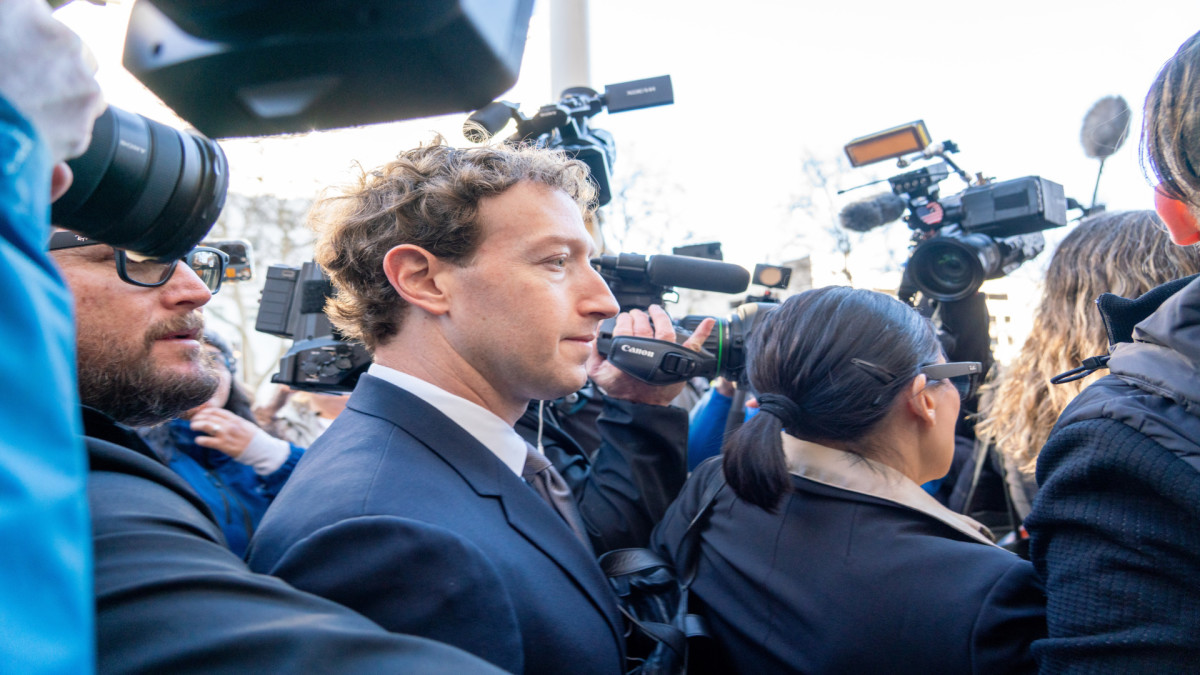 In the child safety case against Meta, New Mexico jurors found thousands of individual violations of the state’s Unfair Practices Act.
Grillot/Getty Images
The legal risk is a different matter. New Mexico’s case is one of hundreds of lawsuits Meta is facing over the safety of young users. More than 40 state attorneys general have filed suits against the company. The central claim in most of them is that Meta deliberately designed addictive features that harmed children’s mental health. Several of those cases are headed to trial later this year.
A separate trial is already underway in Los Angeles. Meta and YouTube are defendants in a case brought by a plaintiff who claims she became addicted to social media as a child. She says she suffered anxiety, depression, and body-image issues as a result. A jury in that case was still deliberating as of March 24.
Why the Meta verdict matters beyond the dollar amount
The significance of this case is not the $375 million. It is the precedent. Several things now shift as a result of this verdict.
- State law as a weapon. New Mexico succeeded by sidestepping federal protections and using its own consumer protection statute. Other states can now follow the same playbook. More than 40 AGs already have active suits.
- Internal documents are on the record. The trial surfaced internal communications showing Meta employees raised concerns that were not acted on. Those documents will be cited in future cases.
- The injunction phase may matter more. If the judge orders platform-wide changes in May, the operational and financial impact could dwarf the $375 million penalty. Age verification and algorithm audits would affect the core product.
- The comparison to Big Tobacco is no longer just rhetoric. Legal experts and prosecutors have drawn the parallel explicitly. New Mexico just became the first state to win at trial, which is precisely where the tobacco cases turned.
The verdict is “a historic victory for every child and family who has paid the price for Meta’s choice to put profits over kids’ safety,” Torrez said.
“Meta executives knew their products harmed children, disregarded warnings from their own employees, and lied to the public about what they knew.”
Meta maintains it spends heavily on safety and takes the issue seriously. The jury in Santa Fe disagreed.
Related: Meta layoffs hint at an income threat AI could worsen