
The scale of Microsoft’s latest connectivity numbers stopped me in my tracks before I even reached the AI details. The company now says it has extended internet connectivity to more than 299 million people around the world, topping its pledge to reach 250 million by the end of 2025, including over 124 million people across Africa.
That update appears in a new Feb. 24 blog post and is immediately framed not as a victory lap, but as the moment to pivot from basic access to what Microsoft calls “AI‑ready communities.”
The post, signed by vice chair and president Brad Smith, argues that getting people online is no longer enough in an economy that is being reshaped by generative AI. Microsoft’s own “2025 AI Diffusion Report” is cited to show how quickly AI is spreading and how sharply it is reinforcing divides between the Global North and Global South, including a finding that generative AI adoption in Zambia rises from 12% nationwide to 34% among people who already have internet access.
That kind of gap sets the stage for the move Microsoft is making now: pairing connectivity with satellites, cloud infrastructure, local partners, and skills training so that people in rural and low‑income communities can do more than just load web pages.
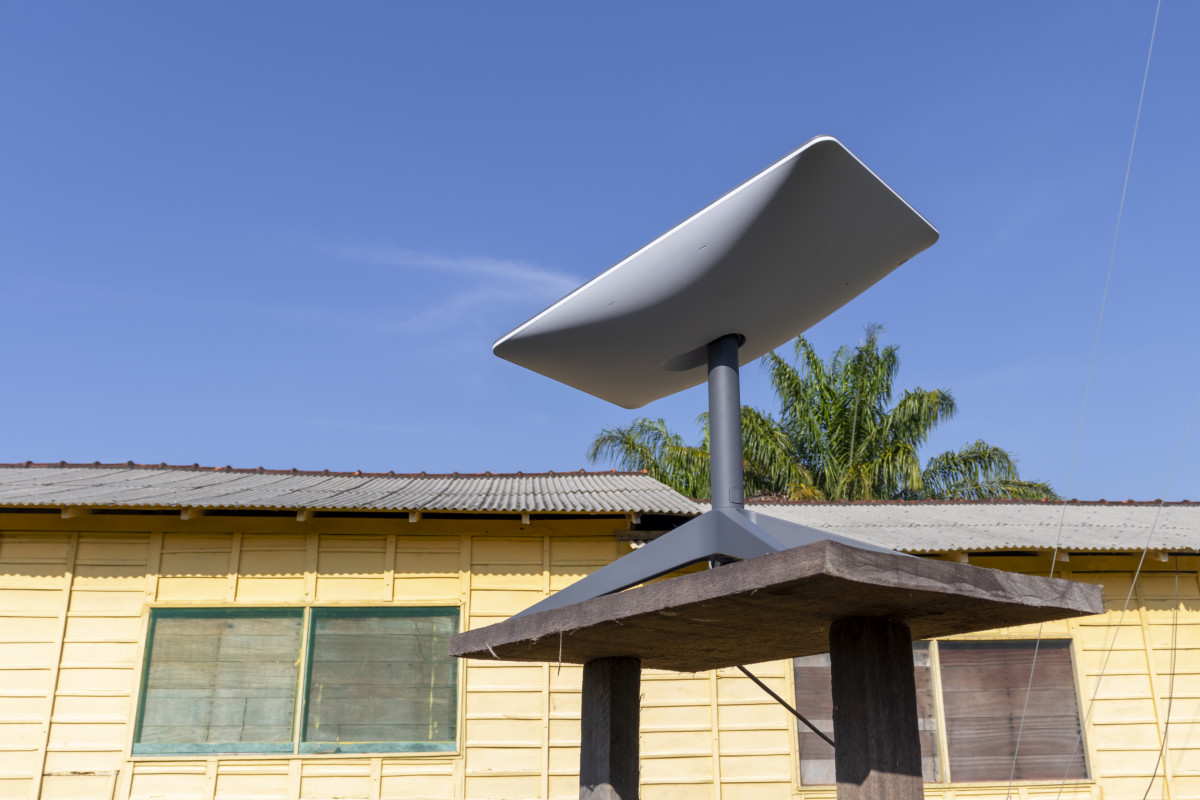 Kenya becomes the early proving ground for Starlink and Microsoft’s partnership.
Photo by Tarcisio Schnaider on Getty Images
How Starlink fits into Microsoft’s next phase
The most eye‑catching piece of this plan is a new collaboration with SpaceX’s Starlink program, which Microsoft describes as one option in a toolkit designed to reach places that fiber and mobile networks have not been able to cover.
The company says Starlink’s low‑Earth‑orbit constellation will help extend both backhaul and local access in “hard‑to‑reach rural and agricultural communities” where traditional infrastructure alone cannot meet demand.
Related: Elon Musk shoots down a big Starlink hardware rumor
This is not Microsoft’s first contact with Starlink. Back in 2020, Microsoft announced that it would connect its Azure cloud to Starlink to serve customers in remote or hybrid environments, a move CNBC framed as a way to provide cloud computing capabilities “in challenging environments, particularly in remote locations,” rather than just selling satellite internet as a consumer product.
What feels different now is that Microsoft is placing Starlink inside a broader community‑based access model, instead of treating satellite as a stand‑alone answer.
Recent reporting shows why Microsoft might be comfortable leaning more on Starlink’s network. SpaceX’s “cellular Starlink” upgrades aim for speeds of up to 150 Mbps per user, suggesting the service is being engineered for higher‑bandwidth applications that go well beyond basic browsing, PCMag wrote.
If those speeds can be delivered reliably at scale, they could support AI‑enabled tools such as remote diagnostics, precision agriculture services, and cloud‑based education platforms in places that have never had robust backbones.
More Streaming:
- Paramount Warner Bros. hostile bid has a catch for cable networks
- Apple TV adds key feature Netflix dropped
- Facebook makes daring move to challenge Disney, Netflix
Here is how I see the Starlink piece changing the equation for rural communities:
- It extends backhaul into areas where fiber would be too expensive or slow to deploy, which matters for sparsely populated farming regions.
- It raises the performance ceiling for what rural users can realistically do online, including using AI‑powered tools that need low latency and decent upload speeds.
- It gives local ISPs another wholesale option, rather than leaving them dependent on aging geostationary satellites or fragile microwave links.
Kenya becomes the early proving ground
The clearest example of how this partnership might work in practice is in Kenya. Microsoft says it is working with Starlink and local internet service provider Mawingu Networks to connect 450 community hubs in rural and underserved regions, as seen in the blog post.
Those hubs include farmer cooperatives, aggregation centers, and digital hubs, and the company presents them as multi‑purpose access points that combine connectivity with digital skills training and AI‑enabled services.
When I read that section, what stood out to me was the way Microsoft links connectivity directly to outcomes like higher agricultural productivity and better access to markets. The company says the hubs are intended to “boost agricultural productivity, market access, and the uptake of digital and AI‑enabled services in these regions.”
From a policy and development angle, the Kenya pilot also bundles several pieces that often get handled separately:
- Shared connectivity hubs that can serve schools, clinics, co‑ops, and small businesses, rather than isolated household subscriptions.
- Training programs that aim to build basic digital and AI literacy so communities can actually use the tools on offer.
- Local partners like Mawingu that understand the regulatory landscape and can handle on‑the‑ground operations.
Why Microsoft says access alone is no longer enough
A big chunk of the blog is devoted to explaining why Microsoft is widening the frame beyond connectivity. The company argues that digital access now sits alongside reliable electricity, water access where relevant, affordable devices, local language tools, and basic digital skills as part of a “Community First AI Infrastructure” framework that communities need if they are going to participate in the global AI economy.
It explicitly links this work to its “AI Access Principles,” which were first detailed around Mobile World Congress 2024 and position electricity and connectivity as foundational to any responsible AI rollout.
From my point of view as a business reporter, this is both a social and strategic play. On one hand, Microsoft notes that 2.2 billion people remain offline and warns that millions more face barriers related to affordability, reliability, and a lack of relevant services, which risks widening inequalities “as AI becomes more central to how economies grow and societies function.”
On the other hand, Microsoft also presents this bundle of connectivity, energy, devices, and skills as a way to help governments and development finance institutions design programs that channel investment through Azure, cloud‑based AI services, and local partners aligned with Microsoft’s ecosystem.
Outside observers have flagged the high stakes involved. Microsoft plans to invest $50 billion by 2030 to expand AI access in the Global South, saying the company laid out a five‑part program to build infrastructure, empower people through tools and training, strengthen multilingual AI, foster local AI innovation, and measure adoption, according to Reuters.
The same report noted that this push comes on top of tens of billions of dollars already earmarked for AI‑enabled data centers, raising questions about energy demand, environmental impact, and new dependencies on Big Tech.
What this could mean for rural users and investors
For people in rural communities, the upside Microsoft is promising is a chance to plug into the AI economy instead of watching it happen from afar. The company’s own figures show how internet access changes the adoption curve: in Zambia, generative AI usage nearly triples among those who are already connected.
If pilots like the Kenya hubs can be made affordable and durable, they could become templates for similar efforts in other parts of Africa, Latin America, and South Asia, especially in regions where there is already some mobile coverage but no consistent broadband capacity or local training.
For investors and policy watchers, I see a few themes emerging from this plan. Microsoft is explicitly tying long‑term connectivity spending to AI revenue opportunities, effectively arguing that building AI‑ready communities now will pay off later as more workloads flow through Azure and related services.
Starlink, for its part, gets validation as an enterprise‑grade partner with development impact, not just a consumer broadband provider for rural households and recreational vehicles.
Related: Musk just flipped Starlink’s free internet switch in a tense zone