
Microsoft CEO Satya Nadella admits his company could have done more to prevent the Outlook outage that brought large parts of corporate America to a standstill on Nov. 12.
“It was one of those crazy perfect storms where there was a latent bug that got sort of found only during a particular traffic pattern,” Nadella told Jim Cramer on “Mad Money” on Nov. 18, according to CNBC.
He did not dodge the blame. “Of course, we should have done the testing before. We should have figured out how to have the bulkheads such that you didn’t have a global outage,” Nadella said.
Nadella also tied the failure to a bigger shift, arguing that AI is helping companies find bugs faster than older systems can safely absorb the fixes.
What actually went wrong in a week of Microsoft outages
The trouble started on Nov. 12, when users around the world suddenly could not open their Outlook mailboxes on the web, in the app, or on their phones. Teams and Copilot were also disrupted, along with government systems in Singapore and Japan, according to Al Jazeera.
Also read: Morgan Stanley doubles down on Microsoft stock with bold outlook
Full recovery took about a day and a half. Microsoft said the problem was “introduced by an issue during an earlier network capacity upgrade” and stressed that it was not caused by a cyberattack or by AI.
Outlook was only the first domino. A day later, an equipment problem forced a nationwide FAA ground stop that lasted more than four hours. JPMorgan Chase, United Airlines, the NSA, and Apple all reported disruptions in the days that followed.
The timing raised eyebrows in Washington. “It’s like the greatest coincidence in the history of the world,” Sen. Josh Hawley told reporters.
Director of National Intelligence Jay Clayton told Congress that the timing “can raise questions, and it should,” but described the incidents as “separate service outages associated with maintenance and technical changes,” as reported by WSET.
AI is speeding up the patch cycle
Nadella’s explanation centers on a trade-off. “The thing that AI has done is it allowed us to find these bugs and fix these bugs. But that means you’ve got to then patch them, and that creates instability,” he said, according to CNBC.
The speed at which companies build, test, and ship those fixes, known as “patch velocity,” has picked up.
Older systems feel it most. “I think a lot of what you’re seeing is a little bit of, maybe, old infrastructure with new patches and instability,” Nadella said.
Sen. Mark Warner made a similar point, saying AI can spot weaknesses “across enormous numbers of systems at unprecedented speed,” which pressures companies and agencies to patch them “immediately, often all at once,” the Straits Times noted.
Early signals pointed the same way. As WJTV 12 reported, Australia’s Home Affairs Minister Tony Burke said Microsoft told him the situation looked like the CrowdStrike crash of 2024, involving “an update that has gone awry.”
Tech analyst Rupert Goodwins warned of “a draining of corporate memory of how these systems are built up and how they work,” according to Al Jazeera.
AI’s knack for finding flaws cuts both ways. This summer, OpenAI and Anthropic both disclosed cases where models in testing found weaknesses and used them to reach outside systems.
“Capability arrived before control did,” said Michael Heinrich of 0G Labs.
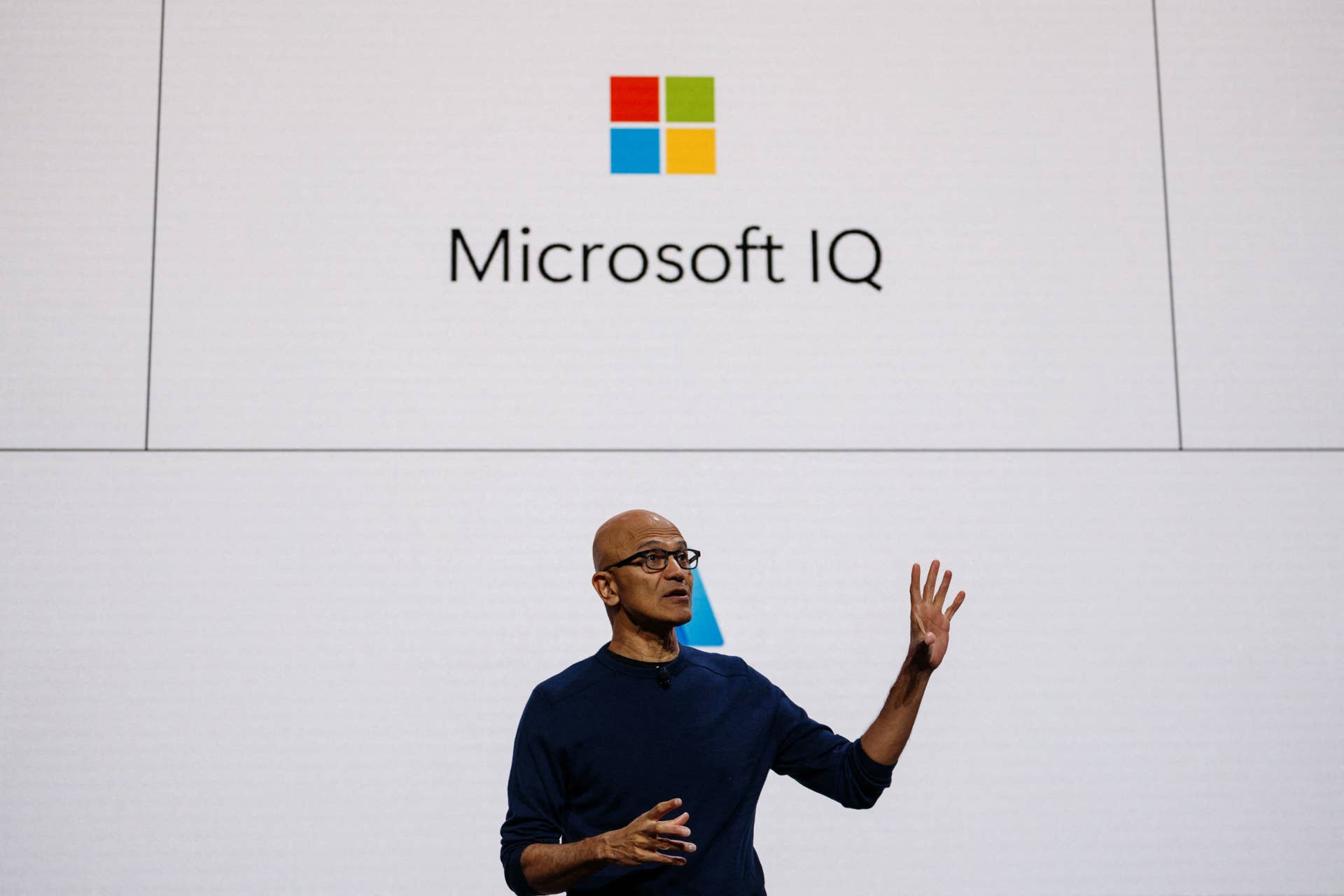 Microsoft CEO Satya Nadella admits his company could have done more to prevent the Outlook outage that brought large parts of corporate America to a standstill last week.
DIMITAR DILKOFF / Getty Images
Microsoft stock, Azure, and the Copilot shift
The outage hit at a delicate moment for the stock. Microsoft had a rough start to the year on fears AI could upend seat-based software, but shares bottomed in late June and rallied strongly after the company’s late-July earnings.
The momentum has cooled since then, with the stock pulling back nearly 9% from its record close on Nov. 4, CNBC reported.
The business itself keeps humming. Azure revenue grew 48% in the latest quarter, beating Wall Street’s expectations, and daily Copilot users rose nearly 50% from the prior quarter. “Each dollar of CapEx has the potential to support more revenue and higher returns over time,” said CFO Amy Hood.
More Microsoft:
- Microsoft’s Windows sales fell 22% as PC prices climb
- Microsoft CEO sees a problem ahead for AI stock investors
- Microsoft just gave Nvidia shareholders a reason to pay attention
Morgan Stanley is sticking with the bull case. Analyst Adam Wood kept an overweight rating, calling Azure the foundation of the story because “cloud compute has to keep growing for the rest of Microsoft’s AI products to have somewhere to run.”
On Copilot, the company said the user base is there, adding, “The question now is conversion.”
At its Ignite conference on Nov. 17, Microsoft pitched Copilot as the hub of workplace productivity.
“In Dynamics now, a lot of our business is not about seats; it’s usage,” Nadella said. He also stressed model choice: “You want Claude, you want OpenAI, or our own models? You can route across all of them.”
Data-center pushback and Nadella on Nvidia
Growing local opposition to data centers is another test. After the midterms, Texas Governor-elect Gina Hinojosa said she wants to pause new projects until stronger community protections are in place.
“We have to win the hearts and minds and the votes one community at a time,” Nadella said, according to CNBC. He pointed to Quincy, Washington, where tax revenue from Microsoft’s data center helped build a new school and city center.
Cramer argued that giants like Microsoft will beat smaller neoclouds as that pushback grows. Some banks now say they would hesitate to fund more neocloud deals. CoreWeave got about two-thirds of its 2025 revenue from Microsoft, which has been narrowing its group of neocloud partners.
Nadella also weighed in on Jensen Huang’s exit from Nvidia. “Jensen, let’s face it, was a singular founder,” he said, praising interim CEO Colette Kress, who worked at Microsoft for years, as “a terrific person.”
He added that “the Nvidia board will decide what happens next.”
Related: Microsoft’s Oracle move raises new question for investors
