
For about three years, Oracle servers helped power the AI version of Microsoft’s Bing. Now, Microsoft is letting the arrangement lapse and has recently been switching off the rented capacity.
It was one of the more unusual partnerships of the early AI rush.
The timing could hardly be worse for Oracle. The news landed a day after the Nasdaq dropped more than 5% and slipped into a correction on Nov. 5, as investors bailed out of AI names on fears of slower data center construction. A customer walking away from old hardware is exactly the kind of story bears have been waiting for.
Why Microsoft walked away from the Bing deal
The deal itself goes back to 2023, when Oracle announced a multi-year agreement for Microsoft to use its cloud AI infrastructure for the AI-assisted Bing, Bloomberg reported. Financial terms were never disclosed. At the time, it looked like a rare case of a cloud giant (Microsoft) renting from a direct rival (Oracle) because it simply could not get enough chips.
Also read: Microsoft just gave Nvidia shareholders a reason to pay attention
Three years on, the math looks different. People familiar with the matter said the capacity no longer met Microsoft’s evolving needs, and the Oracle hardware ran on older Nvidia chips. Microsoft did not immediately respond to a request for comment.
This is not the first time talks between the two have hit a wall. In June, a separate leasing deal that one source said could have been worth more than $3 billion reportedly fell apart over security and compliance concerns, Reuters reported, citing Business Insider. Oracle called the details inaccurate and described Microsoft as both a partner and a customer.
The market reaction on Nov. 6 was messy. Oracle traded down about 2% around midday after sliding nearly 10% over the previous few sessions, and Microsoft also slipped. Both names were already bruised from earlier in the week, when the midterm sweep stirred up fears of tougher scrutiny for the AI industry.
Oracle’s case for older GPUs
Oracle is pushing back hard on the idea that ageing chips are dead weight. A company spokesperson said demand for its AI infrastructure “remains strong, including for earlier-generation GPUs.”
The company has numbers it likes to point to. In September, Oracle said it was renewing contracts for four-year-old GPUs at a 20% premium to the original deal price, according to Bloomberg. If that holds, losing one tenant on older hardware may matter less than the headline suggests. It is a bold claim in an industry where most people assume chips lose value quickly, and Oracle will now have to keep proving that its chips are still dependable and in demand.
There is also a large pile of signed contracts behind the stock. Oracle’s remaining performance obligations reached $664 billion, and the company booked more than $30 billion in new AI cloud contracts during the quarter, as reported by TheStreet.
The catch is who sits behind that backlog. Reports suggest almost half of Oracle’s remaining performance obligations come from a single agreement with OpenAI. That leaves Oracle leaning heavily on one customer at the same moment its oldest gear is losing a big-name renter, which is not a comfortable spot for a company still spending heavily.
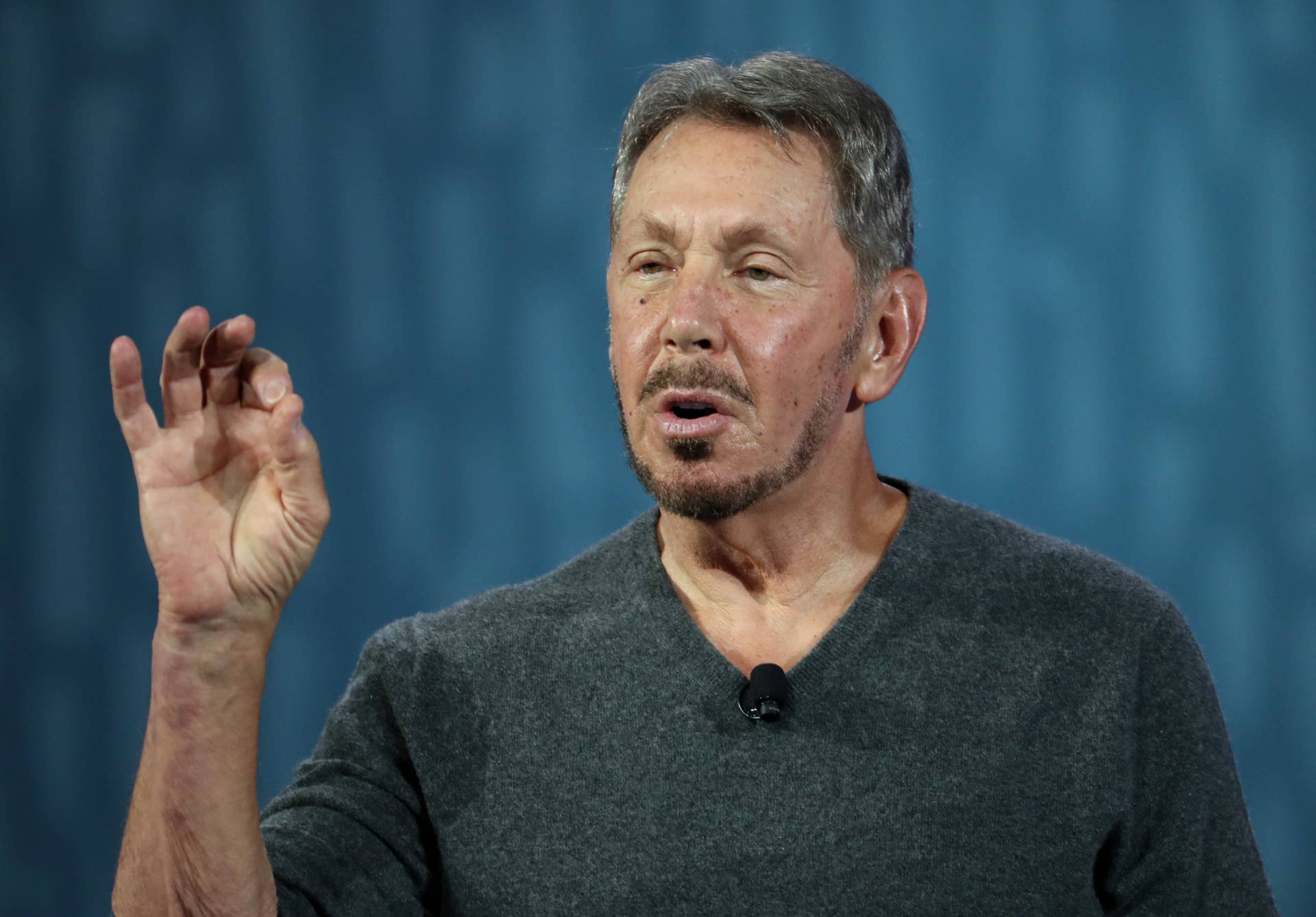 For about three years, Oracle servers helped power the AI version of Microsoft’s Bing.
Justin Sullivan / Getty Images
The bill for Oracle’s buildout keeps growing
Oracle’s balance sheet is where the worry really starts. S&P cut the company to BBB-, one notch above junk, in July, and its reported debt stood at about 4.3 times EBITDA, while peers like Alphabet, Amazon, and Microsoft sat under 1 times, Reuters reported.
The funding needs have not gone away. On Oct. 28, Oracle committed to capping new capital raises through fiscal 2030 at $20 billion, not counting debt refinancing. Five days later, on Nov. 2, it filed to raise the full amount through a mix of stock and senior notes, and the shares fell sharply that day, according to Oracle.
There is also a timing mismatch that the Microsoft news puts in sharper focus. Oracle’s data center leases run 15 to 19 years, while many of its customer contracts last only up to five, and some of those leases have yet to even start. If and when a customer decides older chips no longer fit its needs, Oracle is still carrying the building.
More Microsoft:
- Microsoft’s Windows sales fell 22% as PC prices climb
- Microsoft CEO sees a problem ahead for AI stock investors
- Microsoft just gave Nvidia shareholders a reason to pay attention
The selloff has already done a lot of damage––Oracle’s stock has roughly halved since June, as investors fret over spending that has pushed its free cash flow negative. But because the shares look like a better deal, since the stock price slide has improved the price/earnings ratio, some valuation screens now rank Oracle ahead of its megacap peers. However, a lower valuation does not necessarily mean a lower-risk investment.
What Microsoft’s pullback really signals
Microsoft is not cutting back on renting computing power in general. Back in October 2025, it committed more than $33 billion to neocloud providers such as CoreWeave, Nscale, and Lambda, with cloud chief Scott Guthrie describing the company as being in “land-grab mode,” as reported by TheStreet. Those commitments have since expanded substantially, but Microsoft has grown frustrated with the high costs and delays that came with them.
What has changed is how picky the company has become. Microsoft has been tightening oversight of data center projects run by neoclouds including IREN, Nebius, and Nscale. IREN pushed back some deliveries after Microsoft asked for network design changes, Bloomberg reported. Nebius alone signed a five-year deal worth $17.4 billion with Microsoft in 2025.
For Oracle, the next real test comes with its fiscal second-quarter report on Dec. 14. Investors will want proof that the 20% renewal story is holding up and that newer chips are finding buyers fast enough to carry the debt.
Related: Warren Buffett endorses this Vanguard ETF for young investors
