
The U.S. economy is closer to a breaking point than it looks at this point.
According to a Barrons’ report, Moody’s chief economist Mark Zandi has reset his recession odds to a worrying 49%, arguing the economy looked shaky well before the Iran-driven surge in oil prices.
Layer that on top of remarkably weak jobs data and sluggish GDP growth, and he points to a credible risk that higher energy costs would tip the economy over the line.
Though the Iran conflict isn’t the root cause of the problem, it is a potential trigger that could turn a soft patch into something a lot worse.
As of Wednesday, March 18, U.S. WTI crude was around $94.50 to $94.65 a barrel, Reuters reported, and Brent was around $102.93 to $103.12, having surged from $67 a barrel before the Iran war began in late February.
Also, U.S. gasoline prices have jumped by nearly 84 cents a gallon to over $3.75, their highest average since October 2023, according to Reuters.
Interestingly, in my previous piece on Zandi, he spoke about the economy’s fragility beneath the surface.
He pointed to relatively solid GDP growth, slowing job creation, and accelerating AI-driven productivity as the primary reasons for the sluggishness. If AI-led demand doesn’t rise quickly enough, the unemployment picture would start to look uglier.
So clearly, he has been sensing the economy’s vulnerability for some time, and the latest jolt is arguably a lot more pronounced.
Where Wall Street stands on recession odds right now
- Mohamed El-Erian: 35% — Bumped odds from 25% as oil prices rise, and consumer strength weakens.
- Goldman Sachs: 25% — Lifted recession risk following soft jobs data and growing geopolitical pressure.
- J.P. Morgan: 35% — Sees elevated recession risk for 2026, arguing that recovery remains mostly fragile.
- Apollo/Torsten Sløk: 30% — Market-implied odds are near 30%, still behind the more bearish calls. Source: Barrons, Fortune, Business Insider, JP Morgan, Apollo
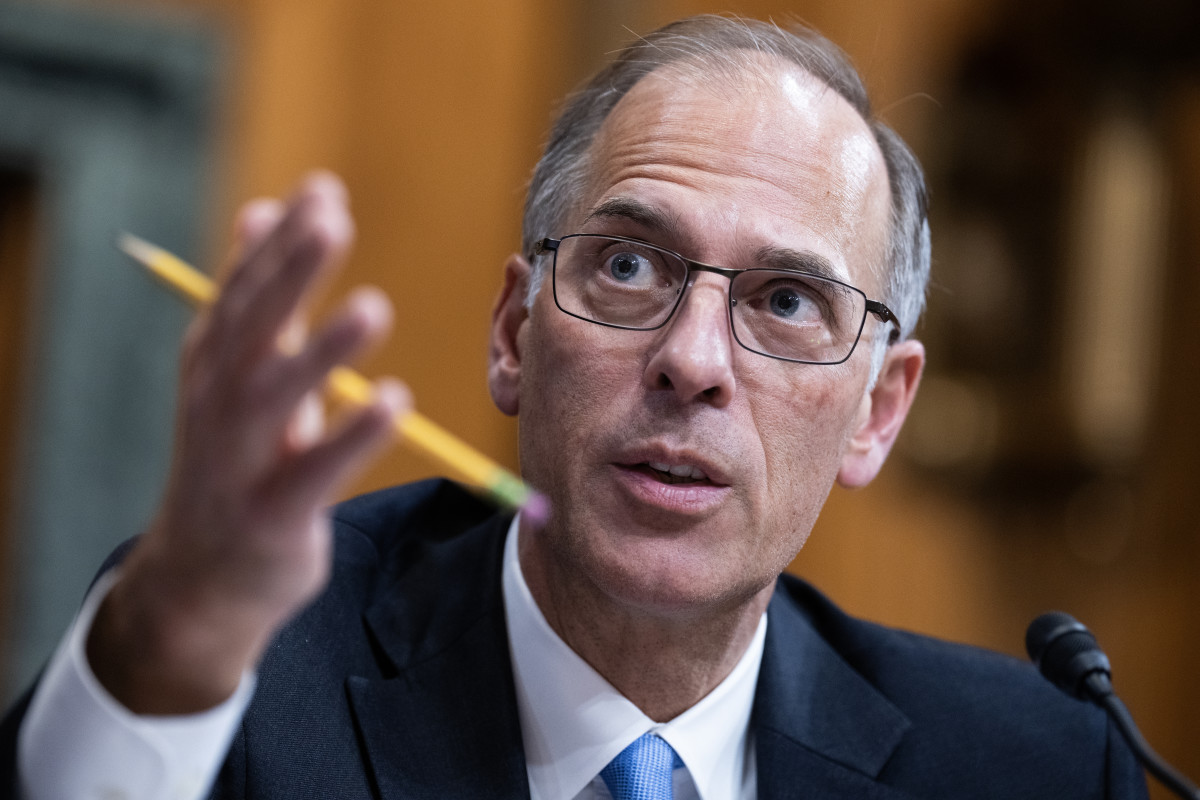 Moody’s economist Mark Zandi warns of a recession risk near the tipping point, amid an oil surge pressuring the economy.
Williams/CQ-Roll Call via Getty Images
Who is Mark Zandi?
Zandi is one of the most influential economists on Wall Street, sitting at the crossroads of markets, policy, and real-world predictions.
Currently, he serves as the chief economist at Moody’s Analytics, directing economic research, and he co-founded Economy.com in 1990, which Moody’s acquired in 2005.
Collectively, he has been in the game for nearly 35 years, making him a bona fide veteran that the big banks and lawmakers still listen to.
MoreEconomic Analysis:
- Ernst & Young drops blunt reality check on the economy
- Federal Reserve official blasts latest interest-rate pause
- IMF drops blunt warning on US economy
Moreover, his calls have consistently been prescient and well-timed ahead of the market.
Zandi rose to center stage during the financial crisis.
In November 2008, he sounded the alarm in the Senate that the U.S. was likely to experience its worst economic setback since the Great Depression, making him one of the most prominent mainstream voices during the 2008 meltdown.
On top of that, he boasts real Washington credibility.
For context, Zandi served as an unpaid economic adviser to John McCain’s 2008 presidential campaign and has testified before Congress multiple times.
The weak jobs report that raised fresh recession concerns
The latest U.S. jobs report has sparked intense discussion over the past few days, showing negative hiring while unemployment moved higher, sharpening fears that the labor market is losing momentum.
- Payrolls dropped by 92,000 in February, compared to market expectations for a 59,000 gain.
- Unemployment rose to 4.4% from 4.3%, which shows that labor slack is building.
- Core sector-wide job losses include health care, which saw a 37,000 drop in physicians, while information technology shed 11,000 jobs, and federal government employment fell by 10,000.
- Payrolls have now posted the sixth consecutive monthly drop since early 2025, with job gains averaging just 6,000 over the past three months. Source: Reuters, Bureau of Labor Statistics
Zandi warns the U.S. economy may be one shock away from recession
Zandi’s recession odds, noted by Barron’s, were just below a tipping point, even before the recent events in the Middle East.
Now, the veteran economist says the real risk is that higher energy prices could push it over the edge, especially with labor and GDP growth already softening.
- The economy was already losing momentum: The February jobs report showed 92,000 jobs lost, with Zandi arguing that “almost all” economic data has turned soft since late last year. Growth has been sluggish, too, with GDP revised down to 0.7% in Q4, comfortably below prior estimates, and a steep drop from 4.4% in Q3.
- Oil is the potential tipping point: Zandi feels it wouldn’t take much for recession odds to cross 50%, noting that virtually every post-WWII downturn has been preceded by rising oil prices. Elevated energy costs squeeze demand and act like a tax to consumers and businesses.
- The risk is broader than recession alone: Another top economist, Nobel laureate Joseph Stiglitz, said the U.S. might face stagflation, led by choppy growth and persistent inflation.
Not everyone is buying the oil-driven recession call
Though plenty has been made of the Iran conflict’s impact on the economy, not every big-name analyst feels it’s a long-term demand killer.
For instance, Goldman Sachs raised its Q4 oil forecasts, but its base case still assumes that the Strait of Hormuz flows start recovering with WTI moderating in the $70s by early June following fresh reserve releases and normalization in logistics.
However, as I covered in a recent story, big-bank analysts also believe that if the conflict becomes more prolonged than expected, conditions could turn rocky.
Moreover, Bank of America’s global fund manager survey underscores a similar narrative, Reuters suggests. Investors, despite concerns about stagflation, still expect Brent to settle around $76 by year-end, suggesting they see today’s oil spike as severe but not irreversible.
Related: Veteran analyst sends blunt message on Nvidia stock after GTC