
Nvidia (NVDA) stock is up about 15.98% year to date, at the time of writing, Thursday afternoon, June 4. Meanwhile, the SPDR S&P 500 index (SPY) is up about 10.97% in the same period.
While the stock has outpaced the S&P 500, its growth has lagged that of other computer-related semiconductor companies benefiting from the AI boom.
How have the main Nvidia competitors in the compute space have performed?
A look at Nvidia’s top rivals year-to-date:
- Intel (INTC) is up 202.06%.
- Advanced Micro Devices (AMD) is up 145.09%.
- Broadcom (AVGO) is up 20.46%.
These competitor stocks that achieved higher growth are driven by the sentiment that they can take more market share in the AI data centers. However, sentiment might change, and Broadcom is currently trading approximately 12% lower following its earnings report, which disappointed investors.
Nvidia has used its GPU Technology Conference (GTC) at Computex to send a strong signal that it can surely maintain its high market share and quite likely even increase it. Morgan Stanley analysts had a lot to say about Nvidia after attending the conference.
Key news for Nvidia stock:
- The company reported strong Q1 earnings.
- Nvidia invested $2 billion in Marvell (MRVL).
- Nvidia teamed up with IREN to deploy up to 5 GW of AI infrastructure.
- It used the GTC in March to unveil the Groq 3 LPX accelerator.
- Nvidia recently delivered its first Vera CPUs.
Key announcements from GTC at Computex
The most important announcement was confirmation that the Vera Rubin platform is ramping into full production.
Vera Rubin platform unifies NVL72 systems, Vera CPU, Groq 3 LPX, Vera BlueField-4 STX storage, and Spectrum-6 SPX Ethernet racks into a fully integrated system.
According to the company, Vera Rubin delivers 10x agent throughput at scale compared with the previous-generation Grace Blackwell platform.
“Agentic AI is a new kind of workload. One prompt can launch a thousand-step journey of reasoning, retrieval, tool use and response generation,” stated Jensen Huang, founder and CEO of Nvidia, in the press release. “Vera Rubin was built for this moment — an AI factory engine that delivers intelligence at scale, with the performance, efficiency and security needed to power the next industrial revolution.”
The company unveiled RTX Spark, a new superchip, based on a previous-generation architecture. It features a Blackwell RTX GPU with 6,144 CUDA cores, connected via NVLink to a 20-core Grace CPU.
Nvidia designed this chip for running personal AI agents on Windows PCs. According to the company, RTX Spark will offer 1 petaflop of AI performance, up to 128GB of unified memory, and all-day battery life.
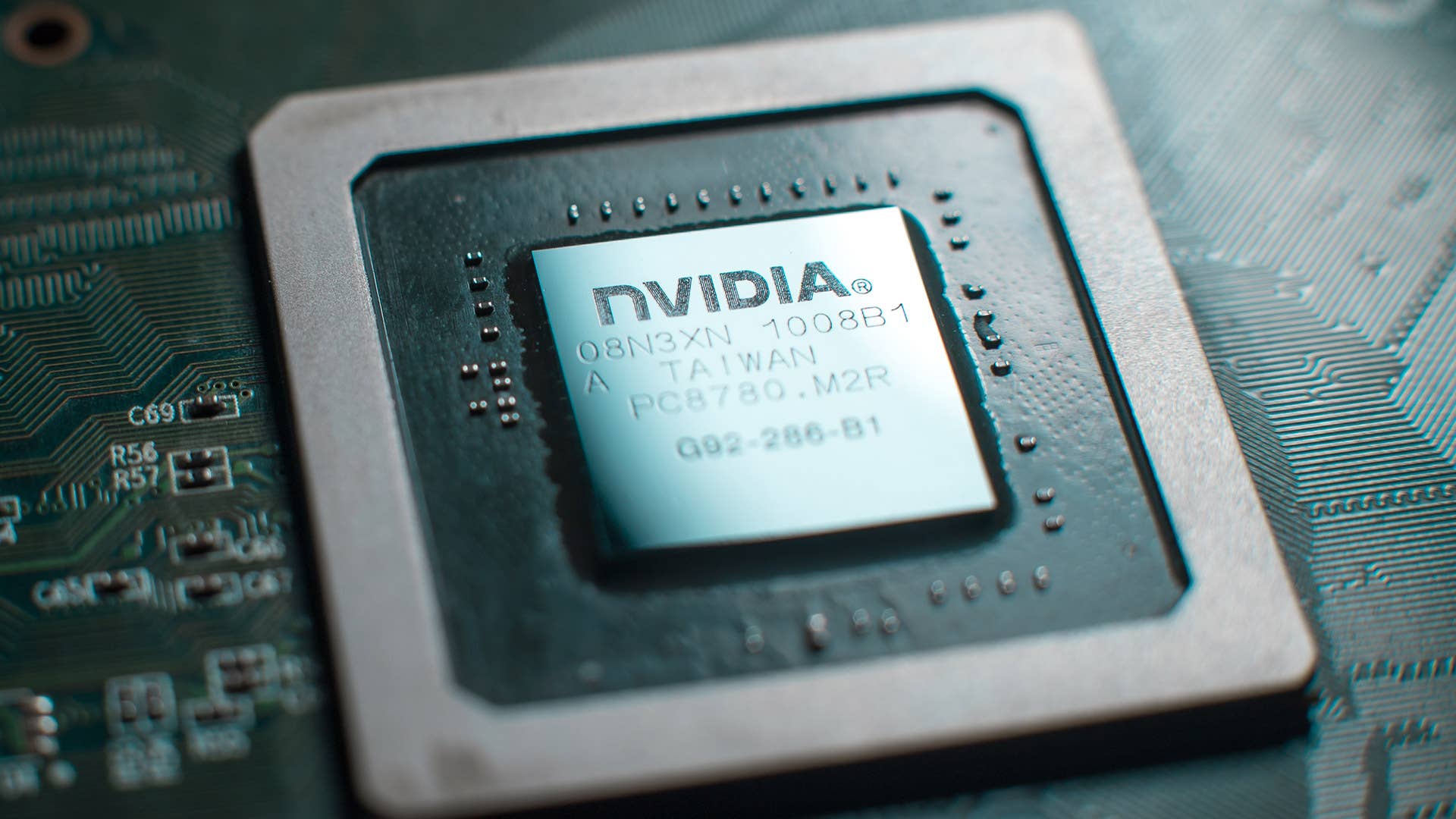 Morgan Stanley says that “Nvidia stands out as the best value in the processor group”
Shutterstock
Morgan Stanley says that “Nvidia stands out as the best value in the processor group”
Following the announcements in a research note shared with me, Morgan Stanley analyst Joseph Moore and his team updated their opinion on Nvidia stock.
The team noted that Nvidia’s market share is approximately 85% and that there has been no visible share loss over the last two years.
Moore wrote: “Nvidia Vera Rubin will be a key driver of maintaining very high market share.”
Analysts said that the reason behind Vera’s standalone CPU sales is not about taking advantage of the CPU shortage, but the fact that the CPU has been designed for AI workloads.
More tech stocks:
- 5-star analyst sets jaw-dropping Nvidia stock price target
- Bank of America resets Microsoft stock forecast after earnings
- Bank of America resets Google stock forecast after key event
- History of Nvidia: Company timeline and facts
They noted that the company’s guidance of $20 billion in server CPU revenue this year was unexpected, as it is at or above the level of market leaders, and caused skepticism.
Analysts said their checks with major customers confirmed very large-volume potential.
Moore reiterated an overweight (buy) rating for Nvidia stock and a target price of $288, based on a 22x multiple of his market-weight EPS estimate for calendar year 2027 of $13.08.
He said the price is a discount compared to peers in the compute semiconductor space, such as Advanced Micro Devices (AMD), Broadcom (AVGO), and Intel (INTC), noting that Nvidia’s high market share and gross margins leave “limited levers for multiple expansion in the near term.”
Morgan Stanley analysts noted downside risks for Nvidia:
- AI end markets don’t materialize as expected, and customers sharply reduce GPU purchases.
- AMD reemerges as a viable GPU competitor.
- Cloud customers outside Google can develop competitive custom hardware.
Upside for Nvidia:
- Growth in training and inference propels data center revenue.
- Gaming sales accelerate as GPU-based AI PCs gain traction.
- Nvidia can recapture lost revenue in China.
Related: Bank of America resets Nvidia stock forecast after key event