
President Donald Trump faced hecklers last week as he took a victory lap after Congress passed his massive omnibus spending bill.
Democrats presented a united front with no member voting for the bill in either house, but the Republican majorities were too much to overcome.
There are complaints from both sides of the political aisle.
Democrats have made clear they plan to run in 2026 on the healthcare budget cuts that the bipartisan Congressional Budget Office estimates could throw 12 million Americans off insurance rolls.
Related: Car buyers have a lot riding on the ‘Big, Beautiful Bill’
Despite the austerity cuts, the bill is also expected to explode the deficit and add $3.3 trillion to the nation’s debt obligation, which sits at an astounding $36 trillion, according to the U.S. Treasury.
This has drawn criticism from some very powerful conservative voices, including Elon Musk.
However, one group has been consistently taken care of by the president: automakers.
Even before the bill was passed, the 25% auto tariffs that went into effect earlier this year were a huge bonus for domestic automakers who had a strong first half despite the costs associated with the tariffs.
On the other hand, foreign automakers that lack production capacity in the United States are being forced to shift strategies to avoid paying taxes.
However, the trade war is global, and now, foreign carmakers in domestic manufacturing are making calls that could cost people jobs.
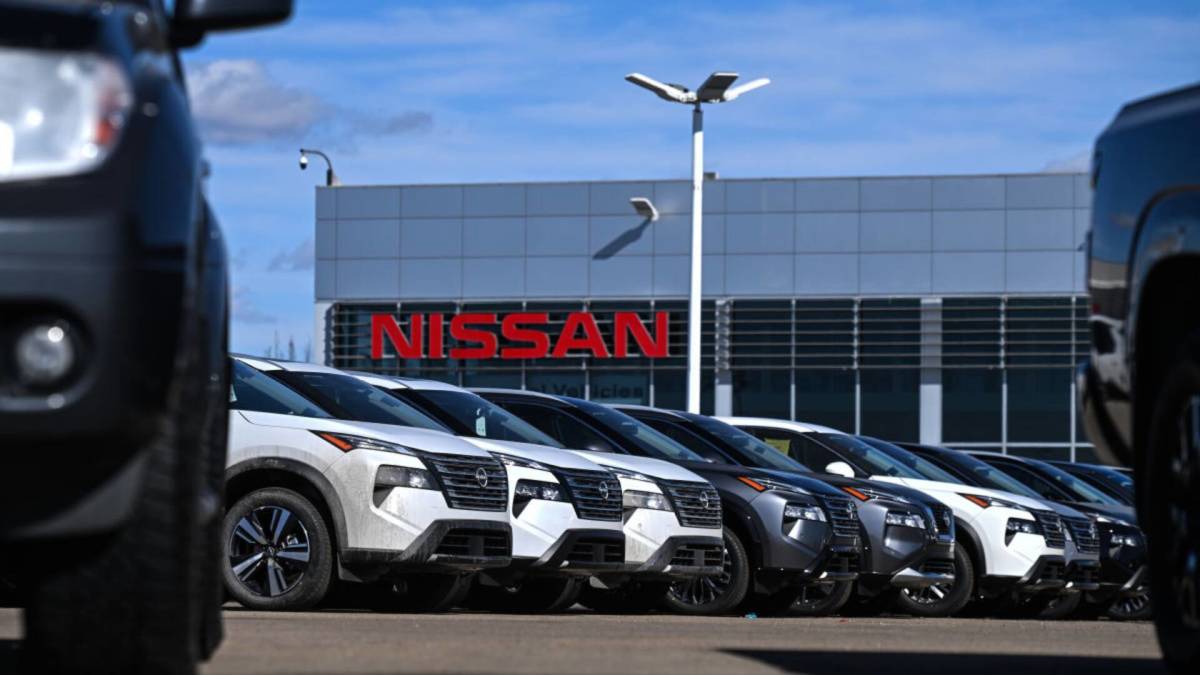 Nissan can’t afford to ship cars to Canada right now.
Image source: NurPhoto/Getty Images
Nissan suspends production of certain vehicles at Tennessee and Mississippi plants
Japanese automaker Nissan has already suspended production of three vehicles meant for the Canadian market due to reciprocal tariffs between the country and the U.S.
Nissan halted production of its Pathfinder and Murano SUVs at its Tennessee plant, and the Frontier pickups bound for Canada at its Mississippi plant, according to reports.
Nissan made the move in May after the tariffs went into effect in April. Fellow Japanese manufacturer Mazda also stopped production of vehicles bound for Canada at its Alabama plant.
Related: President’s latest interview gives US automakers much-needed boost
Mazda offset the decrease by increasing production of U.S. models.
Nissan America employs about 21,000 people, including about 9,000 hourly workers at three factories in the South.
The company offered buyouts to some workers last year after Nissan America reported a 3.1% sales decline to about 237,000 vehicles sold from April to June 2024.
The automaker said that buyout packages were offered to white-collar Nissan and Infiniti employees at least 52 years old and employed in certain non-manufacturing roles, as well as those 55 years and over in manufacturing roles.
Foreign autos with U.S. production are still hurting
Japanese car companies like Nissan and Toyota have spent billions building their manufacturing footprint in the U.S.
But tariffs are still hurting them.
In April, Mazda sent a letter to its U.S. dealers informing them that it would not raise its sticker prices or tack on import fees for any vehicles already on dealership lots or that will come into the country before May 1.
Mazda makes about 20% of the vehicles it sells in this country domestically.
Mitsubishi said it would hold its vehicles in port for the foreseeable future instead of offloading them and being forced to pay duties.
“We have sufficient stock on the ground at dealers for the moment to not impact customer choice,” the company told Automotive News.
Related: Car buyers should shop these brands for the best tariff deal