
A brand’s success in one market can create the illusion of universal appeal. In reality, consumer resonance is often highly localized. What works in one country across pricing, positioning, and product mix does not always translate seamlessly to another.
That is what makes international expansion inherently risky. Differences in consumer behavior, culture, economic conditions, and competitive dynamics all shape how a brand is perceived. Even well-established companies can struggle if they underestimate these factors, because prior success at home is no guarantee of performance abroad.
This makes the latest move by Marks & Spencer particularly notable, not just as a retail expansion, but as a test of whether a legacy British brand can finally translate its appeal to U.S. consumers.
Marks & Spencer returns to U.S. apparel retail
Marks & Spencer has revealed a new collaboration with Nordstrom to launch a curated selection of bestselling womenswear across 30 Nordstrom stores and online, according to a company announcement.
The assortment features over 60 pieces from Marks & Spencer’s core collections, marking the first time the retailer’s fashion line will be available in physical stores across the U.S.
“Now is the time to build our brand awareness in the U.S. Fashion market and establish ourselves as a globally trusted brand,” said Mark Lemming, Managing Director of International at Marks & Spencer in the announcement. “We’re delighted to partner with Nordstrom, a partner who shares our values and will support us as we accelerate our growth.”
Marks & Spencer’s past U.S. expansion attempts
This is not the first time the company has tried to enter the U.S. market.
Marks & Spencer initially expanded in 1988 through the acquisition of Brooks Brothers from Federated Department Stores, later launching standalone stores under its own brand, according to The Standard.
However, the strategy ultimately failed. Misalignment in product assortment, sizing standards, and pricing limited its appeal to American consumers.
By the late 1990s, performance had deteriorated significantly, leading to mounting losses. The company closed its U.S. stores and exited the market entirely in 2001.
A more recent re-entry in a different category proved more successful. In 2022, Marks & Spencer introduced its food range through a partnership with Target, where products like its Percy Pigs gained strong traction, reportedly selling more than 30,000 bags every week, according to Marks & Spencer.
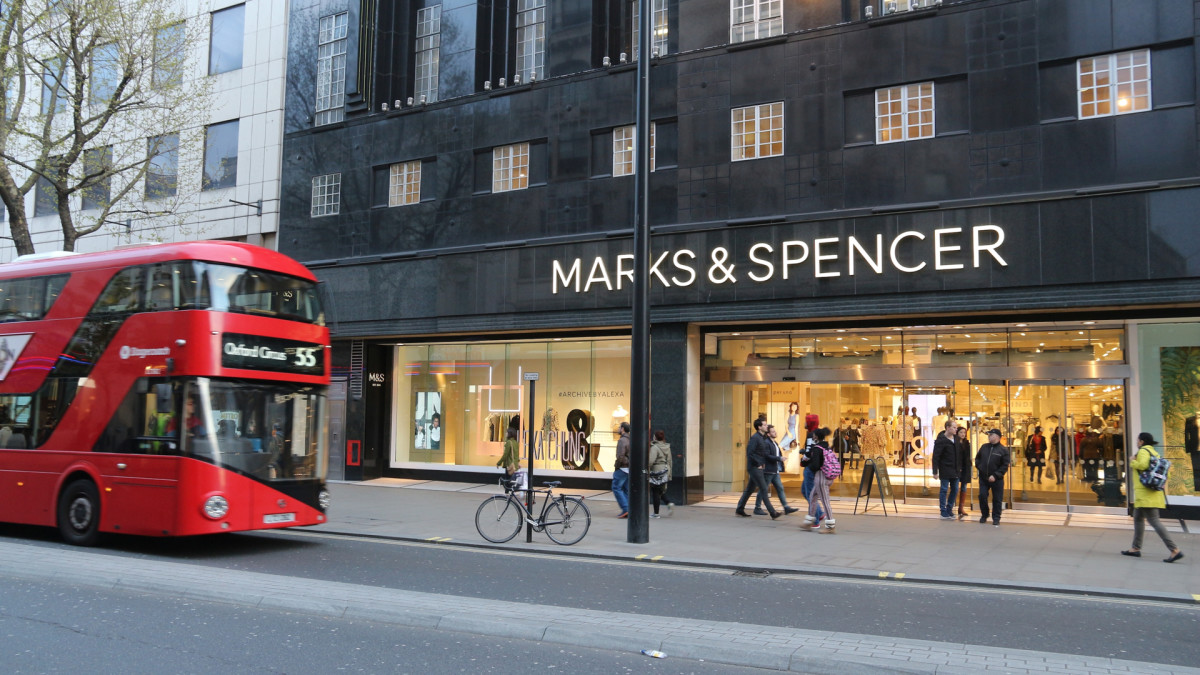 Marks & Spencer partners with Nordstrom to reenter the U.S. market.
Marks & Spencer’s new fashion strategy
Encouraged by its success in food, Marks & Spencer is now taking a more measured, data-led approach to reintroducing fashion in the U.S.
According to company data, 13% of U.S. consumers are aware of the brand’s fashion offering, with particularly strong recognition among women aged 25-34. More than 51,000 customers also shop via its U.S. website annually.
Partnering with Nordstrom allows Marks & Spencer to scale efficiently by leveraging an established retail network rather than investing heavily in standalone stores. This “asset-light” wholesale model reflects a broader strategic shift toward building a global presence through scalable partnerships rather than capital-intensive expansion.
The approach has already been tested internationally. In Australia, Marks & Spencer partnered with David Jones, initially launching lingerie before expanding into womenswear and menswear following strong performance.
Why international brands struggle in the U.S.
Marks and Spencer is far from alone in its past difficulties.
Industry experts say many international brands fail in the U.S. not because of product quality, but because they underestimate how differently the market operates.
Advertising and creative strategist Andrea Cerinza notes that European customers tend to be more conservative in their spending, while U.S. customers are more responsive to aspiration, speed, and convenience.
“Breaking into the U.S. market isn’t just about translating your website or increasing ad spend,” said Cerinza. “It’s about translating your strategy, creatively, culturally, and emotionally.”
Coverage on more retail business:
- Aritzia brings back iconic fashion brand after shutdown
- GLP-1 weight loss disrupting fashion retail demand
- 125-year-old retail chain to close more stores in 2026
Jessica Wong, founder and CEO of marketing and PR firm Valux Digital, says that global brands often hesitate to localize out of fear of diluting their identity.
“Global brands do not fail because they communicate locally,” Wong said in Forbes. “They fail because they underestimate how deeply local trust systems shape perception, credibility and long-term success.”
Analysts from Harvard Business Review support this view, noting that localization is no longer a surface-level adjustment. Companies need to adapt operations, supply chains, and partnerships at a structural level, even at the cost of efficiency, to compete effectively across markets.
Marks & Spencer’s financial performance supports expansion
The U.S. expansion comes as Marks & Spencer shows signs of operational recovery following years of underperformance.
For fiscal year 2025, the company reported:
- Revenue growth of 6%
- Operating profit increase of 22%
- A 5% rise in Fashion, Home & Beauty market share, reaching 10.5%
At the same time, Marks & Spencer continues to streamline its store portfolio. It recorded an £84.4 million ($112.35 million) charge related to its multi-year store rotation program, which includes closures, asset impairments, and accelerated depreciation.
The company plans to reduce its full-line store count from 229 to 180 by 2028, signaling a shift toward a more efficient and modern retail footprint, according to a company announcement.
Nordstrom faces a challenging but evolving retail landscape
The timing of this expansion is complex.
According to McKinsey & Company’s State of Fashion 2026 Report, the global fashion industry is expected to see only low-single-digit growth amid macroeconomic instability, tariff pressures, and increasingly value-conscious consumer behavior, particularly in the U.S.
Despite these challenges, some legacy retailers are adapting.
As Fortune retail and leadership expert Phil Wahba noted, competitors such as Macy’s, Bloomingdale’s, Nordstrom, Belk, and Dillard’s have invested in upgrading stores, merchandising, and customer service, efforts that not only support sales but also enhance their value.
These efforts are beginning to show measurable results. Nordstrom recorded a 3.3% increase in year-over-year foot traffic in the first quarter of 2025, according to Placer.ai.
Still, some analysts remain cautious. Department store partnerships can provide reach, but they also limit control over brand presentation, pricing, and customer experience, factors that have historically been critical to success in the U.S. market.
Marks & Spencer’s more calculated second attempt
Marks & Spencer’s renewed U.S. strategy reflects a more disciplined and informed approach than its earlier expansion, but it is also fundamentally different.
Rather than attempting to establish a standalone retail presence, the company is effectively distributing through established partners, seeking to mitigate the risks that led to its prior exit. However, success will depend on whether the brand can build relevance among American consumers within another retailer’s ecosystem.
While the outcome remains uncertain, the combination of improved financial performance, a partnership model, and a deeper understanding of the U.S. market shows that this second attempt is designed for a very different retail landscape than previously.
Related: 77-year-old jewelry giant will close 100 stores, shut 2 brands