
There is something deeply comforting about a classic country-style breakfast with all the staples: stacks of pancakes drenched in syrup, fried eggs, home fries, bacon, sausage, and, of course, warm buttermilk biscuits.
For many families, sharing a hearty breakfast on a cozy morning is an American tradition, so much so that most have a favorite spot they have been going to for years, and sometimes for generations.
But even the most beloved, decades-old restaurants aren’t immune to change. Now, a recent development is set to forever change a major aspect of one iconic breakfast chain that has served families nationwide for nearly 78 years.
Few could have predicted that a modest diner with just four stools and six tables, founded in 1948 on a humble farm in Rio Grande, Ohio, would grow into a national brand with more than 400 locations across 18 states.
That diner became Bob Evans Restaurants, a family-style chain known for staying true to its roots by using farm-fresh ingredients in traditional country-inspired dishes, including its iconic biscuits and house-made gravy with its signature pork sausage.
Bob Evans Restaurants sold to new ownership
Bob Evans Restaurants’ parent company, Golden Gate Capital, has sold the entire restaurant business to private equity firm 4×4 Capital to maximize the chain’s long-term growth potential.
“Together, we look forward to investing in and enhancing our operations, guest experience, and brand — with a continued focus on stability, partnership, and long-term value creation,” said Bob Evans Restaurants CEO Mickey Mills in a press release.
Although the financial terms of the deal were not disclosed, Mills and the current executive team will continue to lead the company. Meanwhile, 4×4 Capital Co-Founder & Partner Gustavo Assumpção will serve as Executive Board Chair.
Golden Gate Capital has owned Bob Evans Restaurants since 2017, when it acquired the business for $565 million, according to public SEC records. Later that same year, Bob Evans Farms, the packaged foods division known for sausage and other grocery products, was sold separately to Post Holdings.
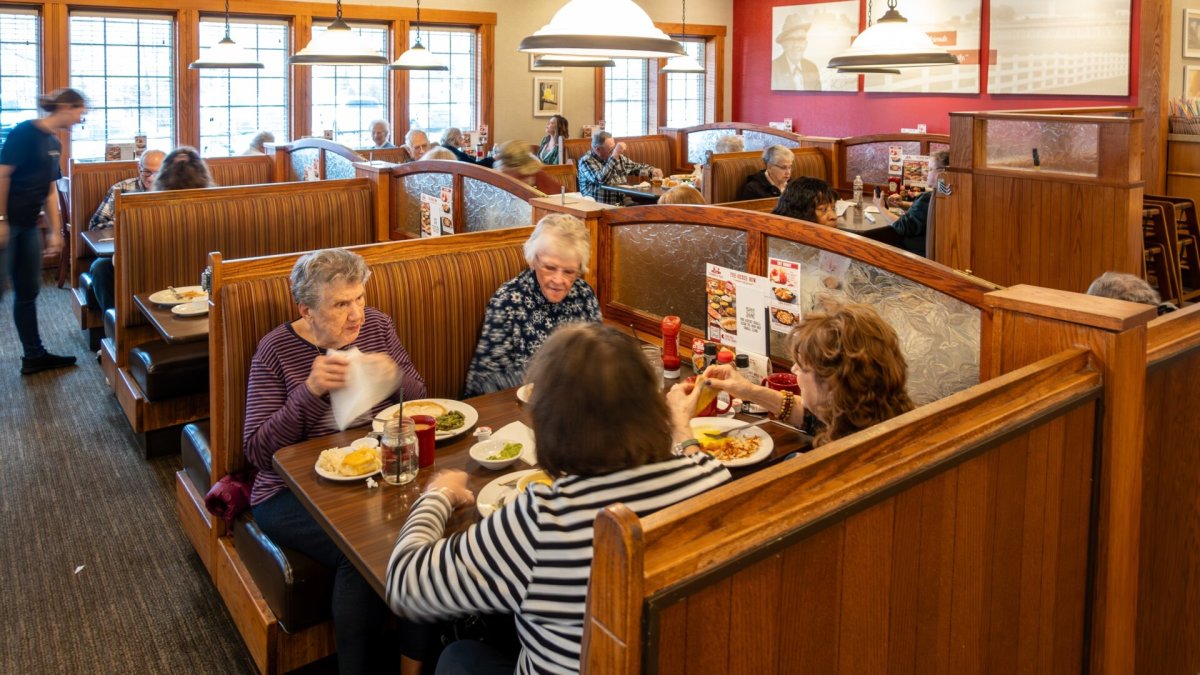 Bob Evans Restaurants is acquired by 4×4 Capital.
Bob Evans sale speculation follows strategic shifts
Speculation about a potential sale had circulated for months after Axios reported that Bob Evans Restaurants was working with investment bank Kroll on a sale process.
Bob Evans Restaurants generated earnings of approximately $65 million before interest, taxes, depreciation, and amortization over the past 12 months through January 2026, valuing the chain at up to $600 million, according to Bloomberg.
More Restaurant Business News:
- 41-year-old burger chain closes historic location after 35 years
- 62-year-old pizza buffet chain gives up control in major deal
- 110-year-old hot dog chain just sold its entire business
The transaction comes as Bob Evans Restaurants has implemented significant changes to better adapt to evolving consumer demands and avoid falling behind competitors in an uncertain economic environment.
“Our number one group, our biggest user is a millennial family, who thinks about food differently than the Gen X or baby boomer family did 20 or 30 years ago,” said Bob Evans President and Chief Marketing Officer Bob Holtcamp in an interview with FSR in late 2023.
“All of our innovation has been looking at what the needs are of that group and staying relevant.”
A central focus of that strategy has been value. As inflation has increased costs and prices, consumers have become more cautious with their spending, contributing to a nationwide decline in restaurant foot traffic. In response, Bob Evans Restaurants revamped its menu and rolled out daily promotions.
“Value and affordability are just really key for us, and for the whole industry,” said Holtcamp. “Consumers aren’t just looking for the lowest price. They love variety and they love affordability, and they’ll determine value.”
The breakfast restaurant industry grapples with economic pressure
Prices for food at home climbed 2.6%, while prices for food away from home surged 3.7% in the 12 months ended September 2025, according to recent U.S. Bureau of Labor Statistics data.
Higher grocery bills and restaurant costs are forcing more Americans to cut back, with 27% admitting to skipping meals to save money, according to a Credit Karma survey.
While price increases have hit the entire restaurant sector, breakfast chains have been among the hardest affected.
Between 2020 and 2025, menu prices at 16 major restaurant chains, including IHOP (DIN), Denny’s (DENN), Cracker Barrel (CBRL), and Waffle House, rose 39%, nearly double the national inflation rate of 22%, according to FinanceBuzz.
“Morning now is a place that you’re seeing people are choosing either to skip breakfast or they’re choosing to eat at home for breakfast,” said McDonald’s CEO Chris Kempczinski during a recent earnings call.
To remain competitive, many sit-down restaurants are now turning to value deals and promotions to compete with fast-food pricing.
“Value pricing gives customers the confidence that they are getting the biggest bang for their buck without compromising taste and quality,” HungerRush Senior VP of Marketing Shannon Chirone told Restaurant Dive.
Value-menu traffic rose 1% in the quarter ending June 2025, up from a 2% decline the prior year, marking the first positive growth in the last three years, according to Circana. Still, overall foodservice traffic fell 1%, suggesting consumers are dining out less frequently.
“It’s important for restaurants to remember that value is rarely defined only by price,” said Circana Senior VP and Industry Advisor for Food and Foodservice David Portalatin in a statement. “Operational excellence in providing quality, affordability, great experiences, and convenience is what leads winning restaurants and their supply chain partners to greater success.”
Why the Bob Evans Restaurants sale matters
The sale of Bob Evans Restaurants reflects a broader shift across the breakfast restaurant industry, where legacy brands are under pressure to modernize while preserving the traditions that built their loyal customer base. As consumers prioritize value and convenience, chains that fail to adapt risk losing relevance in an increasingly competitive market.
For Bob Evans Restaurants, the ownership change comes at a pivotal moment. With traffic slowdowns across the breakfast category, new ownership could provide additional capital and flexibility to accelerate menu innovation, pricing strategies, and operational improvements.
Breakfast chains undergoing major changes
- Denny’s: Closed 150 underperforming locations by the end of 2025 and sold for $620 million in January 2026, as reported by TheStreet and Restaurant Business Online.
- First Watch: Acquired 16 franchise restaurants in North and South Carolina in 2025, bringing them under corporate ownership, according to GlobeNewswire.
- IHOP: Several locations have closed in recent months, and a franchisee filed for Chapter 11 bankruptcy in early 2025, TheStreet reported.
- Maple Street Biscuit Company: Plans to close 14 restaurants in 2026, per TheStreet.
Related: Chick-fil-A quietly rolls out six new sandwiches for 2026