
Nvidia (NVDA) started as a video game chipmaker, but became so much more thanks to smart investments. Today, along with GPUs, it makes CPUs, networking equipment, and AI inference accelerators.
According to the company’s 10-K form, in fiscal year 2026, its networking revenue totaled $31.4 billion. That was a pretty big jump from $13 billion in 2025.
The form states: “Revenue from Data Center networking grew 142%, driven by the introduction and continued ramp of NVLink compute fabric for GB200 and GB300 systems and the growth of Ethernet and InfiniBand platforms.”
This networking segment success happened thanks to Nvidia’s acquisition of Mellanox Technologies.
While that was a total acquisition, the company also holds investments in many companies, and investors pay close attention whenever it invests, as it sends a strong signal of confidence for that particular stock.
The company seems to have picked up the pace with its investments.
It announced on March 2nd that it would invest $2 billion in Lumentum Holdings (LITE) and another $2 billion in Coherent Corp. (COHR). Both companies are networking companies working on silicon photonics technologies.
Silicon photonics is a technology of the future, which is something even Nvidia’s competitors agree on. Here is what Hock Tan, Broadcom President and CEO, said during the Q4 earnings call about the technology:
“And of course, when you can’t do it even in copper, then you’re right. You go to silicon photonics, and it will happen.”
Nvidia’s latest investment shows that it wants to be 100% sure it has the upper hand against Broadcom in the race to silicon photonics.
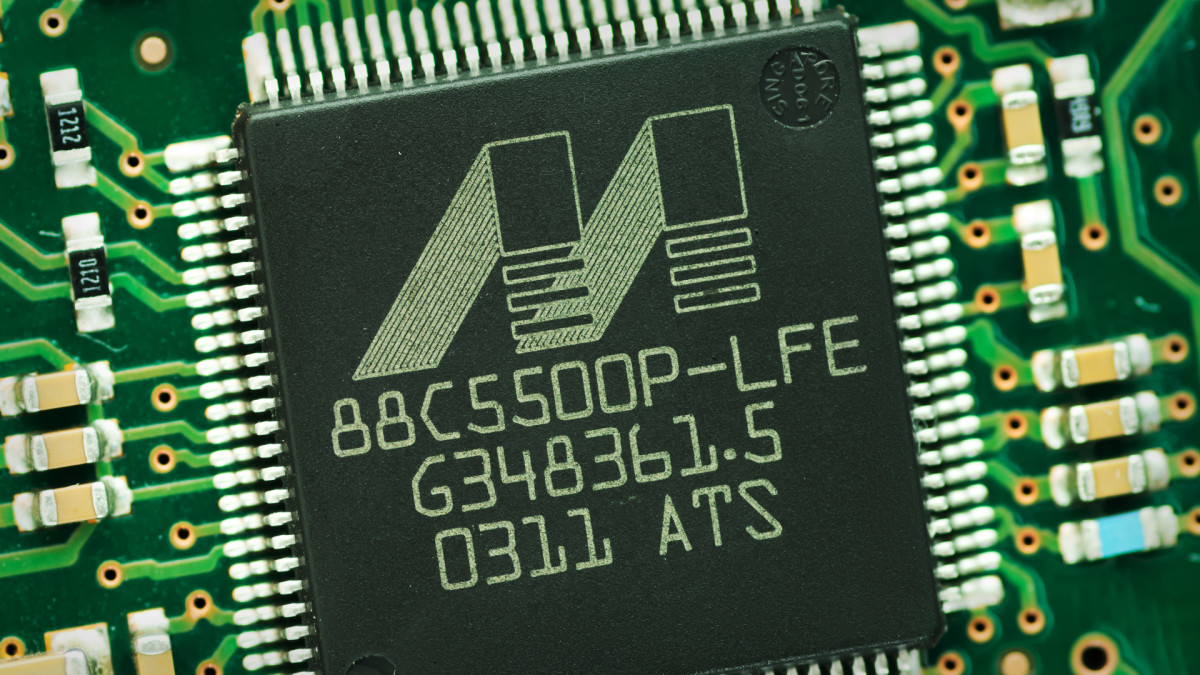 Nvidia entered into partnership with Marvell and invested $2 billion.
Shutterstock
Nvidia teams up with Marvell and invests $2 billion
Nvidia and Marvell Technology (MRVL) entered into a strategic partnership. The companies plan to connect Marvell to the Nvidia AI factory and artificial intelligence—radio access network (AI-RAN) ecosystem via Nvidia NVLink Fusion.
This will give customers building on Nvidia architectures greater freedom to develop next-generation infrastructure. The companies will also work together on silicon photonics technology.
Nvidia has invested $2 billion in Marvell.
NVLink Fusion is a rack-scale platform that enables customers to develop semi-custom AI infrastructure based on the Nvidia NVLink ecosystem.
Thanks to this partnership, it will be possible to pair Marvell’s custom AI accelerators (XPUs) and NVLink Fusion-compatible scale-up networking with Nvidia’s Vera CPUs, ConnectX network interface cards, Bluefield data processing units, NVLink interconnect, and Spectrum-X switches, and the rack-scale AI compute.
More Nvidia:
- Goldman Sachs sends blunt message on Nvidia stock after GTC
- Nvidia CEO makes bombshell call on AI’s next big thing
- Bank of America resets Nvidia stock forecast after meeting with CFO
“The inference inflection has arrived. Token generation demand is surging, and the world is racing to build AI factories,” stated Jensen Huang, founder and CEO of Nvidia. “Together with Marvell, we are enabling customers to leverage Nvidia’s AI infrastructure ecosystem and scale to build specialized AI compute.”
Investors have reacted positively to this deal, and Nvidia stock is up about 4.7%, at the time of writing, Tuesday afternoon, March 31, according to Yahoo Finance. A positive reaction is warranted, given the growth of the networking revenue segment and the partnership with Marvell, which is cementing Nvidia’s networking dominance in the AI space.
What investors need to know about Marvell
Marvell’s vast IP portfolio spans computing, optics, networking, storage, and security and addresses the enterprise, cloud, telecom, auto, and industrial markets.
The company’s Q4 earnings report on March 29 provided a significant boost to the stock of about 18%. I covered the earnings in my article “Goldman Sachs resets Marvell price target after earnings.”
Marvell’s most important products are Data Center Interconnect Modules, which are used to transmit data over regional fiber networks, making them indispensable for large data centers. Another key product is its custom AI accelerators, and the two biggest customers are Amazon for its Trainium chips and Microsoft for its Maia line.
How do the analysts rate Marvell stock?
In a research note shared with me from March 26, Bank of America analyst Vivek Arya reiterated a buy rating for Marvell stock and a price target of $110, based on a 25 multiple of his pro forma EPS estimate for 2027 (including stock-based compensation). He said that this price target is generally in line with the 27 multiple historical median and within the 14 to 47 range.
Analysts noted downside risk factors for Marvell:
- Loss of visibility in key custom ASIC projects,
- Competition in AI compute,
- Cyclical industry risks.
Upside for Marvell:
- Faster than anticipated visibility in major custom application-specific integrated circuit projects,
- Continued growth in the Digital Signal Processor-based pluggable market,
- Share gains in emerging active electrical cable/Co-Packaged Optics/scale-up switch markets.
RBC Capital rates Marvell with an outperform (buy) rating and price target of $115, according to TipRanks.
Morgan Stanley rates Marvell with an equal-weight (hold) rating and a price target of $103, according to TipRanks.