
You don’t need to own Nvidia stock directly to feel the impact of its latest troubles. Through retirement accounts, index funds, and other assets, millions of Americans are exposed to the chipmaker.
Wall Street is now giving those investors mixed signals.
Evercore ISI slashed its Nvidia (NVDA) price target by 60%, from $465 to $186, while downgrading the stock from Outperform to In Line.
Meanwhile, Bank of America maintained its Buy rating, even after lowering its target from $350 to $280.
The predictions of two big investment firms for the same stock varied by $94.
The dispute follows Jensen Huang’s resignation as CEO of Nvidia on Thursday, Nov. 12, which put an end to his more than thirty years of leadership at the business he co-founded.
While the board looks for a long-term replacement, Chief Financial Officer Colette Kress has assumed the role of temporary CEO.
Nvidia’s official announcement confirmed the leadership transition.
The more important issue is whether Nvidia’s remarkable AI business can continue to expand without Huang leading its strategy.
And with earnings scheduled for Nov. 17, investors won’t have long to wait for another important test.
Evercore’s 60% Nvidia target cut sends a warning
One of the most significant adjustments to Nvidia’s projection this week was made by Evercore ISI analyst Mark Lipacis.
He downgraded the stock from Outperform to In Line and reduced his price objective from $465 to $186.
Investing.com reported that Evercore expects uncertainty surrounding Nvidia’s leadership and the board’s investigation to weigh on the stock’s valuation.
Read more: Jensen Huang was ‘broken and shattered’ in final hours as Nvidia CEO
An analyst’s 60% lower price target does not imply that Nvidia shares would drop a further 60% from where they are now. This indicates that the analyst has drastically lowered the price he thinks investors should pay for the stock.
Baird did the same.
Analyst Tristan Gerra lowered his objective from $500 to $200, a further 60% reduction, and downgraded Nvidia from Outperform to Neutral.
Reuters reported that Baird cited uncertainty surrounding Nvidia’s leadership, restrictions on chip exports to China and the possibility of slower AI spending.
It’s not only about who is in the CEO’s office. Nvidia’s expansion is largely dependent on tech businesses investing massive sums of money in AI infrastructure.
Nvidia may see a decline in demand if such businesses scale down building, postpone purchasing, or find it difficult to fund projects.
Additionally, investors may grow less inclined to pay a premium for future profits even if chip sales continue to be high.
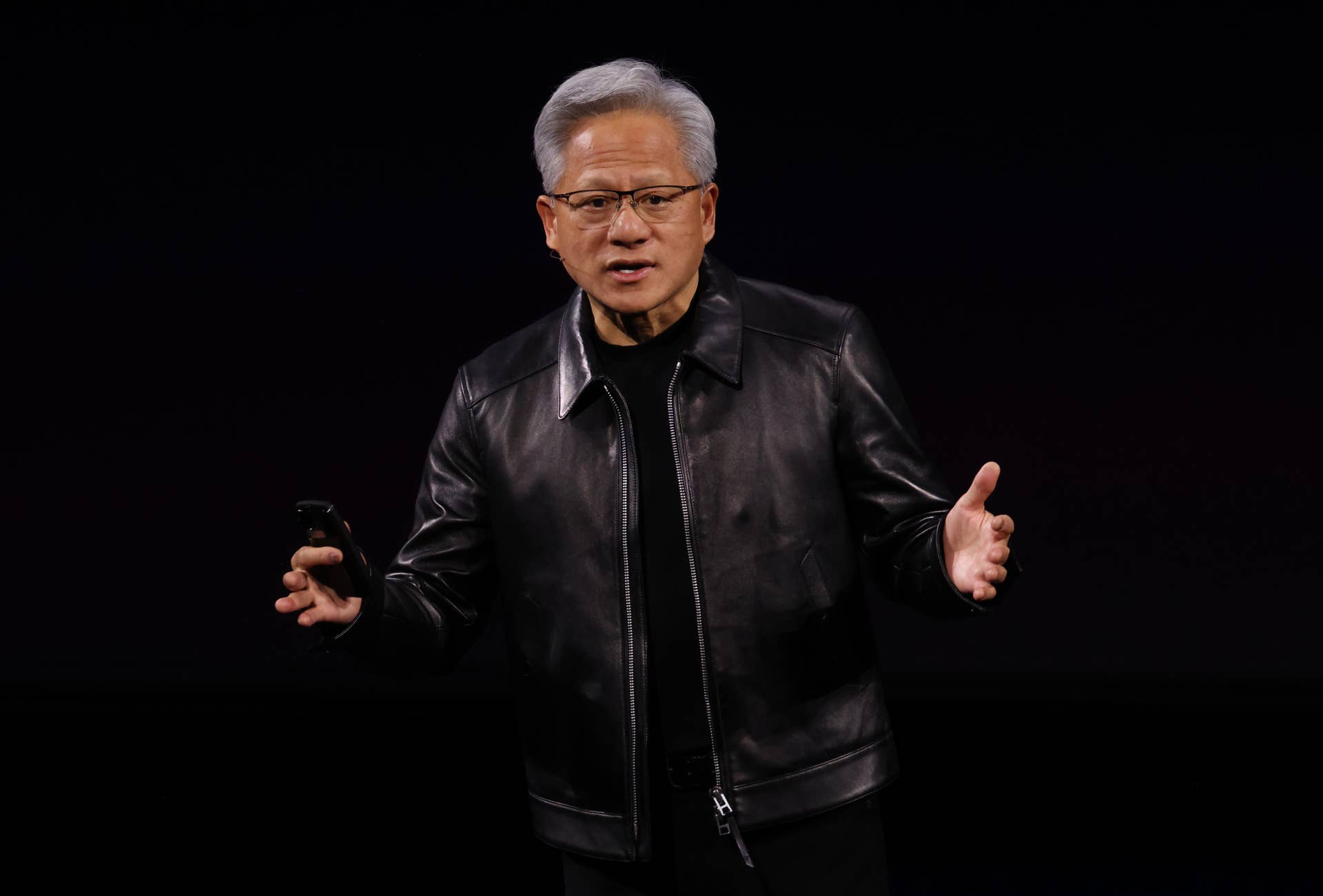 Wall Street’s latest Nvidia warning comes with a twist.
Bank of America still sees major Nvidia upside
Not all analysts think that Nvidia’s investment thesis has altered significantly.
Bank of America analyst Vivek Arya maintained his Buy rating on Nvidia Thursday, although he reduced his price target by 20% to $280. That target represents nearly 67% upside from Nvidia’s Nov. 12 share price of $168.
Goldman Sachs also maintained its Buy rating while lowering its target from $300 to $220.
Two perspectives about Nvidia are reflected in the debate.
The uncertainties surrounding its leadership and future value is the attention of several analysts.
More Nvidia:
- Microsoft just gave Nvidia shareholders a reason to pay attention
- Nvidia has a stake in SpaceX that came from an unexpected place
- Nvidia’s $12.9 billion deal could shape the AI apps you use
The products that turned Nvidia into a dominant force in AI are still in high demand. This confidence is explained by the company’s most recent financial performance.
In its fiscal second quarter, Nvidia brought in $96.2 billion, up 106% from the same period last year.
Its data center business accounted for $89 billion, up 117%.
Nvidia’s August earnings release confirmed those figures and projected approximately $108 billion in revenue for the following quarter. For a company that currently operates at Nvidia’s magnitude, such figures are astounding.
They also explain why some investors believe there may be a chance to purchase during the selloff.
However, an attractively priced stock is not the same as a profitable firm.
Even if quarterly sales continue to rise, Nvidia’s shares may continue to face pressure if investors feel that the company should have a lower earnings multiple due to leadership instability or slower future growth.
Nvidia’s Nov. 17 earnings could settle part of the debate
Nvidia’s next earnings report arrives Tuesday, Nov. 17. This will be the company’s first planned quarterly announcement since Huang’s departure.
As CFO since 2013, Kress must convince investors that Nvidia can carry out its ambitions without its longstanding boss.
There are a number of crucial concerns to keep an eye on.
The first is if Nvidia generates the roughly $108 billion in quarterly revenue that it had anticipated.
The second question is whether big clients are still making significant investments in AI data centers.
The third question is whether the business keeps up its product pipeline, which includes its next Vera Rubin systems.
The board has said that it anticipates uninterrupted operations, customer obligations, and product development.
However, investors will want more than guarantees. They will want proof that Nvidia can maintain its expansion in the face of shifting leadership and unclear regulations.
In response to allegations that Huang was the target of a foreign intelligence operation, the company’s board is now carrying out an independent examination.
Nvidia’s Nov. 8 statement said the board had no reason to believe national security or company secrets had been compromised.
Another source of uncertainty is still the inquiry.
The difference between stock value and company success is critical for shareholders, even those who indirectly own Nvidia via retirement plans.
Evercore’s $186 target suggests limited upside from current prices. Bank of America’s $280 target presents a considerably more optimistic picture.
Neither prediction is certain.
Furthermore, concerns about Nvidia’s long-term AI expenditure and permanent leadership may not be addressed in the company’s next quarterly report.
Related: Nvidia’s $12.9 billion deal could shape the AI apps you use
