
October traditionally is the most volatile month for U.S. stocks.
Among this year’s multitude of risks is a key question: Will the Federal Reserve hike interest rates again on Oct. 28, just days before inflation-weary Americans face the divisive midterm elections on Nov. 3?
This week’s economic data reports provide clues, as the energy shocks from the Iran war, rising Treasury yields, and AI supply-demand dynamic continue to froth prices to sticky inflation levels elevated by fiscal, not monetary, policy.
Bond markets are already bracing, with the 10-year Treasury yield hitting its highest close since July 2007 and traders hiking the odds of an October rate increase to 70%.
This week’s data could fine-tune that focus.
Economists expect August’s PCE price index, the Fed’s preferred inflation gauge, to rise 0.4% from July, with the core measure up 0.3% when it’s released Sept. 30. The Oct. 2 jobs report for September is forecast to show 100,000 new jobs and unemployment rising to 4.2%.
A hot inflation reading accompanied by a stable labor market would strengthen the Fed’s hawkish tilt to more tightening. But a soft jobs report might give policymakers pause.
Fed Governor Lisa Cook said in a Sept. 28 speech that in the short term, AI appears to be adding inflationary pressures to the economy, postponing inflation’s return to the Fed’s 2% target.
“In coming months I expect to see continued pressure on inflation from the AI buildout, as discussed today, and from the pass-through of higher oil prices and supply chain disruptions associated with the conflict in the Middle East,’’ she said in prepared remarks. “The labor market appears to be well positioned to handle an increase in rates.”
Cook said that looking ahead, she “will consider what policy rate may be needed to continue to guide inflation down to our target.”
Yet, as EY-Parthenon Chief Economist Gregory Daco said in his Sept. 28 newsletter, monetary policy has its limits.
“Interest-rate changes cannot produce energy, resolve supply chain pressures, expand the labor force or increase semiconductor capacity,’’ Daco said. “More frequent supply disruptions therefore place greater weight on fiscal, regulatory and structural policies that can strengthen productive capacity and resilience.’’
His call? An additional quarter-point hike in December.
Fed’s hawkish tilt focuses on sticky inflation
For retail investors and Main Street consumers, the effects of another interest-rate hike extend beyond the stock market.
The 30-year fixed mortgage rate is averaging more than 7.0%, the highest since January 2025. Diesel fuel is averaging $6.529 per gallon, up from $3.739 per gallon in September 2025. Food prices were up 2.7% year over year as of August 2026, with full-year 2026 inflation projected at 2.9%.
The takeaway for this week: Watch the inflation numbers first, then look at jobs.
Whether the Fed hikes again in October and/or December, or holds rates steady, depends on which way those numbers break.
Tighter monetary policy targets price pressures
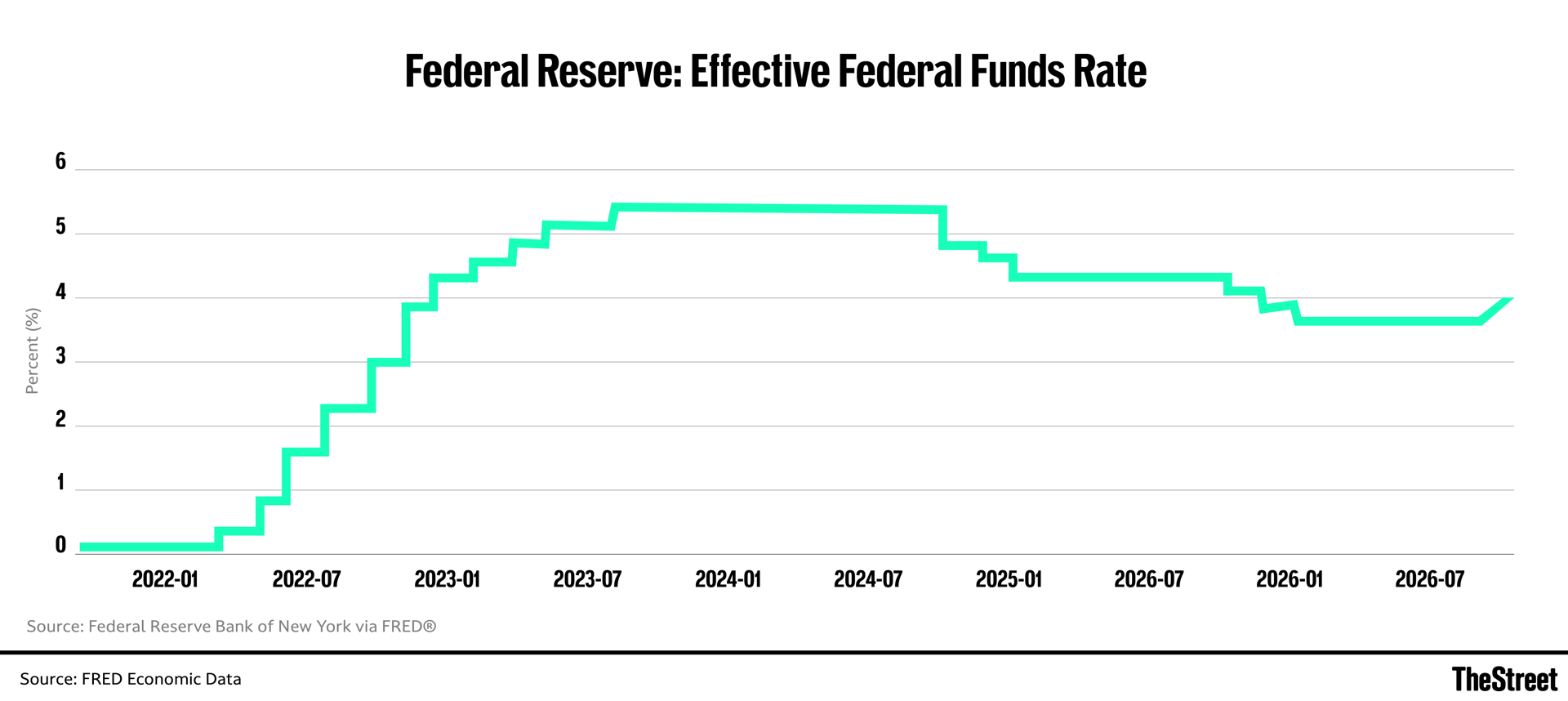
The unanimous 12-0 Federal Open Market Committee decision Sept. 16 of a quarter-point hike lifted the Fed’s benchmark Federal Funds Rate to a range of 3.75% to 4% and was widely expected by traders and Fed watchers.
It marked a renewed hawkish push to tighten monetary policy following persistent price pressures fueled, as I reported, by rising energy costs from the Iran war and related geopolitical shocks.
The big surprise: Fed policymakers signaled that another rate hike could be coming before the end of the year and potentially more if stubborn inflation uncertainties don’t ease.
Related: Vanguard’s top economist names Fed rate that would hurt markets
The rate hike was the result of months of public and private discussions by Fed policymakers who were trying to hold rates steady while allowing inflation to return to its 2% goal — a target it has missed for 5.5 years.
The CME Group FedWatch Tool expects the likelihood of another quarter-point rate hike as 72.5% on Oct. 28 and the probability of at least one additional hike of 94.5% on Dec. 9, the last FOMC meeting of the year.
How an interest-rate hike hits home
The Fed’s interest-rate hike, the first since January 2023, sent ripples through the entire financial system with the most immediate pressure hitting short-term borrowing such as variable-rate credit cards and student loans.
Indirectly, it impacts fixed-rate mortgage rates which rely on Treasury yields plus corporate debt and capital investment.
The good news? Interest rates on savings accounts and CDs could see an increase.
Fed officials drop hawkish clues about interest-rate hikes
As I reported, Bank of America economists call for two more quarter-point hikes in October and December.
Fed officials have been sending hawkish hints for weeks, and some have ramped up concerns about inflation since the September rate hike.
Governor Michael Barr said Sept. 23 that further policy adjustments are likely needed to bring inflation down in a timely way.
Federal Reserve Bank of Cleveland President Beth Hammack said Sept. 25 that she is concerned that persistently high inflation risks conditioning the American public to accept elevated prices as the norm, adding that the central bank cannot let that happen.
“The biggest risk that I see with inflation right now is that an inflationary mindset could start to set in,” given that inflation has been over target for more than five years, the official said, as Reuters reported.
The previous day, New York Fed President John Williams said he thinks it’s “reasonable” to expect another hike before the end of the year, CNBC noted.
And Philadelphia Federal Reserve President Anna Paulson also said Sept. 24 that she and her colleagues may need to raise interest rates further to bring inflation back to target.
Related: Mortgage rates just surpassed 7%. Here’s why they’re rising
