
Reputations in business rarely collapse in a single afternoon. They erode quietly, one quarter at a time, until the distance between what a brand used to be and what it has become is impossible to ignore.
For most of the past 50 years, German cars sat at the top of that pile. The badge on a BMW (BMWYY) or a Mercedes-Benz (MBGAF) signaled money and good taste. Volkswagen (VLKAF) built the family car much of the world seemed to trust.
The “made in Germany” stamp turned precision engineering into a national export machine, and into one of the steadiest corners of any global stock portfolio.
Whole regions of Germany were built around those assembly lines. So were the dividend checks in plenty of European pension funds and American international funds, the kind of holdings most people never look at twice.
That machine is sputtering.
A fresh analysis of the world’s largest automakers landed June 5, and it put cold figures on a slide that has been building for years. The rest of the industry is inching forward. German carmakers are going backward.
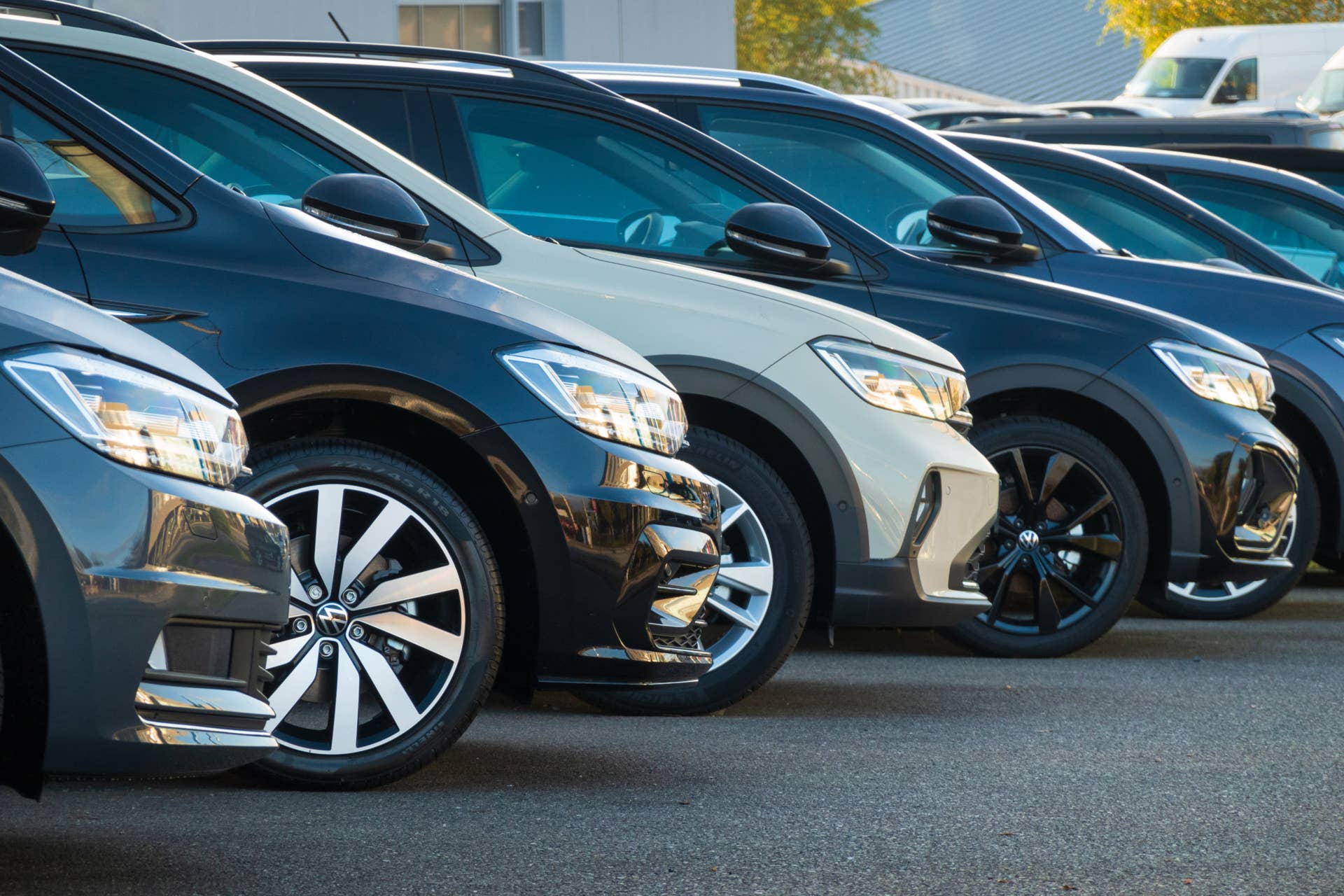 A new industry study shows the German carmakers are losing ground faster than rivals.
deepblue4you / Getty Images
Why German carmakers ruled the road for decades
To understand why this matters, you have to remember how dominant these companies were.
Germany’s car industry is the spine of its economy, the largest in Europe. Volkswagen, BMW, and Mercedes-Benz spent decades setting the global standard for luxury, performance, and resale value, while China grew into their single most important growth market.
More Automotive:
- Hyundai admits deadly defect caused more injuries than previously known
- Consumer Reports names 5 popular EVs with the best real-world range
- Uber targets 50,000 robotaxis in major Rivian, Nvidia deals
That dominance is now under attack from three directions at once. Chinese rivals such as BYD (BYDDY) have leapfrogged the Germans on electric vehicles (EVs) with cheaper cars, longer range, and faster charging.
Tariffs are the second front, as covered in my TheStreet report. President Donald Trump’s duties on imported cars hit German exporters hard, since the U.S. is one of their biggest markets.
The third front is the slow, expensive pivot to electric. German brands poured billions into EVs and software, and the payoff has lagged the spending.
Related: BMW CEO has blunt new message on Trump’s tariff threat
What the new study says about German carmakers
Revenue at the world’s major auto groups rose 2% in the first quarter of 2026, led by Japanese and U.S. manufacturers, according to an EY analysis first reported by Reuters.
German carmakers, by contrast, posted a 4% decline.
A six-point gap may not sound dramatic. But Germany was the only major car-producing bloc moving in the wrong direction while everyone else moved ahead.
EY mobility specialist Constantin Gall described the entire German auto industry as caught in a deep structural shift, pointing to losses in the U.S. and China, costly overcapacity, heavy software spending, and a slow electric ramp-up.
When I lined up Germany’s results against the rest of the industry, the contrast did the talking. Everyone faces the same tariffs and the same Chinese competition. Only the Germans are shrinking through it.
The numbers behind the German auto slump
The first-quarter revenue dip is the headline, but the profit picture is uglier.
The combined operating profit of Germany’s big three collapsed in late 2025, hitting levels not seen since the depths of the 2009 financial crisis.
Here is how the slide looks at a glance.
- German carmakers’ revenue fell 4% in the first quarter of 2026, while the top global automakers’ revenue rose 2%, according to an EY analysis reported by Reuters.
- Combined operating profit at Volkswagen, BMW, and Mercedes-Benz dropped about 76% to roughly 1.7 billion euros in the third quarter of 2025, the lowest since 2009, according to an EY study published by Market Screener.
- Operating profit across the world’s 19 largest automakers fell 37% to about 18.9 billion euros that quarter, according to an EY analysis featured in Market Screener.
- China’s share of German manufacturers’ global sales slid to 29% in 2025, down from 39% in 2020, according to an EY analysis featured in Market Screener.
- German auto employment fell to about 744,000 in January 2025 from 780,000 a year earlier, according to the German auto industry association VDA.
Even the giants are not immune. Volkswagen reported “weaker-than-expected” first-quarter profit, according to CNBC, with its operating result down 14.3% to 2.5 billion euros.
Wars, trade barriers, and intense competition are “creating headwinds,” Volkswagen said in a statement.
What German carmakers’ trouble means for your money
This is where a story about Stuttgart and Wolfsburg lands in your account.
If you own a broad international or world stock fund, you almost certainly hold Volkswagen, BMW, and Mercedes-Benz. Their slide is a quiet drag on returns most American investors never think about.
In my analysis, the scariest figure is not the 4% revenue drop. It is the 76% profit collapse sitting behind it, because revenue can wobble while a company stays healthy, but profit that thin signals real distress.
There is a jobs warning here too. Germany’s car sector has shed tens of thousands of positions, a slow bleed that should feel familiar to anyone who watched Detroit lose its grip half a century ago.
For drivers, the stakes are simpler. The brands that long defined premium are stretched thin, which shapes everything from new-model pipelines to used-luxury resale values.
None of this means BMW or Mercedes is going away. These are huge, cash-rich companies with deep brand loyalty. But a portfolio leans on growth, not just survival, and right now the growth is going to their rivals.
Where German carmakers go from here
The near-term outlook is grim, and the people closest to the data are not sugarcoating it.
Higher fuel prices and inflation tied to the Iran crisis are expected to soften demand across Europe, adding pressure on top of the tariff and China problems.
2026 will be “another crisis year for the automotive industry,” Gall said, according to Reuters.
Watch three things from here. Watch whether German EVs finally start selling in China, whether Trump’s tariffs ease or harden, and whether the next quarterly report narrows that gap with the rest of the world or widens it. The badge still carries weight. Right now, the balance sheet does not.
Related: President Trump’s 25% tariff is gut punch to German carmakers