
Data-center developers are increasingly looking at onsite generation because connecting large new facilities to the electric grid can take years in some markets.
That has helped create demand for behind-the-meter power — electricity generated at or near the customer’s facility instead of relying entirely on new transmission and grid connections.
Reuters reported that data-center developers are accelerating onsite power plans as grid delays and equipment shortages slow traditional projects.
FuelCell Energy (FCEL) is trying to supply some of that power with large fuel-cell systems.
Oppenheimer initiated coverage on Sept. 29 with an Outperform rating and a $24 price target, citing FuelCell’s onsite power offering and the growing electricity needs of data centers.
FuelCell shares rose 4.7% to $16.90 that day, then fell 2.8% on Sept.30 to close at $16.42.
FuelCell’s existing business is still losing money. Fiscal Q3 revenue fell 29% year over year to $33 million, and the company reported a $24.5 million gross loss and a $45.3 million net loss.
Higher data-center volumes could help determine whether those economics improve.
Why Oppenheimer sees FuelCell as an AI power supplier
A fuel cell generates electricity through an electrochemical reaction instead of burning fuel in the way a conventional gas turbine does.
Unlike a battery, which stores electricity produced elsewhere, a fuel cell can keep generating power as long as fuel and air are supplied.
FuelCell Energy’s carbonate systems can operate on natural gas, biogas, and blends containing hydrogen. The company’s systems can also operate independently from the electric grid and provide continuous onsite power directly to a customer.
For a data center, that means part or all of the facility’s electricity can be generated next to the site instead of waiting for a new transmission connection.
FuelCell says its modular systems can be installed in stages as a customer’s electricity needs grow. The company also says the units can run independently from the grid, although a project still needs fuel supply, permitting, and other site infrastructure.
Related: Warren Buffett shares a simple rule for surviving a market crash
Oppenheimer analyst Colin Rusch expects higher production volumes to improve FuelCell’s project economics as data-center orders grow.
His publicized thesis points to more than 10 GW of potential projects and to plans to substantially expand manufacturing capacity from current levels.
FuelCell’s 10 GW pipeline includes projects that are not yet orders
FuelCell says its fiscal-2026 sales pipeline has reached about 10 GW.
The company counts projects in that figure from early conversations about a possible power solution through contract negotiations. FuelCell cautions that those discussions do not represent signed agreements and may never produce sales.
Where FuelCell’s potential business stands
- About 10 GW: Sales pipeline, which can include projects still in early customer discussions.
- $2.35 billion: Awarded Capacity Backlog, where FuelCell has been selected as supplier but definitive contracts have not yet been signed.
- $1.3 billion: Committed Backlog, backed by definitive, non-cancelable agreements.
The difference can be found in FuelCell’s agreement with Fit Energy.
Fit committed to an initial 30 MW and paid a deposit. The agreement also gives Fit the option to proceed with another 350 MW across three later phases.
Fit has no payment obligation for those later phases until it chooses to proceed. FuelCell therefore includes its estimated value in Awarded Capacity Backlog rather than Committed Backlog.
After Q3 ended, another customer moved beyond an initial sales discussion.
An unnamed major data-center operator paid FuelCell an upfront reservation payment for a planned 75 MW Texas project. The payment reserves manufacturing capacity, but FuelCell and the customer are still finalizing definitive project agreements. Financial terms were not disclosed.
The Texas reservation and Fit’s first 30 MW order show that some customers have moved beyond early discussions. FuelCell still needs more projects in the broader pipeline to reach signed contracts before it can support production and revenue.
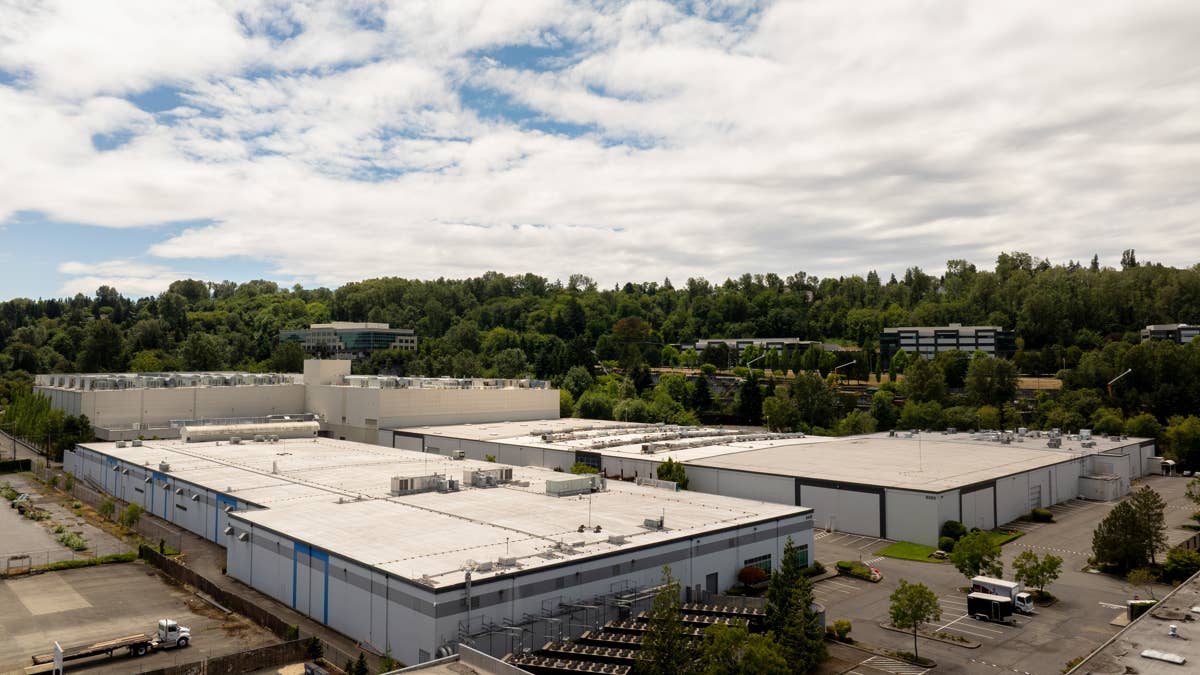
FuelCell needs higher factory output to lower its costs
FuelCell’s current production level is still too low to spread factory costs across enough equipment.
During Q3, the company said product costs and manufacturing overhead associated with the initial Fit order exceeded the contractual pricing for Phase 0.
FuelCell said low production volume was one reason each unit carried more fixed manufacturing overhead.
The company expects higher output, larger purchasing volumes, and further cost reductions to lower per-unit costs, although it cautions that those improvements may not arrive on schedule.
FuelCell’s production ramp
- 37.1 MW: Annualized production rate during Q3.
- 100 MW: Annualized rate management is targeting in October 2026.
- 500 MW: Annualized manufacturing capacity FuelCell plans to support by June 2028 after expanding its Torrington, Conn., facility.
- $200 million to $275 million: Estimated cost of that expansion.
FuelCell had $737.3 million of cash, cash equivalents, and restricted cash at the end of July.
A substantial part of its recent funding came from issuing stock. Public offerings and common-stock sales generated $453.6 million of net proceeds during the first nine months of fiscal 2026, and operating activities used $73.4 million of cash over the same period.
Selling shares gives FuelCell money to expand production, but it can dilute existing shareholders.
FuelCell is targeting positive adjusted EBITDA in fiscal Q4 2027. Management says that goal depends partly on converting awarded projects into committed backlog, keeping customer deliveries on schedule, and reducing costs.
The next test is whether signed data-center orders arrive quickly enough to keep the expanded factory busy, and whether higher production brings FuelCell’s costs below the prices customers have agreed to pay.
