
After closing hundreds of locations in recent years, a pharmacy giant is continuing to shrink its retail footprint, with more stores disappearing from communities across the U.S.
The latest closures come as the chain works to reshape its business and focus on locations it believes have a stronger long-term future. For customers, however, the changes raise the bigger question of what happens when a neighborhood pharmacy is no longer there.
The company is not alone in pulling back from brick-and-mortar retail. Major drugstores, including CVS, have closed locations in recent years, while Rite Aid no longer exists as a physical retail chain following its bankruptcy and widespread store closures.
Founded in 1901, Walgreens is the second-largest pharmacy chain in the U.S., with more than 8,500 stores nationwide.
Walgreens 2026 store closures
Walgreens has shuttered at least 18 stores across 11 states and Washington, D.C., in 2026, with additional closures planned, according to USearch.
The Walgreens locations that have closed in 2026 include:
- San Francisco, California: 1301 Market St
- Fort Myers, Florida: 12041 Palm Beach Blvd
- Chicago, Illinois: 3046 N Halsted St
- Chicago, Illinois: 2351 E 71st St Suite A
- Chicago, Illinois: 8628 S Cottage Grove Ave
- Rockford, Illinois: 5503 E State St
- Deerfield, Illinois: 108 Wilmot Rd
- Bridgeton, Missouri: 11404 St Charles Rock Rd
- St. Louis, Missouri: 2202 Chambers Rd
- Brooklyn, New York: 120 Court St
- Dumont, New Jersey: 406 Madison Ave
- Bogota, New Jersey: 33 River Rd
- Beaufort, South Carolina: 1294 Ribaut Rd
- Houston, Texas: 1805 Greens Rd
- Arlington, Virginia: 1301 S Joyce St Ste. D3
- Seattle, Washington: 2400 S Jackson St
- Washington, D.C.: 1815 Connecticut Ave NW
- Milwaukee, Wisconsin: 2727 W North Ave
Walgreens expects to close about 100 stores nationwide in 2026. The 18 locations already closed represent only part of a much larger multi-year restructuring strategy Walgreens began outlining in 2024.
Why Walgreens is closing locations nationwide
In Oct. 2024, Walgreens announced plans to close approximately 1,200 underperforming stores over three years as the company worked to reverse declining sales and improve its financial performance.
The strategy came as the pharmacy industry faced several challenges, including changing consumer shopping habits, pressure on prescription drug reimbursement, rising operating costs, and increased competition from online pharmacies and other healthcare providers.
During Walgreens’ fourth-quarter fiscal 2024 earnings call, then-CFO Manmohan Mahajan said the company was prioritizing stores that were losing money, underperforming locations where Walgreens owned the property, and stores with leases approaching expiration.
Related: Aldi closes more stores, and yours could be next
“We are prioritizing closing locations that are cash flow negative, underperforming stores where we own the locations and ones where the lease expirations are coming due in the next few years,” said Mahajan.
He added that the closures were expected to help Walgreens redirect investment toward stronger-performing stores and improve the customer experience in those locations.
Walgreens was acquired by Sycamore Partners in Aug. 2025 in a take-private transaction valued at approximately $10 billion in equity. Including debt and potential future payments tied to healthcare asset sales, the total transaction value could reach $23.7 billion.
That change in ownership comes as Walgreens continues to determine which parts of its traditional retail model are worth maintaining and which locations no longer make financial sense.
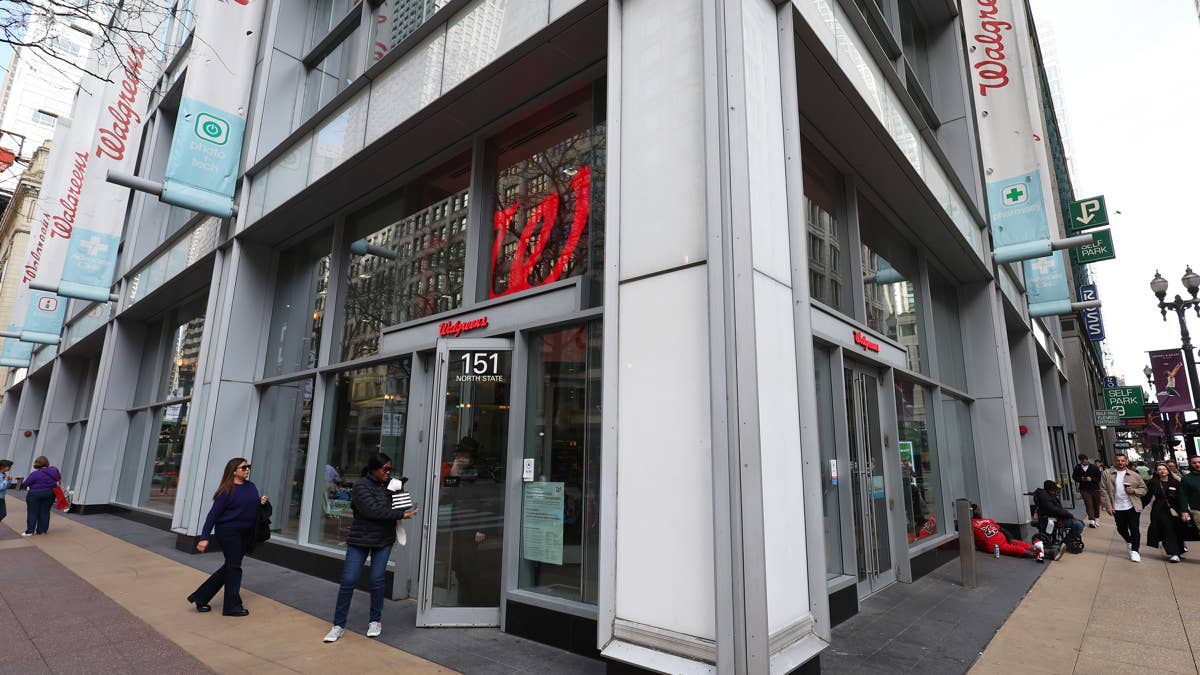 Walgreens closes more stores in 2026.
Terrence Antonio James/Chicago Tribune/Tribune News Service via Getty Images
What this means for Walgreens and customers
Walgreens has said it will continue to evaluate its store footprint as it seeks to improve profitability and adapt to changes in the pharmacy business.
One area of focus is smaller-format stores that place greater emphasis on prescriptions and personalized care. At the same time, locations that generate weaker returns or no longer align with the company’s long-term strategy are being considered for closure.
The restructuring has also extended beyond Walgreens’ retail stores.
The company recently shuttered a roughly 500,000-square-foot distribution center in Houston, resulting in 159 layoffs. The move highlights how Walgreens’ broader cost-cutting strategy extends into its supply and distribution network.
For customers affected by the store closures, Walgreens has created a Walgreens Store Closing Information section on its website. The resource includes information about prescription transfers, delivery options, and alternative locations.
For Walgreens, closing underperforming stores is a strategy for improving its financial position. For communities losing those locations, however, the consequences can extend far beyond retail.
A pharmacy can serve as more than a place to pick up prescriptions. For many consumers, particularly older adults and people managing chronic conditions, a nearby location can provide convenient access to medications and other healthcare services.
That makes the continued reduction in pharmacy locations part of a broader public-health concern.
According to the Centers for Disease Control and Prevention, nearly half of the U.S. population reported taking at least one prescription drug in the past 30 days, with prescription use particularly common among older adults and people with chronic health conditions.
Research published through the National Library of Medicine estimates that nearly 16 million Americans, or about 4.7% of the population, live in areas considered “pharmacy deserts,” where convenient access to a pharmacy is limited.
That makes the continued wave of drugstore closures significant beyond the retail industry. As Walgreens and other pharmacy operators reassess their store networks, some communities could find themselves with fewer nearby options for filling prescriptions and accessing pharmacy services.
Here’s some of my previous coverage on the pharmacy business:
- CVS warns it may have to close over 100 more stores
- Amazon tries to solve huge problem for 10s of millions of Americans
- Walmart tries to bring health and wellness to more Americans
“Community pharmacies have been staples of neighborhoods for more than a century. Unfortunately, current trends in pharmacy closures pose real threats to public health,” pharmacy researchers Lucas A. Berenbrok, E. Michael Murphy, and Sophia Herbert wrote in The Conversation.
They argue that policymakers should address the systemic issues contributing to pharmacy closures to help preserve access to medications, healthcare, and pharmacists.
Related: Grocery chain pays $40 million fine in pricing scandal deal
