
The mall is dead, or so we’ve been told. For years, shifting customer trends to e-commerce have dented foot traffic at malls, but the corner may have turned, and with it, the outlook for many iconic mall retailers, including Abercrombie & Fitch.
A couple of decades ago, when I was in my 20s and early 30s, Abercrombie & Fitch was one of the most popular mall-based retail stores, boasting over 1,000 locations nationwide and capturing attention with its arguably intimidating marketing, which featured aloof salespeople and shirtless models.
“Candidly, we go after the cool kids. We go after the attractive all-American kid with a great attitude and a lot of friends. A lot of people don’t belong [in our clothes], and they can’t belong. Are we exclusionary? Absolutely,” said then-CEO Mike Jeffries in a 2006 interview with Salon.
Abercrombie’s edgy persona allowed it to compete nicely against rivals for many years, including American Eagle Outfitters and Gap. However, sales and foot traffic were deeply dented by cultural shifts that made its concept of “cool clothes for beautiful people” seem dated and out of touch.
In 2014, Jeffries was forced out amid slowing sales; store closures followed, and then the Covid pandemic hit, dealing another significant blow. Overall, Abercrombie’s store count, including its namesake brand and Hollister, fell below 800, down from 1,096 in 2010.
Undeniably, Abercrombie & Fitch’s management hasn’t had it easy, but tough decisions appear to be paying off, given recent customer trends. As a result, the company is positioned as one of retail’s great comebacks. Sales are rebounding, the company’s turning a handsome profit, and stores are opening again.
Abercrombie & Fitch has a rich history
Abercrombie & Fitch’s roots date back to 1892, when it was founded as a high-end sporting goods retailer by David T. Abercrombie. The company’s first store, located in Manhattan, New York, gained popularity among many wealthy patrons, including Ezra Fitch, who became so enamored that he invested in it in 1900 before acquiring it lock, stock, and barrel in 1907.
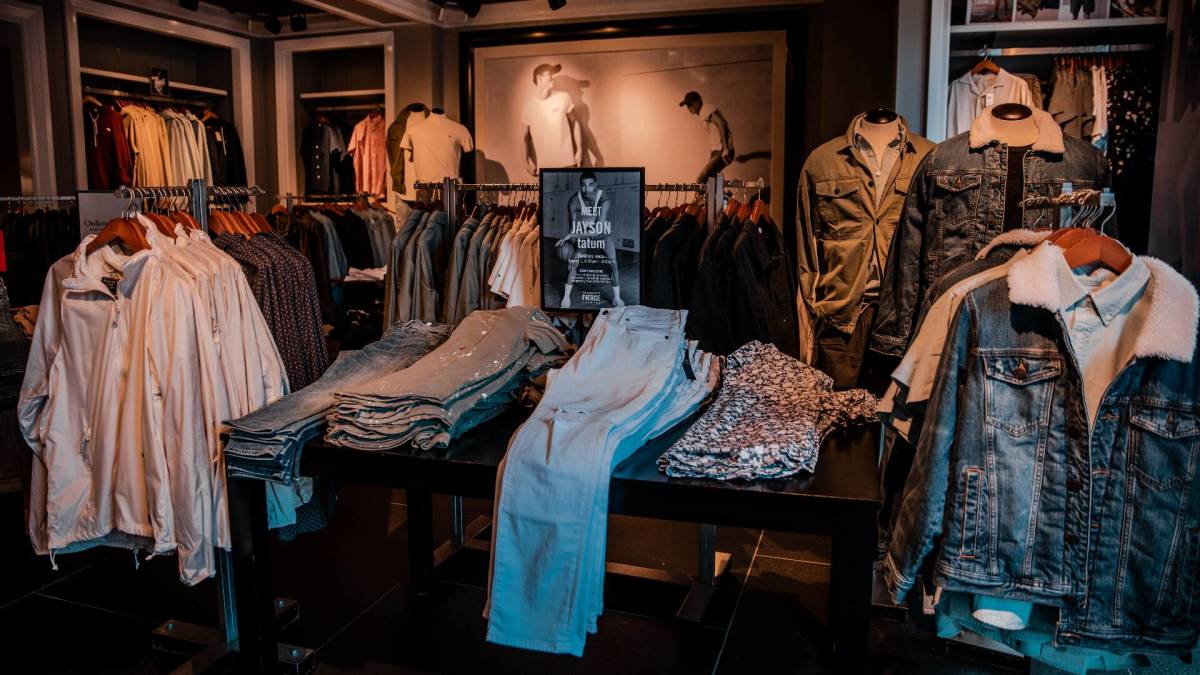 Abercrombie & Fitch is opening stores as sales rebound in 2025.
Shutterstock
By 1917, its store occupied 12 stories on Madison Avenue and East 45th Street, selling everything related to the outdoors, from hot air balloons to fishing reels. Abercrombie was able to survive the Great Depression and later expanded to new locations, including San Francisco, and posted record profitability after World War II.
However, sales began slumping in the 1960s, and eventually, the company declared bankruptcy in 1976, leading to sporting goods retailer Oshman’s buying the brand in 1978.
The company languished until 1988, when Limited Brands, the parent company of Victoria’s Secret and Express, acquired it and committed to a massive expansion in 1992, targeting teen apparel under the leadership of clothing executive Mike Jeffries.
Jeffries’ marketing campaign, which targeted a preppy, “all-American” look, soon turned Abercrombie and Fitch (ANF) into a sought-after, high-priced retailer, operating 67 stores by 1994 and generating sales of $165 million.
By 1996, the retail chain had grown large enough for Limited Brands to spin it off in its own IPO on the New York Stock Exchange, providing the financial firepower to fuel additional growth.
It launched Abercrombie Kids in 1998, and with 250 stores nationwide, sales surpassed $1 billion in 1999. Hollister was launched in 2000, targeting the Southern Californian surf vibe, and sales continued to climb, exceeding $2 billion in 2004.
Abercrombie hits a rough patch
The Great Recession’s impact on customer wallets and shopping behavior led Abercrombie to rethink its store footprint. It closed some stores in 2010 and 2011, and in 2012, announced a major restructuring that included closing 180 stores by 2015.
Jeffries’ exclusionary 2006 quote in Salon resurfaced in 2013, leading to customer backlash. Following 11 consecutive quarters of declining sales at stores open at least one year, and a 77% drop in profit in fiscal 2013, Jeffries was forced out of the company in 2014, leaving The Office of the Chairman in charge until current CEO Fran Horowitz was named CEO in 2017.
Since then, Horowitz has had to navigate ongoing foot traffic challenges at indoor malls, Covid-era shutdowns in 2020, runaway inflation in 2021, and stiff competition as low-cost, fast-fashion retail gained favor and big-box stores, including Walmart and Target, pushed more deeply into teen and young adult apparel with private-label brands, such as Walmart’s No Boundaries.
It didn’t help that consumers were also moving more of their apparel shopping online, no longer feeling it necessary to try on clothing before buying, as return policies and costs eased. Since 2014, online retail apparel sales have more than doubled, accounting for as much as 35% of all U.S. clothing sales in 2025, pressuring mall traffic.
Indoor mall slump forced Abercrombie shift
Many indoor malls were struggling before the pandemic forced shoppers away, mainly because of e-commerce and the nationwide expansion of Walmart, Target, Home Depot, and Costco.
The rise of big-box and wholesale retailers took a significant toll on regional department stores and national mall anchors, including Sears and Kmart. Declining sales led to bankruptcy for major players like Montgomery Ward, and industry-wide, thousands of stores closed. Kmart merged with Sears in 2005, and the merged company declared bankruptcy in 2018.
More retail:
- Major office supply retailer sold after it closed 1,000 stores
- AutoZone makes harsh decision customers won’t like
- Iconic retail chain closed 80% of its stores
Abercrombie called out the negative impact caused by mall anchors closing in its 2014 annual report, writing:
“Our stores benefit from the ability of the malls’ ‘anchor’ tenants, generally large department stores and other area attractions, to generate consumer traffic in the vicinity of our stores and the continuing popularity of malls in the U.S…..Some malls that were in prominent locations when we opened stores may cease to be viewed as prominent. If this trend continues or if the popularity of mall shopping continues to decline generally among our customers, our sales may decline, which would impact our gross profits and net income.”
Still, the trend away from indoor malls appeared to stabilize by 2019, when annual indoor mall visits were flat; however, visits collapsed by 41.1% in 2020 because of Covid, according to Placer.ai data, causing Abercrombie to once again reconsider its path forward.
As part of that effort, Abercrombie closed 137 stores in 2020 and accelerated its e-commerce plan.
CEO Horowitz wrote in the 2020 annual report: “We closed eight A&F flagship locations and 129 non-flagship stores, removing 1.1 million underproductive gross square feet or 17% from our global base.”
The closures and more committed embrace of e-commerce were gambles, but they are paying off.
Abercrombie gets back to growth
Online sales have surged to 54% of Abercrombie’s total revenue, up from 33% in 2019, and the company now generates more money at its namesake online store than it does within its brick-and-mortar locations.
The right-sizing of its store footprint since 2010 has focused on Abercrombie & Fitch, rather than Hollister, which markets toward teens and younger Gen Z shoppers.
According to Abercrombie’s annual reports, the company operated 555 Abercrombie & Fitch and Abercrombie Kids stores in early 2010; however, that figure had decreased to 224 as of February 2022.
Abercrombie & Fitch namesake store count each fiscal year:
- 2015: 393
- 2016: 379
- 2017: 355
- 2018: 330
- 2019: 319
- 2020: 308
- 2021: 238
- 2022: 224
- 2023: 233
- 2024: 247
- 2025: 278 Source: Abercrombie & Fitch annual reports. Data reflects each year’s stores at the end of January or the beginning of February (fiscal year).
Since then, however, the company has been slowly re-expanding, carefully opening stores as sales and profits have warranted.
Abercrombie & Fitch’s total sales were essentially unchanged between 2018 and 2022, but have since accelerated. Wall Street analysts expect revenue to reach $5.3 billion this year, the highest in the company’s 133-year history, and up from $3.7 billion in 2022.
Last fiscal year, its namesake brand generated $2.56 billion in sales, up from $1.29 billion in 2020, while Hollister sales totaled $2.39 billion, up from $1.83 billion. About 60% of Abercrombie & Fitch’s brand and 30% of Hollister’s sales are now digital, rather than brick-and-mortar.
Similarly, profit has risen, with earnings per share estimates for this year topping $10 for a second consecutive year, up from $4.35 in 2022.
Abercrombie & Fitch’s annual revenue:
- 2025: $5.27 billion
- 2024: $4.9 billion
- 2023: $4.3 billion.
- 2022: $3.7 billion. Source: Abercrombie & Fitch; Yahoo!Finance
Abercrombie & Fitch’s annual operating income:
- 2024: $741 million.
- 2023: $485 million.
- 2022: $93 million. Source: Abercrombie & Fitch
In 2024, the company opened 65 stores and closed 41 stores, resulting in a net increase of 24 locations. Management expects to open 60 new stores and close 20 underperforming stores, resulting in a net addition of 40 locations this year (36 new stores are under the Abercrombie banner).
As of the end of the third quarter, the company operates 304 namesake stores and 523 Hollister locations — a sharp contrast to the previous decline.
The openings stem from Abercrombie’s “Always Forward Plan,” announced in June 2022, which aimed for revenues of at least $4.3 billion and an operating margin of at least 8% by the end of fiscal 2025. The company exceeded those targets, given expectations of more than $5 billion in sales this year and an operating margin of 15% in 2024, as well as 13.5% this year.
Overall, the new stores and growth at existing locations propelled Abercrombie’s total revenue higher in the third quarter.
“I am happy to report our 12th consecutive quarter of growth, with sales up 7% to a record of $1.3 billion,” said CEO Horowitz-Bonadies on the third quarter earnings call.
Hollister has been particularly strong, with sales up 16% year over year last quarter, following 14% year-over-year growth one year ago.
What’s next for Abercrombie & Fitch?
Abercrombie & Fitch is far healthier than it was a decade ago, but it does face challenges. Customers are increasingly feeling the pinch as unemployment grows, pay raises shrink, and inflation climbs. Meanwhile, tariffs are dragging on profits.
The company, like most retailers, imports its clothing from overseas. It’s diversified its sourcing to “over a dozen countries,” according to CFO Robert Ball, but that didn’t stop tariffs from reducing operating margin by 1.7% this year, and 2.1% in Q3.
Management expects tariff headwinds to intensify, and as a result, plans to selectively raise prices to offset some of the impact on its bottom line.
“We also continue to expect $60 million of tariff impact net of mitigation efforts or around 360 basis points [in Q4],” said Ball. “We are taking targeted price increases here for the spring. So that inventory will start delivering here post-holiday.”
This suggests that shoppers will have to pay more, at least for some items, in 2026. How that impacts customer behavior may depend heavily on what happens in the U.S. economy. If the jobs market improves, customers may keep shopping despite higher prices; however, if it worsens, it could pose a headwind to foot traffic.
Nevertheless, Abercrombie & Fitch’s solid financial footing and store growth plans suggest it’s made a quiet comeback, surprising many.
“We remain focused on bringing the brand back to growth by diligently executing the playbook that has delivered a double-digit CAGR on sales from 2019,” said Horowitz.