Federal Reserve Chairman Jerome H. Powell on Aug. 22 gave an indication of possible interest rate cuts ahead and noted a high level of uncertainty that is making the job difficult for monetary policymakers.
In prepared remarks the central bank leader cited “sweeping changes” in tax, trade and immigration policies. The result is that “the balance of risks appear to be shifting” between the Fed’s twin goals of full employment and stable prices.
💸💰Don’t miss the move: Subscribe to TheStreet’s free daily newsletter 💰💸
While he said the labor market remains in good shape and the economy has shown “resilience,” downside dangers are rising.
At the same time, CNBC reported that Powell said tariffs are causing risks that inflation could rise again.
This is a stagflation scenario that the Fed needs to avoid, Powell said.
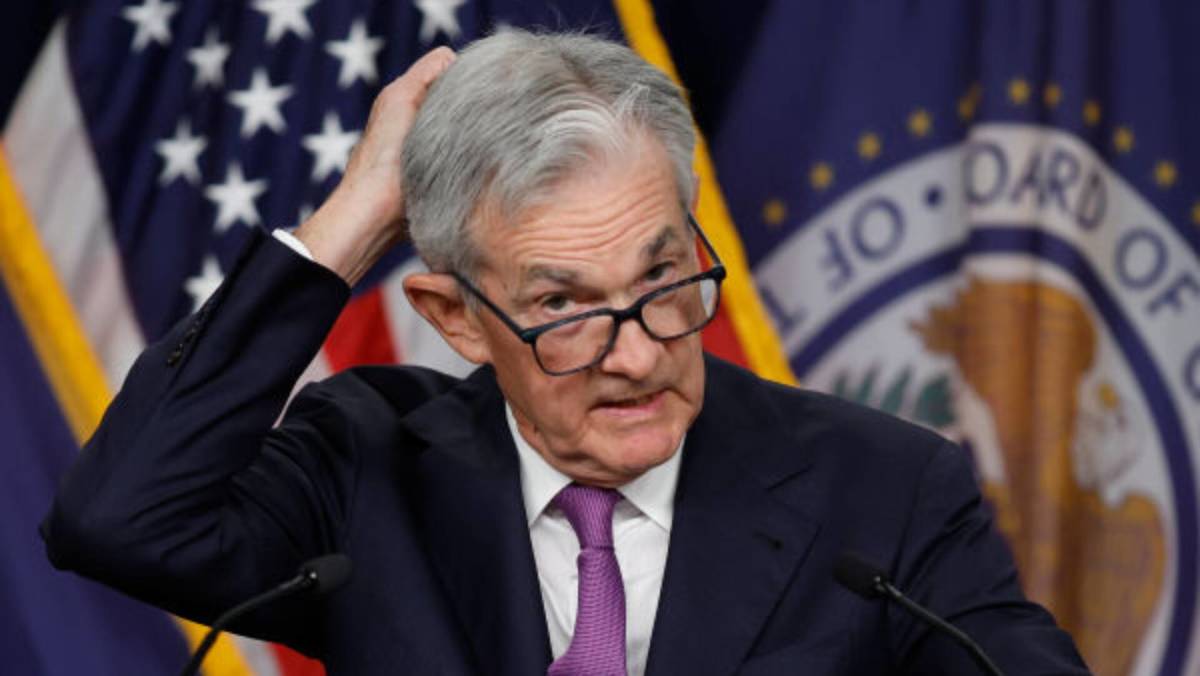 Federal Reserve Chairman Jerome Powell is speaking today at the Jackson Hole symposium.
Fed’s Powell notes ‘shifting balance of risks’
With the Fed’s benchmark interest rate a full percentage point below where it was when Powell delivered his keynote a year ago, and with the unemployment rate still low, conditions allow “us to proceed carefully as we consider changes to our policy stance,” Powell said.
“Nonetheless, with policy in restrictive territory, the baseline outlook and the shifting balance of risks may warrant adjusting our policy stance,” he added.
His speech at the Jackson Hole Economic Symposium was closely watched by global policymakers and investors for any hint of the Fed’s next step.
His keynote remarks set the stage for the Fed’s policy meeting next month.
Related: DOJ turns up the heat to remove embattled Fed official
The divided Federal Open Market Committee, the Fed’s monetary-policy panel, must choose between controlling inflation and preventing further weakness in the labor market.
The Fed’s dual mandate is to achieve both price stability and maximum employment, but since these goals can conflict, policymakers must continuously balance them.
That balancing act is exactly what Powell, whose term ends in May, faces now: Which is the bigger risk?
Powell has to decide which is the priority: rising inflation due to President Donald Trump’s historic tariffs or a jobs market that has slowed nearly to a halt this summer, in part due to the administration’s immigration policy plus AI’s impact on entry-level roles.
White House presses for lower rates
The decision is further complicated by intense, unprecedented pressure from the White House and Trump’s allies for drastically lower interest rates.
Team Trump upped the stakes this week demanding the resignation of Fed Governor Lisa Cook over unsubstantiated allegations of mortgage fraud.
The most recent Fed interest rate cut was in December.
At last month’s FOMC meeting, most of the participants’ concerns about tariff inflation took priority over softening in the labor market.
Market watchers and some economists increasingly expect the Fed to restart rate cuts in September.
Powell indicated in July that the FOMC would be open to easing its policymaking if the labor market further weakened after the August jobs data were reported.
Related: Growing divide splits Federal Reserve as Jackson Hole approaches
The Fed chair now faces the delicate balancing act of measuring economic uncertainty without appearing to cave to Trump’s barrage of demands.
The FOMC minutes from July do not name the participants. However, the majority left the Federal Funds Rate unchanged in a range of 4.25% to 4.5% last month, citing elevated uncertainty, despite seeing economic activity moderating during the first half of the year.
Powell, at that time, characterized the labor market as “solid” but said inflation remained “somewhat elevated.”
In 2021, the Fed underestimated inflation by calling it transitory or a one-time hit to the economy. This led to aggressive rate hikes as prices surged to four-decade highs.
While the Fed succeeded in bringing inflation closer to its 2% target, Trump’s new tariffs have reignited price pressures.