
Markets feel safest right before the story gets complicated. The biggest, most crowded trades pull in the most money, and the most money tends to assume that whatever has been happening will simply keep happening.
That assumption usually holds. Then a few people start quietly putting cash on the other side, and the rest of us learn why much later.
For three years, the safest assumption in technology has been simple. The world cannot get enough artificial intelligence (AI), and the company selling the shovels can charge almost whatever it likes.
Data center spending climbed, along with chip demand. And so did the bill.
Nvidia (NVDA) became the most valuable company on the planet on the strength of that one idea, worth more than $5 trillion. Owning it, whether you bought the shares yourself or hold it inside an index fund, became about as close to a sure thing as the stock market offers.
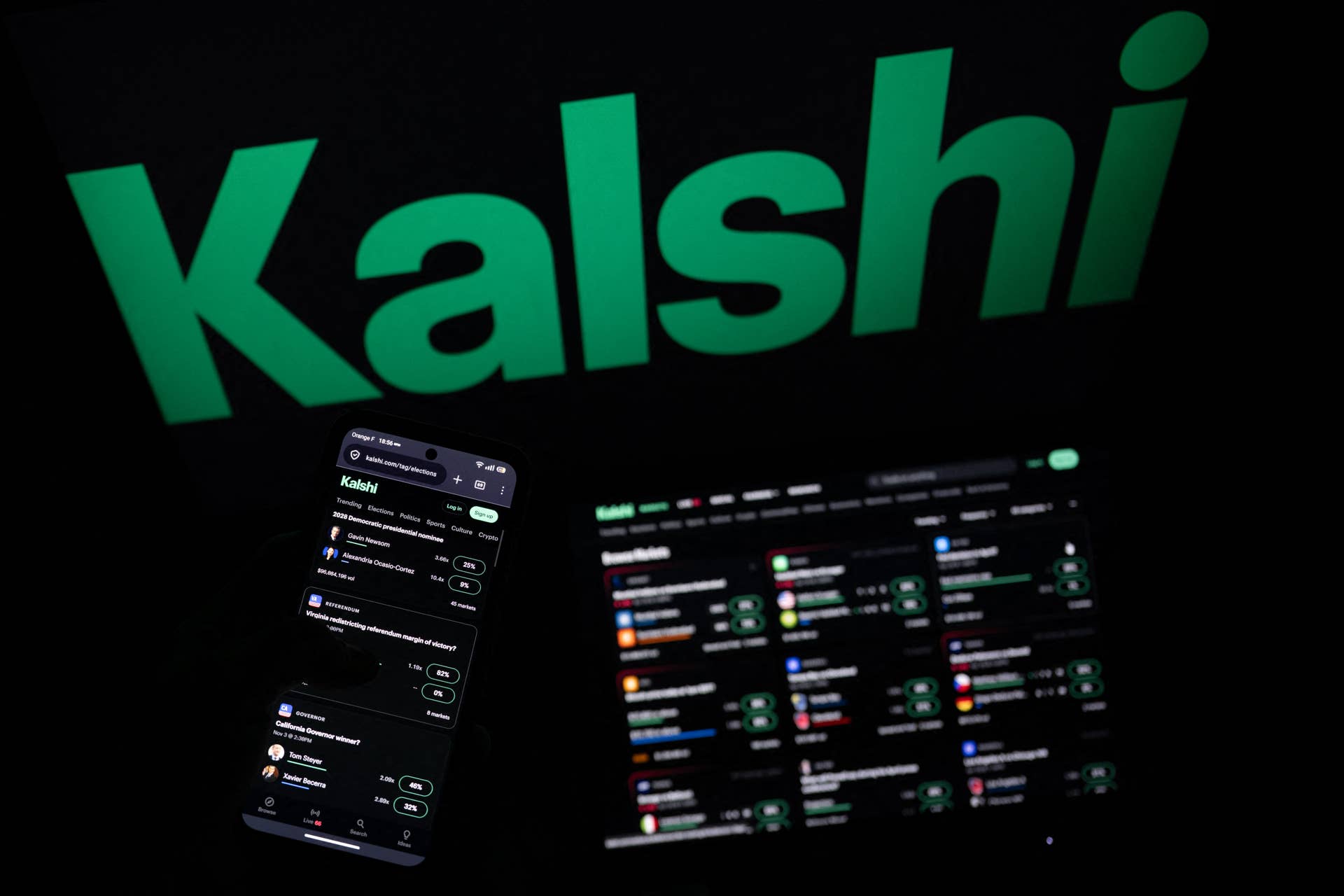
A small but fast-growing corner of the market now thinks one piece of that sure thing is already slipping. Traders on the prediction platform Kalshi are wagering that the price Nvidia’s flagship chip can command has peaked, at least for this quarter, according to CNBC.
That is a quieter, stranger bet than calling the top on the stock. It is a wager against Nvidia’s ability to keep raising the rent.
Why the price of compute is Nvidia’s real story
Nvidia’s real product is access. It sells time on the most sought-after machines in the economy, and most buyers now pay for that time by the hour.
Few companies buy data centers outright. They rent computing power from cloud providers and from a newer crop of specialist suppliers known as neoclouds, paying for hours on Nvidia’s graphics processing units, or GPUs, the way you might pay for electricity.
More Tech Stocks:
- Morgan Stanley sets first-ever Cerebras stock price target
- Cathie Wood buys $52 million of surging tech stock
- Citi resets Adobe stock price target
That hourly rate is the cleanest read on how much pricing power Nvidia really has. A stock price reflects what investors hope will happen. The rent on a chip reflects what buyers are paying right now, today, in cash.
When demand outruns supply, the rate climbs and Nvidia’s margins climb with it. When supply catches up, the rate slips, and so does the hope that good Nvidia news keeps the rally alive.
The flagship machine is the B200, Nvidia’s Blackwell-generation GPU, built to run the enormous data centers behind today’s largest AI models.
Its rental price has become something you can actually track. A startup called Ornn publishes a live index of GPU rental rates, normalized across providers and hardware, and that index is now the exact thing the bettors are trading against.
 Traders on Kalshi bet Nvidia’s best price is already behind it.
MARTIN LELIEVRE / Getty Images
What the Kalshi traders are actually wagering
The bet itself is narrow and precise. On Kalshi, a contract asks whether the B200’s compute price will close the second quarter above a set level, measured by Ornn’s index, and traders have turned pessimistic that it will, according to CNBC.
The reason is sitting in the price chart. The B200’s compute rate hit $6.11 an hour on May 30, its highest mark in three months, then slid to $4.22 by June 21, according to Ornn.
When I lined those numbers up against the stock, the gap was hard to ignore.
- Nvidia is up roughly 12% in 2026 but has slipped about 3% in the past month.
- The VanEck Semiconductor exchange-traded fund (SMH) has surged about 84% this year and 15% in the past month.
- Memory chipmakers Micron Technology (MU) and Sandisk (SNDK) have each jumped nearly 60% in a single month as money rotated their way. Source: CNBC
The chip rally has roared ahead without its biggest name. Wall Street has shifted its attention to memory and infrastructure, the next links in the AI buildout, and left Nvidia sitting on the sidelines.
The uncertainty cuts in every direction. Buyers do not know how much computing power they will need, suppliers do not know how much to stock, and even “the manufacturers, like Nvidia, don’t know how much they should produce,” Santa Clara University finance professor Seoyoung Kim told CNBC.
There is a real bull case underneath all this, and I take it seriously.
Earlier this month, Google (GOOGL) agreed to pay SpaceX (SPCX) about $920 million a month to rent AI computing capacity from late 2026 through mid-2029, a deal that puts roughly 110,000 Nvidia GPUs to work, according to CNBC.
Related: AMD analyst sees something beyond Nvidia’s shadow
RBC Capital Markets read that as a sign Nvidia still looks better positioned than its rivals, arguing the wave of rental deals should ease fears about it losing ground to cheaper custom chips, CNBC reported.
It is worth knowing who runs the casino. CNBC and Kalshi share a commercial relationship that includes a minority investment, which CNBC discloses in its own coverage. The bet is real either way, but the megaphone is not neutral.
The bigger shift is that compute is starting to trade like a raw material. Ornn co-founder Kush Bavaria has said compute is becoming “a commodity class on par with energy and metals,” according to DataCenterDynamics, which is why a chip’s hourly rate now has its own market.
What a cooling chip market means for your money
This is the part that reaches your kitchen table.
If you have a 401(k) or an S&P 500 index fund, you own Nvidia, whether you chose it or not. The company is the heaviest single weight in the indexes most Americans hold, so its pricing power is quietly your pricing power, too.
What strikes me, looking at the whole picture, is how lonely Nvidia’s position has become. The money chasing AI is still pouring in. It is just pouring into the chips and infrastructure around Nvidia rather than the company itself.
A prediction market betting the B200’s rate stays below its peak is not forecasting collapse. It is forecasting something subtler and more useful. The era of charging whatever it wants may be giving way to an era of charging what the market will bear.
For a $5 trillion company, that distinction is the difference between a stock that keeps compounding and one that simply holds its ground while everything else runs.
The contract resolves at the end of June, so the traders learn soon whether they were early or simply wrong. Nvidia reports earnings again in late summer, where the rent it collects per chip will show up in the only number that ever truly mattered — the one in your account.
Related: Nvidia’s $6.9 billion side bet just paid off in a big way
