
When a bank goes bust, federal regulators step in to make sure there’s as little impact on customers as possible.
Federal regulators like the Federal Deposit Insurance Corporation (FDIC) and the Federal Reserve ensure that customers’ money is secure and that another bank will buy the failing institution.
It’s designed to keep the American economy going.
Recent bank failures
- March 2023: Silicon Valley Bank in California fails after a bank run. Regulators transferred the bank deposits to First-Citizens Bank & Trust Company, according to The New York Times.
- March 2023: New York-based Signature Bank closes and is swallowed by Flagstar Bank, Banking Dive reports.
- May 2023: First Republic Bank fails and is sold to JPMorgan Chase Bank. It’s the second‑largest failure by assets since 2008, per NPR.
- November 2023: Iowa-based Citizens Bank of Sac City fails, and its deposits are absorbed by Iowa Trust & Savings Bank, The Des Moines Register reports.
- April 2024: Republic First Bank in Pennsylvania is closed. Fulton Bank absorbs it, according to Reuters. It is the only U.S. bank failure in 2024.
- January 2025: Illinois-based Pulaski Savings Bank fails. Millennium Bank assumes its deposits, reports American Banker.
- January 2026: Chicago’s Metropolitan Capital Bank & Trust bank is the first bank to go under in 2026. It is absorbed by First Independence Bank in Detroit, per the Chicago Sun Times.
While bank failures aren’t common, they do happen. There have been 14 bank failures since 2020, according to FDIC data. Most of those happened in 2023, when a bank run on Silicon Valley Bank resulted in several tech-heavy banks failing in the subsequent months.
Now, a change in FDIC policy means a big change in who can buy a failed bank.
FDIC changes bank rules to pave way for private capital investors
On March 23, the FDIC overturned a 2009 rule that made it difficult for private capital firms to bid on failing banks.
When a bank fails, other financial institutions that are interested in absorbing the bank can place a bid. The FDIC or a state regulator will take over the bank and accept any offers to buy the failed bank, in the least costly deal.
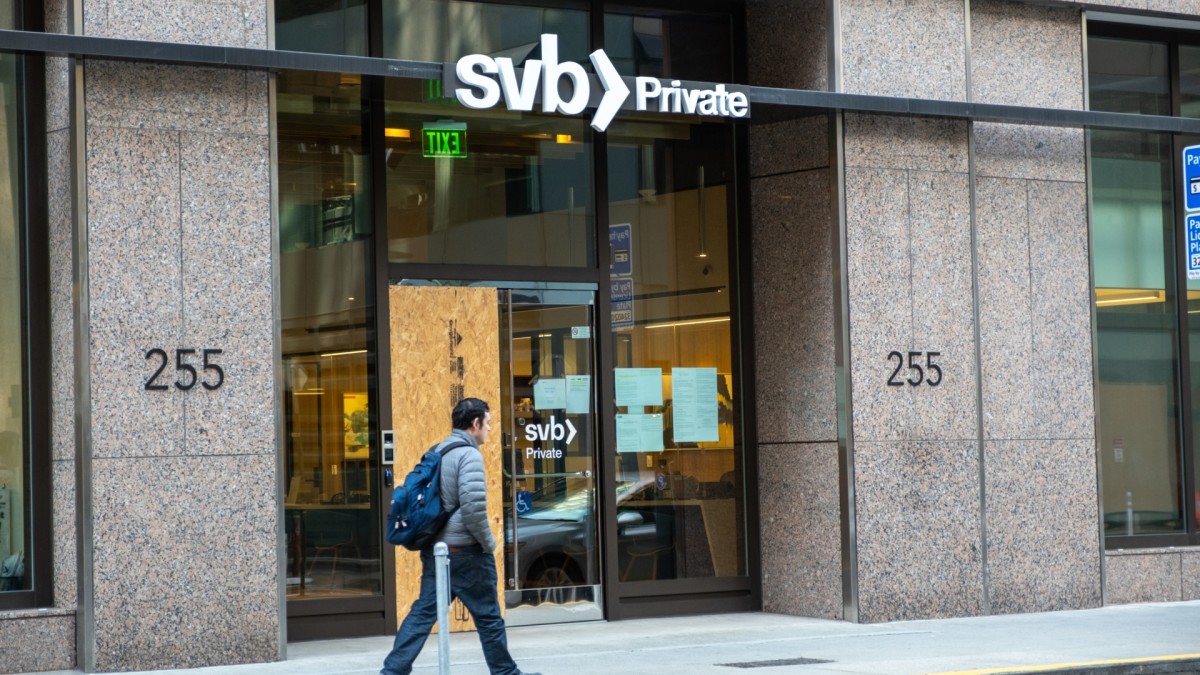 The sudden failure of Silicon Valley Bank in 2023 is one reason the FDIC has made it easier for private capital to bid in bank failures.
While private capital investors are allowed to bid, the 2009 rule created extensive conditions for private capital that other banks didn’t have to contend with. These included very high capital standards, limits on transactions, and very lengthy ownership limits.
The FDIC stated it was concerned that the policy discouraged and limited investments by nonbanks.
“The FDIC recognizes that nonbank entities such as private equity firms can play a significant role in the resolution process, given their ability to access and deploy significant pools of capital,” the regulator stated.
In other words, private capital investors have a lot of money and could help prevent bank failures from having any sort of ripple in the economy.
‘Mo money, less problems? Nonbanks can now more easily bid on failed banks
It’s the run on Silicon Valley Bank and other tech-focused banks that has led the FDIC to rescind the 2009 rule.
The “rapid speed of the failures” of these banks showed the need for a shift on how regulators prepare and communicate with potential acquirers, the FDIC stated. While private capital investors made a bid for these banks, they ultimately lost out due to the 2009 policy, the FDIC concluded.
More Private Credit News
- This private credit fund just suspended withdrawals — is it a warning for the economy?
- Apollo CEO calls out private-credit shakeout
- Deutsche Bank signals $30B risk to private credit
“Given the increased speed with which a bank failure may occur, in part driven by the advancement of technology and ongoing evolution of the financial system, these impacts could, in turn, result in considerably increased costs of resolution and risk to the Deposit Insurance Fund,” the FDIC memo stated.
FDIC Chairman Travis Hill has previously spoken about the benefits of opening channels to nonbanks in order to soften the blow on FDIC deposits after a bank closure.
Speaking at the Bankers Association’s 2026 Washington Summit in early March, Hill hinted at the rescinded rule and the possibility of creating a cross-regulatory emergency exception that would allow nonbanks to quickly set up charters to bid on failed banks.
Related: Bank mergers are on the rise: Your bank could be next