
The housing market has faced several roadblocks in recent years. Rising home prices and stubborn mortgage rates have made homebuyers hesitant, while sellers opted to wait for rates to drop before listing their homes.
Slowed construction of new homes, combined with fewer listings, created a housing shortage, increasing competition among buyers and worsening the housing gridlock.
🏦 🏡 Don’t miss the move: SIGN UP for TheStreet’s FREE daily newsletter 🏦 🏡
After years of sellers having the upper hand in the housing market, housing inventory began rising this spring and has outpaced buyer demand.
Though overall demand has remained sluggish, experts hope that more favorable buying conditions and a shift in negotiating power will be enough to spur housing activity later this year.
In a release to TheStreet, Danielle Hale, Chief Economist at Realtor.com, shares predictions for the housing market imbalance, and when homebuyers can expect to regain buying power.
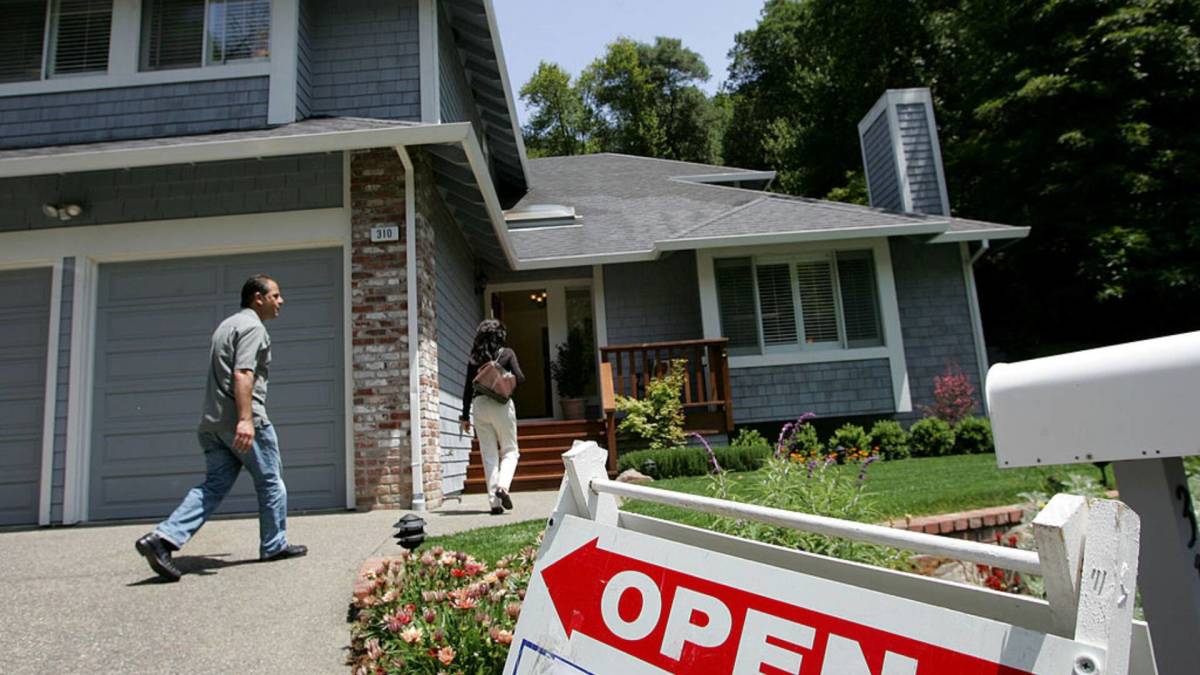 Rising home prices and consistently high mortgage rates, and a general lack of affordability have diminished homebuyer demand. However, Realtor.com believes a buyer’s market may be on the horizon.
Image source: Sullivan/Getty Images
Realtor.com economists anticipate a ‘buyer-friendly’ summer
In May, there were 34% more sellers than buyers in the market, creating a surplus of 500,000 homes. As sellers adjust to the new norm of elevated mortgage rates and houses stay on the market for longer, sellers have become more amenable to negotiation and price reductions.
Over the past few years, homes were going off the market in record amount of time, and it was typical for sellers to receive offers well above listing price and in cash. However, the market pendulum may be swinging toward homebuyers soon.
In March, 24% of Zillow listings received a price cut, during what is usually the start of the spring housing boom. Some economists believe that we’re not yet in a buyer’s market, but we’re on our way.
More on homebuying:
- The White House will take surprising approach to curb mortgage rates
- Housing expert reveals surprising ways to reduce your mortgage rate
- Dave Ramsey predicts major mortgage rate changes are coming soon
- Warren Buffett’s Berkshire Hathaway sounds the alarm on the 2025 housing market
“If you use months supply—the hallmark metric of whether or not we are in a buyer’s or seller’s market — we are not in a buyer’s market. The U.S. had 4.4 months supply in May; historically, a buyer’s market starts at 6 months supply,” Hale explained. “While some are calling this housing market a buyer’s market, I would say the market is shifting in a buyer-friendly direction.”
“We’re moving from a pretty seller-friendly housing market to one with more balance. This means we’re seeing more buyer-friendly market signals than we have in years. In fact, outside of a temporary blip early in the pandemic, we’re likely to see the most buyer friendly summer in nine years,” she continued. “This is consistent with the Realtor.com 2025 forecast that predicted 2025 would see the first ‘balanced’ housing market since 2016.”
The housing market will reset as housing supply continues to rise
Housing inventory is increasing across the U.S., even in some highly competitive markets in the Northeast and on the west coast.
The number of available houses on the market is set to exceed pre-Covid levels in 2019, with the value of unsold homes totaling over $700 billion. As this trend continues, homebuyers may see a market shift lasting several years.
Related: Bank of America predicts major housing market changes are coming soon
“Looking at historical data, buyer’s and seller’s markets have tended to be somewhat persistent,” Hale noted. “We’ve been in a seller’s market pretty consistently since 2016, when the supply averaged 4.4 months across the year. Since then, it’s averaged 4.0 or lower for each calendar year, signaling a tough market for buyers.”
“It’s worth pointing out that it followed a few years of balance (from 2012 to 2016) and before that, we saw roughly 6 years of a buyer’s market from 2006 to 2012 as the housing market worked through the over-building of the mid-2000s housing boom,” she continued.
Hale expects the market to rebalance as it always does, and highlights that price reductions and increased time spent on market will become increasingly important indicators.
“As the market rebalances, homebuyers and sellers can look for buyer-friendly signals. Sellers can typically expect it to take longer to sell a home, and they may have to reduce their home price — either directly in the listing or by accepting a below asking-price offer — to ultimately make a sale.”
Related: Veteran fund manager unveils eye-popping S&P 500 forecast