
If you’ve been hoping 2025 would finally ease the housing market crisis, the market has other ideas.
Elevated mortgage rates have kept buyers on the sidelines, stretching the affordability crisis while pushing households to rent longer. Despite the 30-year fixed rate easing to roughly 6.5% in early September, purchase activity has only started to thaw.
Meanwhile, the sales market has cooled off, too, with the construction pipeline that has helped cap rents thinning fast.
For perspective, existing-home sales have hovered at 4.01 million (SAAR) in July with 4.6 months of inventory.
That was a better result compared to the winter, but still a slow market compared with standards.
Listing supply is finally building as well, with active listings rising 20.9% year-over-year in August, though the median listing price remained flat at $429,990. That’s a clear sign that sellers are basically meeting buyers halfway.
Naturally, the investing world is paying close attention to what’s brewing behind the scenes with rents impacting REIT and landlord earnings power.
That said, a fresh Redfin datapoint points to something we haven’t seen since 2022, potentially rippling through apartment REITs, homebuilder sentiment, and the inflation outlook.
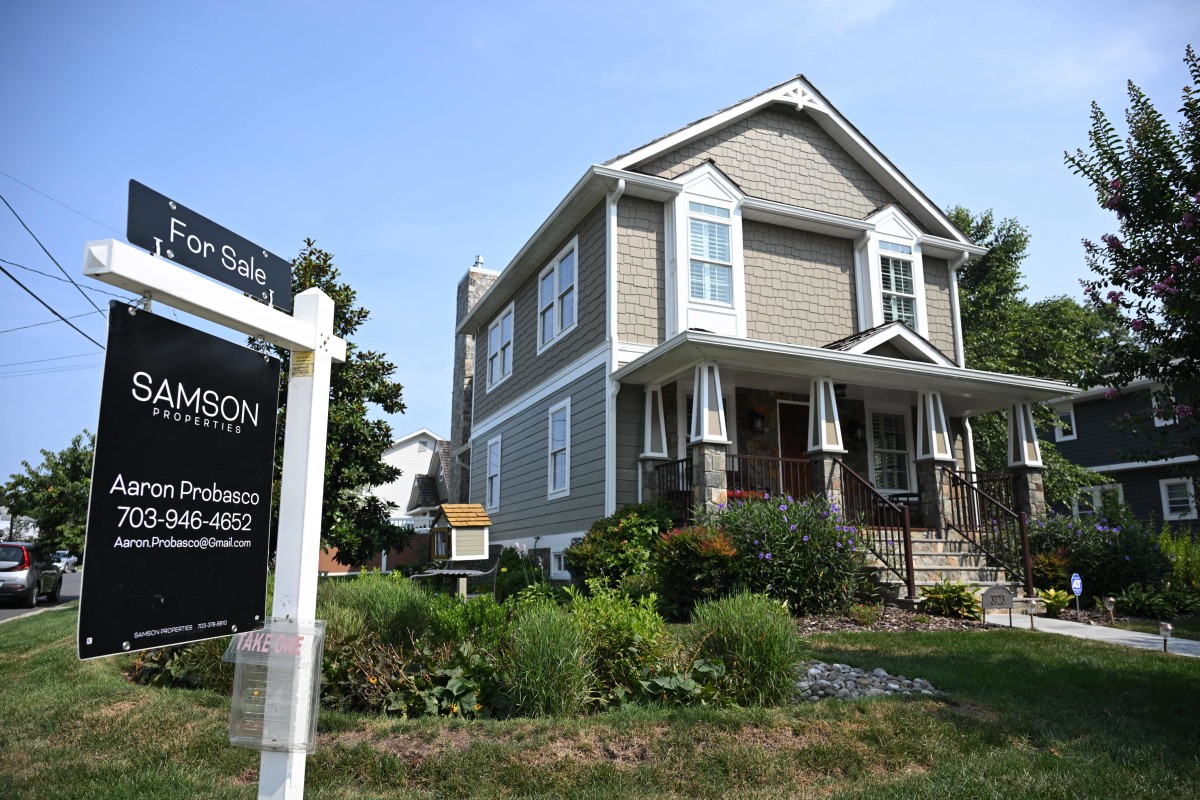 Redfin’s rental tracker points to a new squeeze.
Image source: Caballero-Reynolds/Getty Images
Rent surge hits fastest pace since 2022
The rental market is heating up again — and swiftly, according to a new Redfin update.
After a couple of years of flat or falling prices, U.S. asking rents are on a three-month streak of year-over-year gains.
That has renters paying just $70 below the all-time high set during the Covid pandemic housing frenzy. In August, the median asking rent jumped 2.6% to $1,790, which is perhaps the biggest jump since December 2022.
More News:
- Veteran tech analyst drops unexpected verdict on Apple stock
- Jim Cramer flips the playbook on the S&P 500
- Qualcomm just made a massive leap into Tesla’s turf
- Cathie Wood goes biotech shopping, shells out $7.7 million
A big part of what’s driving the turn is that supply is tightening while demand remains mostly robust.
Apartment construction, which took off in 2021 and 2022, has cooled off sharply as developers come up against higher borrowing costs, rising labor costs, and a weaker investor appetite.
Core housing market takeaways from the latest Redfin report:
- National rents: Median asking rent jumped to $45 year-over-year $1,790 (+2.6%).
- Metro standouts: Chicago surged 10.7%, San Jose gained 10.6%, and Philadelphia added 9.9%.
- Where rents fell: Only three metros saw drops, which include Austin at (-3.1%), Louisville (-2.4%), and Jacksonville (-1.9%).
- Apartment size split: 0-1 bedrooms led with a 4.4% increase to $1,650, while 2-bedrooms jumped 3.6% to $1,920.
- Supply squeeze: Completions dropped to 385,000 units annualized in July, down 45% from the prior year.
Why rents are climbing again
The rental market’s recent turn can be best described as a supply-and-cost story with clear investor fallout.
Developers went all-in during 2021–2022, which lifted multifamily completions to an August 2024 peak of 705,000 units.
However, by July of 2025, that run rate has effectively slipped to 385,000, representing a massive 45% drop.
Related: Broadcom ties its fate to a massive AI gamble
On top of that, financing is biting; following Fed hikes, construction loans have gotten costlier, with pricier materials and thinner investor appetite.
And the rent cycle has flipped accordingly. After peaking in summer 2022 and easing out for nearly two years, August’s median asking rent jumped 2.6% to $1,790, the biggest bump since December 2022.
Policy hasn’t caught up either, with cities pushing supply or caps showing mixed results.
For markets, the takeaway is simple. With shelter forming one-third of CPI, rising rents keep inflation sticky, while restoring landlord pricing power and squeezing household budgets.
On the flip side, the trend points to lower concessions and higher monthly costs for renters.
Also, it’s another reminder for investors that the housing affordability crunch isn’t easing while landlords are back in the driver’s seat.