
Southwest Airlines has decided to become as crummy and passenger-unfriendly as its rivals, which offer fares that come with nothing and market them as giving passengers choice.
Imagine how customers would react if McDonald’s started charging extra for lettuce, tomato and ketchup and other condiments and marketed this as offering customers more ability to customize their burgers. Or, better yet, the chain could add a grilling fee and charge for frying your french fries.
Consumers are not stupid, but where airfares are concerned they are sometimes desperate. Truly low-cost carriers like Spirit and Frontier operate on a truly a la carte basis because they cater to customers who truly need low fares.
Ultimately, their basic fares mean nothing because few people actually pay them. They may book them at first, but as their flight dates approach they are forced to spend more for options.
Few people travel with only a personal item — a purse or a small backpack — so almost everyone is forced to pay a baggage fee. And most people would prefer not to sit in a middle seat, and they’ll pay up to both pick a seat and not to be the last person to board.
Sure, a few people pay the ultralow fares, but they’re the exception, not the rule.
Southwest Air just sacrificed its identity
Southwest Airlines (LUV) had staked out a clear position as the low-cost carrier that did not nickel-and-dime its passengers.
It had been slowly paring that advantage by doing things like charging separate internet fees for each segment of a flight.
Now, it has fully given up that space and sacrificed its identity to appease some activist investors. The airline has dropped free checked bags for most passengers and in doing so has become just another airline.
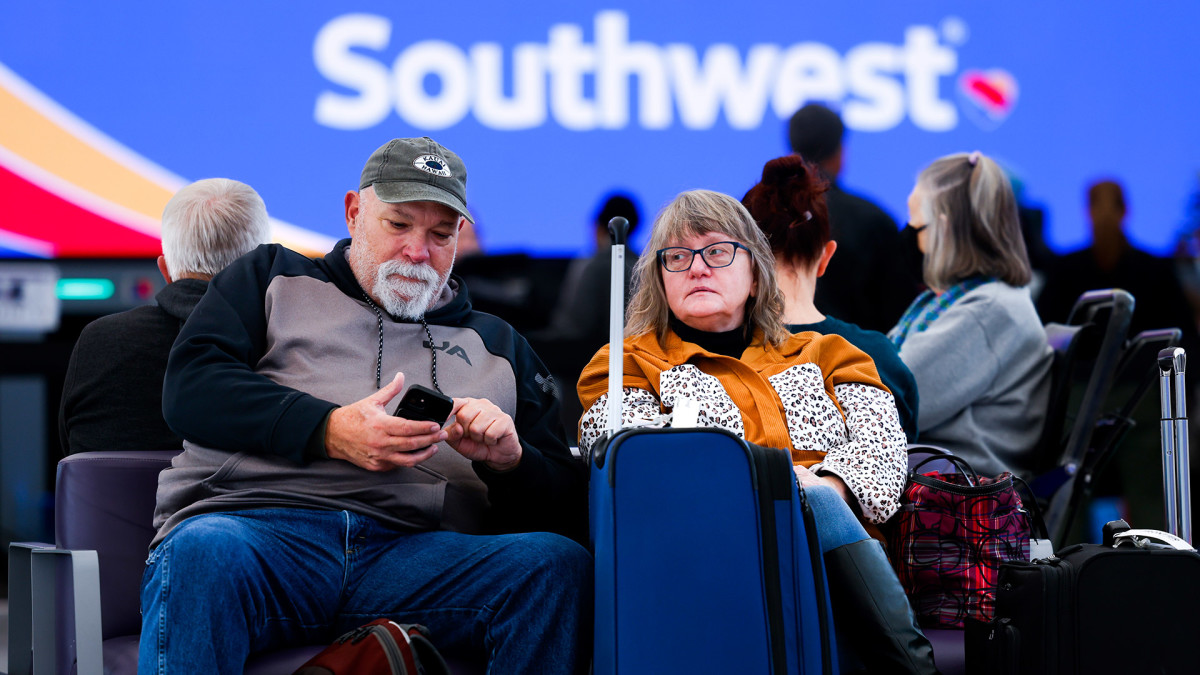 Southwest Airlines once had a clear mission.
Image source: Getty Images.
For decades Southwest Air’s mission was to serve its passengers. The airline offered fair prices that included all the basic things they needed.
The airline’s unique democratic approach removed the class system most airlines used. Yes, having a higher loyalty level helped you get on board earlier and there were other ways to get a better boarding position. But many passengers simply checked in 24 hours before and were assigned a place in line.
It was a very different system but it created an incredibly loyal fan base. The company also treated its workers well by never cutting jobs and paying reasonably well.
The airline has slowly been chipping away at the trust relationship with both passengers and its employees that it had built up over decades. But it hadn’t landed a particularly hard blow to its passengers until it made the checked-luggage decision.
Related: Southwest Airlines makes major change in key perk
The Christmas technology meltdown in December 2022 did not help, and the company’s approach to it — with complete disrespect for passengers — made things worse.
Southwest’s relationship with its workers also has exploded in recent years as its pilots union made scathing comments about management during labor negotiations. These weren’t the things people typically say during a tough negotiation..
Some comments made made clear that employees believed the company had now put money first and people second.
Southwest puts money first, passengers second
Eliminating the checked-baggage perk, a major brand differentiator, shows how much the company has changed. Chief Executive Bob Jordan tried to defend the move.
“We have tremendous opportunity to meet current and future customer needs, attract new customer segments we don’t compete for today, and return to the levels of profitability that both we and our shareholders expect,” he said in a statement.
That statement reads about as sincere as one from a hostage who professes their love for whichever country is holding them. Jordan is essentially being held hostage, sacrificing any integrity he had in an effort to keep his job.
Southwest Airlines used to be a brand that stood for something, a company that valued both passengers and employees.
It has sacrificed that at the altar of added fees and of prices that no longer reflect what many people will actually pay.