
Robert Kiyosaki has spent decades telling people that conventional financial wisdom is a trap designed to keep them poor. The 78-year-old author of Rich Dad Poor Dad built a media empire on his contrarian stance toward savings accounts, bonds, and employer-sponsored retirement plans.
His latest warning, posted on X on March 30, goes further than most of his past predictions about the system. Kiyosaki did not name just one or two assets he trusts for the year ahead in his most recent social media post. He listed exactly six investments he considers safe enough to hold, while everything else, in his view, falls apart around you.
His reasoning ties together U.S. debt levels, inflation, geopolitical conflict, and what he calls a broken monetary system headed for a reckoning.
Kiyosaki’s case against “fake” money
“If something could be printed, it was fake,” Kiyosaki wrote in his March 30 post on X, targeting government currencies and bonds. He called U.S. government bonds “the biggest lie” in modern investing, arguing that they lose purchasing power as Washington prints dollars.
His longstanding criticism of the centralized banking system centers on one thesis: assets that governments can create at will are fundamentally unsafe to hold in 2026.
The timing of his statement is notable, given that the total gross national debt reached roughly $39 trillion as of April 2026. The federal government is adding debt at about $7.6 billion per day, and the total amounts to about $289,204 per household, according to the Joint Economic Committee of the U.S. Congress.
The 6 assets on his survival list
The list spans physical commodities, agricultural essentials, and two of the largest cryptocurrencies by market capitalization, a mix consistent with the price targets he set late last year for Bitcoin, Ethereum, and precious metals. He grouped these assets under a single principle: scarcity creates real value over time in ways that printed money cannot.
Here are the 6 assets Kiyosaki believes will survive 2026
- Gold
- Silver
- Oil
- Food
- Bitcoin
- Ethereum
Gold and silver have backed up his thesis so far
Gold has been one of the best-performing major assets in 2026, trading near $4,760 per ounce as of mid-April this year, according to Trading Economics. The precious metal has gained over 46% in the past twelve months alone, fueled by central bank purchases, inflation fears, and geopolitical conflict.
Gold’s surge has vindicated investors who positioned early in physical metals and gold-backed exchange-traded funds before the rally accelerated.
Silver has followed a more volatile path but remains closely tied to the same macroeconomic forces pushing gold higher this year. Industrial demand for silver in solar panels, electronics, and medical devices adds a dimension that pure monetary metals lack.
Kiyosaki has argued that gold and silver beat traditional savings over long time horizons, but you should understand that silver’s price swings tend to be wider, creating both bigger opportunities and bigger risks. Between 1971 and 2024, gold delivered an average annual return of 7.9%, while traditional stocks averaged 10.7% over the same timeframe.
More Gold:
- Gold just saw its biggest decline since 1983: what’s next
- Gold and silver bugs face grim reality check
- Gold’s price is falling fast: Here’s what comes next
Gold tends to outperform during periods of high uncertainty and elevated inflation, which is precisely the environment Kiyosaki is warning about now. The metal does not pay dividends or generate income, however, meaning it works best as a portfolio hedge rather than a primary growth asset.
Central banks worldwide bought record amounts of gold in 2023 and 2024, and that trend has continued into 2026 as tensions stay elevated. Kiyosaki celebrated gold’s surge past $5,000 earlier this year and set a long-term target of $27,000 per ounce. This institutional demand has provided a floor under gold prices that did not exist in previous cycles and strengthens his core argument.
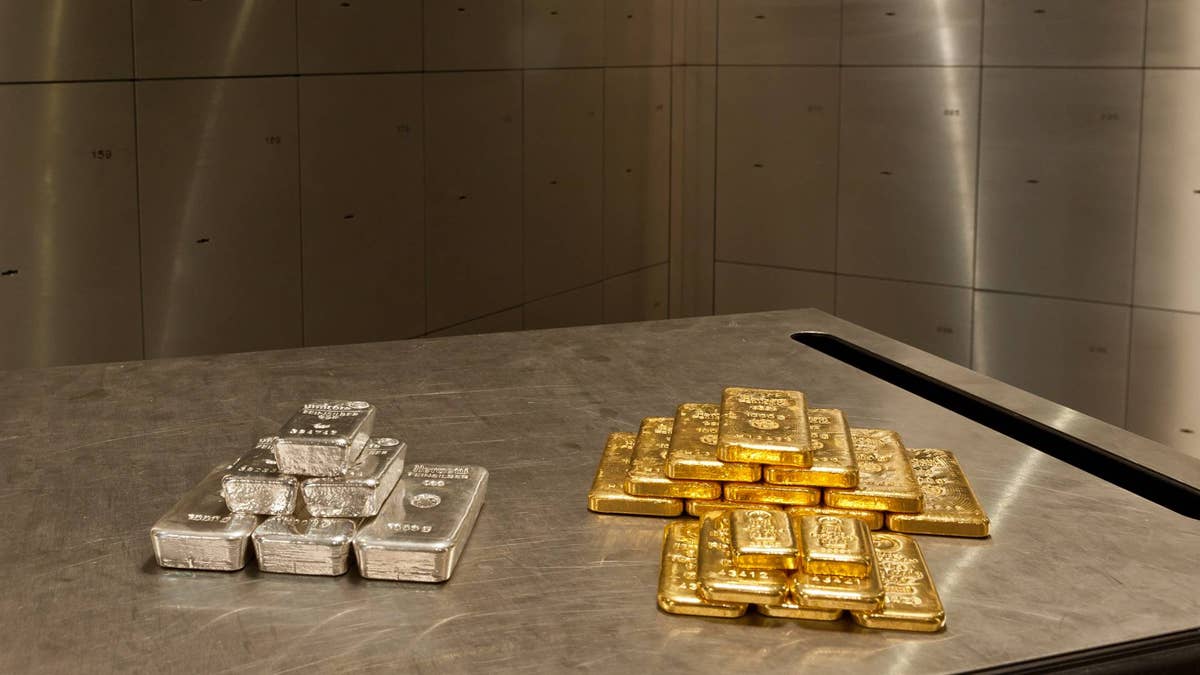 Gold’s surge and silver’s volatility support Robert Kiyosaki’s thesis, but both remain hedges, not income assets, in uncertain markets.
Bitcoin and Ethereum have high upside, high uncertainty
Bitcoin opened at roughly $74,442 on April 14, 2026, rebounding after weeks of war-related volatility that pushed prices as low as $66,000 earlier. Kiyosaki has set a 2026 price target of $250,000 for Bitcoin, a forecast that would require a gain of more than 230% from current levels.
He recently purchased another whole Bitcoin at $67,000, reinforcing his conviction even during the selloff. Ethereum was trading near $2,370 the same morning, well below Kiyosaki’s $60,000 target and roughly 52% below its all-time high of $4,953 from August 2025.
“A 1% to 5% allocation can make sense for investors with strong financial foundations and high risk tolerance. Downturns don’t change crypto’s role, they highlight its uncertainty.” said Vered Frank, CFP, Founder, StackWealth.
Both cryptocurrencies have shown sharp sensitivity to geopolitical developments, gaining 8.1% and 12.4%, respectively, over the past week following ceasefire signals between the U.S. and Iran.
Oil and food are the survival essentials
Oil is the asset on Kiyosaki’s list most directly affected by current events unfolding in the Middle East and the broader global economy. The Iran conflict has disrupted shipping through the Strait of Hormuz, which carries roughly one-fifth of the world’s oil supply every single day.
Gasoline prices surged 21.2% in March alone, the largest monthly increase recorded since 1967, according to the Bureau of Labor Statistics. Food as an investment category is less conventional, but Kiyosaki’s logic ties it to the same inflationary pressures driving oil prices higher.
Rising energy costs increase the price of fertilizer, transportation, and refrigeration, all of which flow directly into your grocery bills each month. The annual inflation rate jumped to 3.3% in March 2026, the highest since May 2024, driven primarily by a 10.9% surge in energy costs.
The risks kiyosaki doesn’t emphasize enough
No asset on Kiyosaki’s list is risk-free, despite his use of the word “safest” in describing all six of his picks. Bitcoin has fallen more than 40% from its October 2025 all-time high of $126,198.07 to current levels of around $74,000, underscoring how volatile these investments remain.
Kiyosaki himself has acknowledged that crashes do not scare him, calling market crashes “priceless assets going on sale,” but that philosophy requires cash reserves and risk tolerance most retail investors simply do not have. Kiyosaki’s track record on specific price predictions has been mixed at best over the years he has been making public forecasts.
He predicted a major market crash in 2016 that did not materialize, and his company, Rich Global LLC, filed for bankruptcy in 2012. You should weigh his conviction against the full range of expert opinion before making allocation decisions with your own retirement savings today.
How you should think about these picks
If Kiyosaki’s macro thesis resonates with you, the practical question becomes how much of your portfolio to allocate to these assets. Most financial planners recommend limiting exposure to commodities and crypto to between 5% and 15% of your total investment portfolio.
Going all-in on any single thesis, no matter how compelling the argument sounds, exposes you to concentration risk that could damage your finances.
- Gold and silver ETFs like SPDR Gold Shares (GLD) and iShares Silver Trust (SLV) offer exposure without storage and insurance costs.
- Bitcoin and Ethereum spot ETFs, including Fidelity Wise Origin Bitcoin Fund (FBTC), trade in standard brokerage accounts you may already hold.
- Oil exposure is available through energy ETFs like the Energy Select Sector SPDR Fund (XLE) or through individual energy stock holdings.
- Food-related investments include agricultural ETFs such as the Invesco DB Agriculture Fund (DBA) and direct shares in major food producers.
The Social Security Old-Age and Survivors Insurance Trust Fund is projected to be depleted by 2033, at which point benefits would face 23% cuts, according to the 2025 Social Security Trustees Report.
That timeline gives Kiyosaki’s broader warning about government finances some factual grounding, even if his specific asset picks carry significant individual risk. You do not need to agree with Kiyosaki’s most extreme predictions to take the underlying message seriously and apply it to your portfolio.
Inflation at 3.3%, a $39 trillion national debt, and a war disrupting global energy markets are real forces that affect your purchasing power every day. Building some exposure to hard assets alongside a diversified core portfolio is a reasonable response to those conditions heading into the rest of 2026.
Related: Robert Kiyosaki reveals why gold and silver beat your savings