
Most girls remember the first time they ever touched a beauty product. Even if it was just a small lipstick or a face mask, it somehow made us feel confident and pretty.
The beauty industry experienced a cultural boom in the 2010s, when YouTube tutorials dominated screens, and our search histories were filled with makeup tutorials, skin care routines, and “get ready with me” videos. Beauty became both a hobby and an identity.
This craze gave rise to dedicated beauty retailers like Sephora. Making constant trips to the store became a ritual, as we rushed to find the latest launches or celebrity collaborations. Many of us even saved our allowance or money from our first job for months just to afford these products. After all, rent wasn’t a concern when living at home.
Founded in 1969, Sephora has become one of the world’s most trusted beauty retailers, growing to more than 3,400 stores and e-commerce platforms across 35 markets.
In 1996, the luxury conglomerate LVMH (LVMUY) acquired the company, aiming to showcase its portfolio of high-end brands through Sephora’s powerful platform. The acquisition gave LVMH greater control over beauty distribution and enabled rapid global expansion.
Today, Sephora carries nearly 500 brands, has developed its own private label, and remains among the most recognizable beauty retailers worldwide.
Yet even dominant players must evolve. In an industry defined by trend cycles and rapid innovation, remaining stagnant is not an option. That’s why Sephora’s latest strategic move has drawn industry-wide attention.
Sephora reveals partnership with CJ Olive Young
Sephora is partnering with the Korean beauty and wellness retailer CJ Olive Young to introduce a dedicated K-beauty zone across stores and online channels in North America, Singapore, Malaysia, Thailand, and Hong Kong in the second half of 2026. The partnership is expected to expand into the Middle East, the UK, and Australia in 2027.
This collaboration aims to strengthen Olive Young’s global presence while enabling Sephora to tap into emerging consumer trends by supporting innovative Korean brands, helping it remain relevant in an increasingly competitive beauty landscape.
“Korean beauty is one of the most innovative, fastest-growing and desirable categories in beauty right now,” said Sephora Global CMO Priya Venkatesh in a press release. “Sephora was the first major retailer to debut K-beauty brands to North American consumers in 2010, and our portfolio has grown to a global business.”
This announcement comes as Olive Young prepares to open two of its first physical U.S. stores in Los Angeles this May, signaling its high ambitions in the U.S. market beyond digital platforms.
“We are pleased to enter into this partnership with Sephora as we continue to advance our global expansion strategy,” said Olive Young Chief Strategy Officer Youngah Lee in the press release.
“As global interest in K-beauty continues to accelerate, we see this collaboration as a meaningful opportunity to work together in expanding the reach of Korean brands in key international markets.”
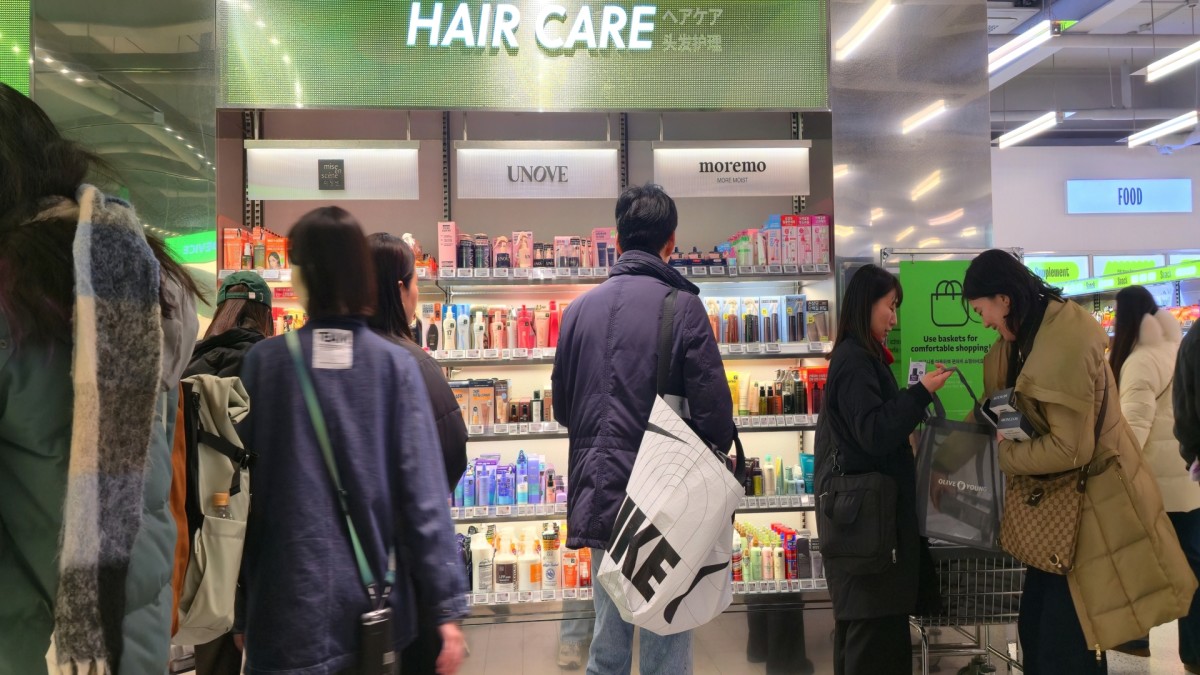 Sephora partners with Olive Young to introduce K-beauty dedicated zones globally.
Why Sephora is collaborating with a rival
Founded in 1999 under the CJ Group, Olive Young is a South Korean beauty and health retailer that carries affordable K-beauty brands across makeup, haircare, skin care, accessories, wellness, and men’s categories. It operates more than 1,390 stores alongside a global online platform.
While Olive Young is comparable to Sephora and caters to a similar audience, a major incentive has brought the two brands together, despite their rivalry.
Although LVMH does not report Sephora’s individual earnings, its Perfumes & Cosmetics category has struggled in recent quarters, reporting flat revenue in the first nine months of 2025. This marks a significant slowdown compared to the 5% revenue increase recorded during the same period in 2024.
To reignite growth, LVMH has prioritized innovation, geographic expansion, and emerging beauty categories, according to its 2024 annual report. The partnership with Olive Young directly supports those goals by strengthening Sephora’s position within one of beauty’s fastest-growing segments.
The changing beauty industry
The global beauty industry is valued at approximately $450 billion, with annual growth of 5% projected through 2030, according to McKinsey & Company’s State of Beauty 2025 Report.
In the U.S., the prestige beauty market rose 2% to $16 billion in the first half of 2025, while sales at mass merchants increased 4% to $34.6 billion, according to Circana.
However, K-beauty has emerged as one of the strongest growth drivers. Its U.S. market size is projected to reach $42.8 billion by 2030, growing at an annual rate of 8.8%, according to Grand View Research.
“The growth has been remarkable,” said NielsenIQ VP of Beauty and Personal Care Therese-Ann D’Ambrosia to CNBC. “When you compare that to the broader beauty market, which is growing at single digits, K-beauty is clearly operating in a different gear right now.”
Landing International CEO Sarah Chung Park, in her The Second Wave of K-Beauty report, attributes the category’s appeal to “its innovative formulations and emphasis on natural ingredients, attracting consumers (particularly millennials and Gen Z) who prioritize effective, affordable beauty products.”
This growth highlights how rapidly consumer preferences are evolving, making it increasingly crucial for brands to stay ahead of trends or risk being outpaced by competitors.
“A strong uptick in beauty spend, plus higher inflation and greater access to information, has pushed shoppers to pay closer attention to whether products deliver,” said McKinsey & Company industry analysts. “Consumers are selectively splurging across not only consumer discretionary categories but also beauty subcategories.”
More Retail News:
- 11-year-old cosmetics brand puts business up for sale amid slump
- Target bets on a strategy that hasn’t fixed declining sales
- Walmart tries to bring health and wellness to more Americans
The industry’s resilience was tested during the Covid pandemic. Makeup sales were weak in early 2020, prompting widespread store closures, according to McKinsey & Company’s 2020 COVID-19 Beauty Report. That downturn permanently altered beauty-industry marketing practices.
“Even before the pandemic, brands were under pressure to overhaul their product-innovation pipelines,” said McKinsey & Company industry analysts. “Now, the need for speed is even greater.”
Beauty rivals embracing K-beauty
Sephora is not alone in betting on K-beauty. Several major U.S. retail competitors have also expanded their K-beauty offerings recently.
- Ulta (ULTA): Expanded its K-beauty assortment with eight brands, including Chasin’ Rabbits, I’m From, Mixsoon, Rom&nd, Neogen, Some By Mi, Sungboon Editor, and Unleashia in mid-2025 (Source:Retail Dive)
- Target (TGT): Partnered with the Korean skin care brand Haruharu Wonder in early January 2026 (Source:PR Newswire)
- Amazon (AMZN): Features curated storefronts and brands dedicated to K-beauty (Source:Amazon)
Related: These luxury brands hold their value better than others