
Few voices in investing and retirement planning are as blunt and unyielding as Kevin O’Leary’s.
The Shark Tank investor and entrepreneur has issued a stark warning: Credit card debt is more than a financial nuisance — it directly threatens the integrity of 401(k) plans nationwide.
💵💰Don’t miss the move: Subscribe to TheStreet’s free daily newsletter💰💵
O’Leary says excessive spending and compounding interest are quietly draining the potential of Americans’ retirement accounts, preventing them from delivering the long-term financial security they’re designed to provide.
The entrepreneur points to credit card debt as the main culprit in many people’s financial struggles.
Related: Tony Robbins sends warning message to Americans on IRAs, 401(k)s
Kevin O’Leary calls credit card debt a cancer to 401(k) plans
O’Leary doesn’t sugarcoat the issue. In his book, “Cold Hard Truth on Men, Women and Money,” he writes, “Spending too much is a disease. And credit card debt is a cancer.”
According to the Federal Reserve Bank of New York’s 2025 second-quarter Household Debt and Credit Report, U.S. household debt has reached $18.93 trillion. Credit card balances climbed to $1.18 trillion in the first quarter — a 6% increase year over year.
This level of debt, O’Leary argues, directly undermines Americans’ ability to contribute meaningfully to their 401(k)s. Interest payments consume disposable income, leaving little room for long-term investing.
“You can’t build wealth if you’re bleeding money every month,” he warns.
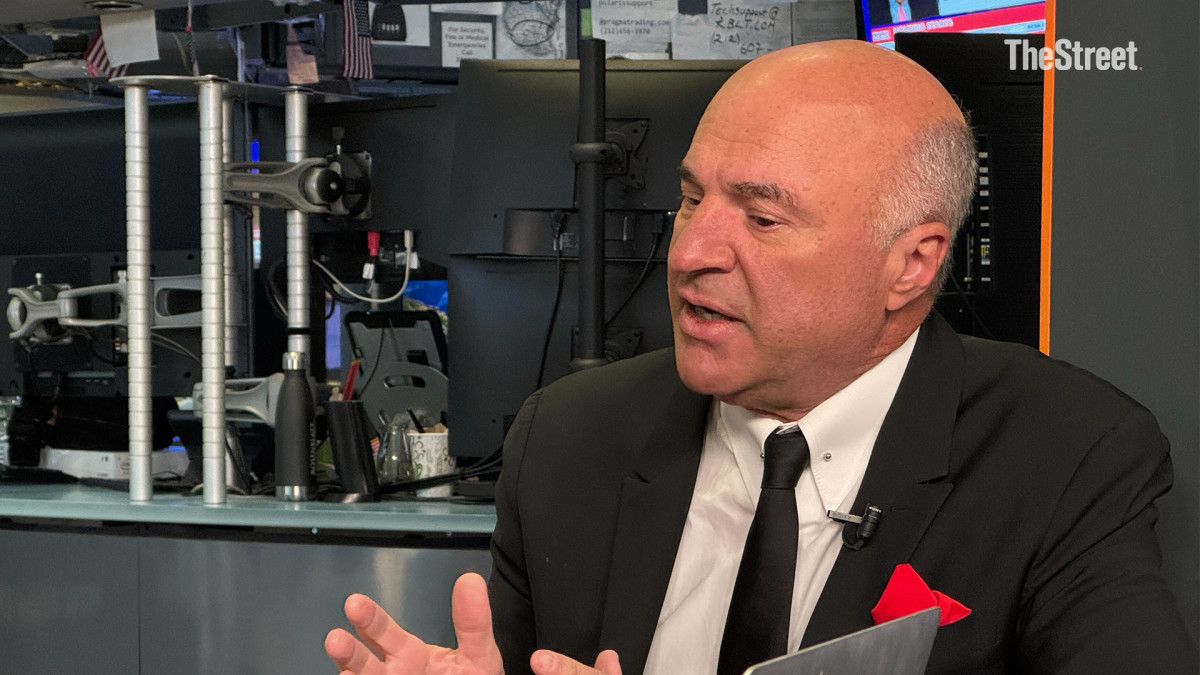 Shark Tank’s Kevin O’Leary talks with TheStreet about personal finance. The ‘Shark Tank’ personality minces no words on explaining how credit card debt can damage retirement planning, including 401(k)s.
Image source: TheStreet
Kevin O’Leary warns Americans on retirement, 401(k) planning
Kevin O’Leary doesn’t just focus on financial figures — he challenges the mindset that keeps individuals from making progress.
He argues that many Americans remain trapped by unrealistic expectations and wishful thinking, often delaying meaningful action in hopes of a financial windfall.
“Too many people are steeped in magical thinking about money,” O’Leary says, pointing to fantasies such as winning the lottery or receiving a surprise inheritance.
More on personal finance:
- Dave Ramsey has blunt words for Americans on Medicare, Medicaid
- Jean Chatzky sends strong message on major 401(k) changes
- Finance expert has blunt words for car buyers
To counter this, O’Leary promotes a practical, numbers-driven strategy. He advises calculating a “90-Day Number” — the difference between total income and total expenses over a three-month period.
A negative result signals the need for immediate spending cuts and tighter budgeting. A positive result, on the other hand, presents an opportunity to boost 401(k) contributions.
This method, he explains, forces people to confront their financial behavior and make intentional decisions that support long-term retirement goals.
Related: Dave Ramsey has blunt words for Americans on Medicare, Medicaid
Kevin O’Leary says 401(k)s work — if they are properly used
Kevin O’Leary may be known for his tough-love attitude, but he’s also a firm believer in the power of 401(k) plans.
He champions features like automatic payroll deductions and employer matching, viewing them as efficient tools for building long-term retirement savings.
However, he’s clear that these advantages only work if people actively contribute and avoid the trap of high-interest debt.
His recommendations align with core financial principles: Start saving early, contribute regularly, and resist lifestyle inflation.
He considers saving 15% of income a minimum standard rather than a lofty target. For those who feel they’re falling behind, he advises strict budgeting and aggressive debt repayment as the first steps toward financial recovery.
Kevin O’Leary’s action plan for financial discipline
Kevin O’Leary’s philosophy goes beyond pointing out financial pitfalls — it centers on decisive action and personal accountability.
Drawing from his guidance, here are three practical steps to strengthen financial discipline:
- Review spending habits: Apply the 90-Day Number technique to assess income versus expenses over a three-month span. This snapshot reveals whether adjustments are needed.
- Tackle credit card debt: Focus on eliminating high-interest balances before ramping up retirement savings. Reducing debt frees up resources and lowers financial stress.
- Leverage employer contributions: Ensure retirement plan contributions are high enough to receive the full employer match — a valuable benefit that shouldn’t be left on the table.
O’Leary consistently emphasizes that financial success hinges on intentional choices. He views retirement plans such as 401(k)s as powerful tools, but only when paired with disciplined money management.
His core message urges people to stop relying on luck and start shaping their financial future through consistent, strategic action.
Related: Shark Tank’s Kevin O’Leary speaks bluntly on divorce and stupidity