
A report out of South Korea on Tuesday, July 21, claimed SK Hynix was in talks to buy Intel’s unfinished Ohio semiconductor campus, according to Stocktwits.
The claim traced back to Korea JoongAng Daily and described a deal that would give SK Hynix front-end memory production in the United States, years ahead of its own internal timeline.
Now SK Hynix is dismissing it. In a filing with the Korea Exchange, the company said it “has not pursued or decided to acquire Intel’s Ohio site and Fab as reported in the article,” TipRanks reported.
A company spokesperson went further, telling Benzinga simply that SK Hynix has no plans for an acquisition.
Intel did not confirm or deny the talks directly. An Intel spokesperson told Benzinga the company does not comment on deal speculation but remains committed to Ohio and to speeding up the site’s readiness.
The SK Hynix denial didn’t erase Intel’s rally
Intel (INTC) closed July 21 at $105.45, up 8.64% on the day.
That gain held even as the acquisition story it was riding fell apart hours later. This matters because markets usually give back speculative pops once the trigger disappears.
SK Hynix followed a similar pattern in Seoul. Shares opened up more than 9% on the original report, then trimmed to a 6.7% gain once the denial filing landed, TradingKey confirmed.
A stock that gives back a third of its gain on a denial but still finishes up nearly 7% is not a stock that stopped believing the story.
The one exception was SK Hynix’s own US-listed shares (SKHY), which slipped about 1.4% in the overnight session after the denial.
That gap between how Seoul traded the news and how New York traded it says something about who was pricing in a real deal and who was just reacting to a headline.
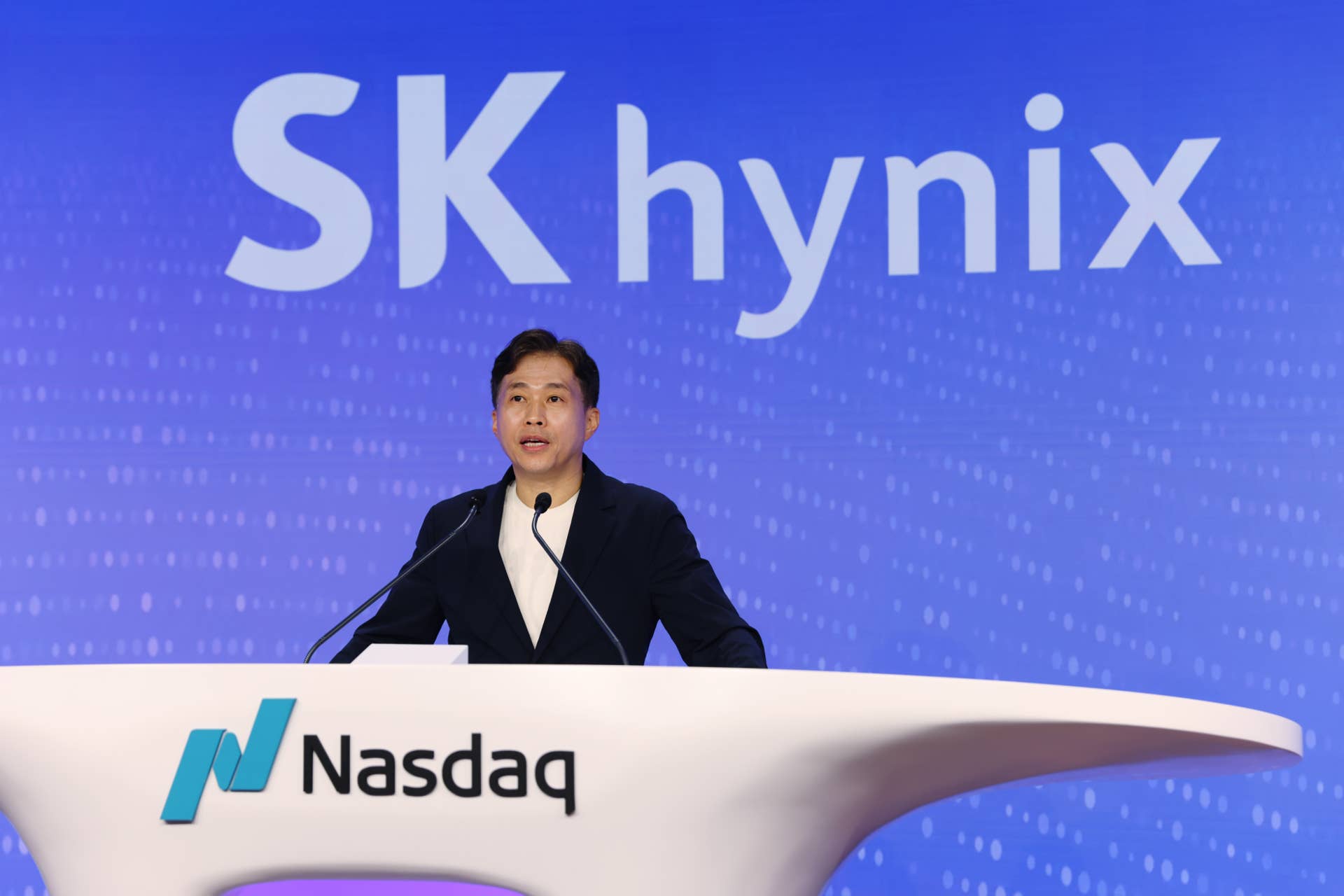 SK Hynix denied plans to acquire Intel’s Ohio chip campus, but Intel and SK Hynix shares held onto sharp gains anyway.
Intel’s foundry losses made the rumor easy to believe
The reason the story had legs is Intel’s balance sheet. Intel Foundry has been bleeding cash, posting a $7 billion operating loss in 2023 and another $2.4 billion in the first quarter, according to TipRanks.
A struggling foundry business sitting on a mostly idle 1,000 acre campus is exactly the kind of asset investors expect a cash-strapped company to consider selling.
Related: SK Hynix makes jaw-dropping gains in wild Nasdaq trading debut
Intel has pushed the Ohio site’s production timeline back to 2030 or 2031, citing challenging market conditions and the need to strictly manage its capital, Construction Dive reported.
A campus that will not run chips for another four or five years is easier to imagine changing hands than one already generating revenue.
SK Hynix doesn’t need this deal to keep growing in the U.S.
SK Hynix is already building a $3.87 billion HBM packaging plant in Indiana, and the market knows it has an appetite for more.
SK Group Chairman Chey Tae-won recently confirmed the company is aggressively scouting additional U.S. and Korean sites for future wafer fabs, as long as the right power, water, and workforce conditions are met, Bloomberg indicated.
More SK Hynix:
- Jim Cramer’s cryptic comments on key AI supplier turn heads
- Major AI chip stock plunges after blockbuster $26.5 billion Nasdaq debut
- SK Hynix is testing the limits of Wall Street’s ETF boom
The appetite for U.S. capacity is genuine. This particular target just was not it.
Moor Insights and Strategy CEO Patrick Moorhead called the Intel talks unlikely, noting that Ohio remains central to Intel’s plan to win outside foundry customers, StockTwits reported.
Selling the campus SK Hynix supposedly wanted would undercut the exact turnaround story Intel is trying to sell investors ahead of its Thursday, July 23, earnings report.
A denial is not the same as a closed door
What happened this week is less about one campus in New Albany and more about how thin the line has gotten between memory chip supply and desperation.
AI demand has made HBM capacity scarce enough that investors will bid up two stocks on a deal neither company confirms, then barely blink when it gets denied.
Intel reports earnings on Thursday, and direct questions about the Ohio site’s future will be asked.
Until then, the market has already told investors what it thinks a deal between these two companies would be worth, whether or not one ever gets signed.
Related: SK Hynix is testing the limits of Wall Street’s ETF boom