
Software-mageddon may sound like a Seventies disaster movie, but for investors, it was all too real.
The term describes the recent sell-off in software and tech stocks, driven by fears that generative AI companies could make traditional software firms irrelevant.
As of Feb. 9, the North American Tech-Software iShares ETF (IGV) had tumbled 24.6% year to date. Some investors have abandoned the sector, while others are looking for bargains.
Wedbush analyst Dan Ives dismissed the gloom, declaring that it is “crystal clear to us the AI Revolution is accelerating at a warp speed pace, with 2026 being an inflection point year for AI.”
“The market is baking in a doomsday scenario for software companies in the near term, which we believe is extremely overblown,” he said in a Feb. 8 research note. “The sell-off in tech stalwarts Salesforce and ServiceNow is way overdone, and both companies will be core participants in the AI Revolution.”
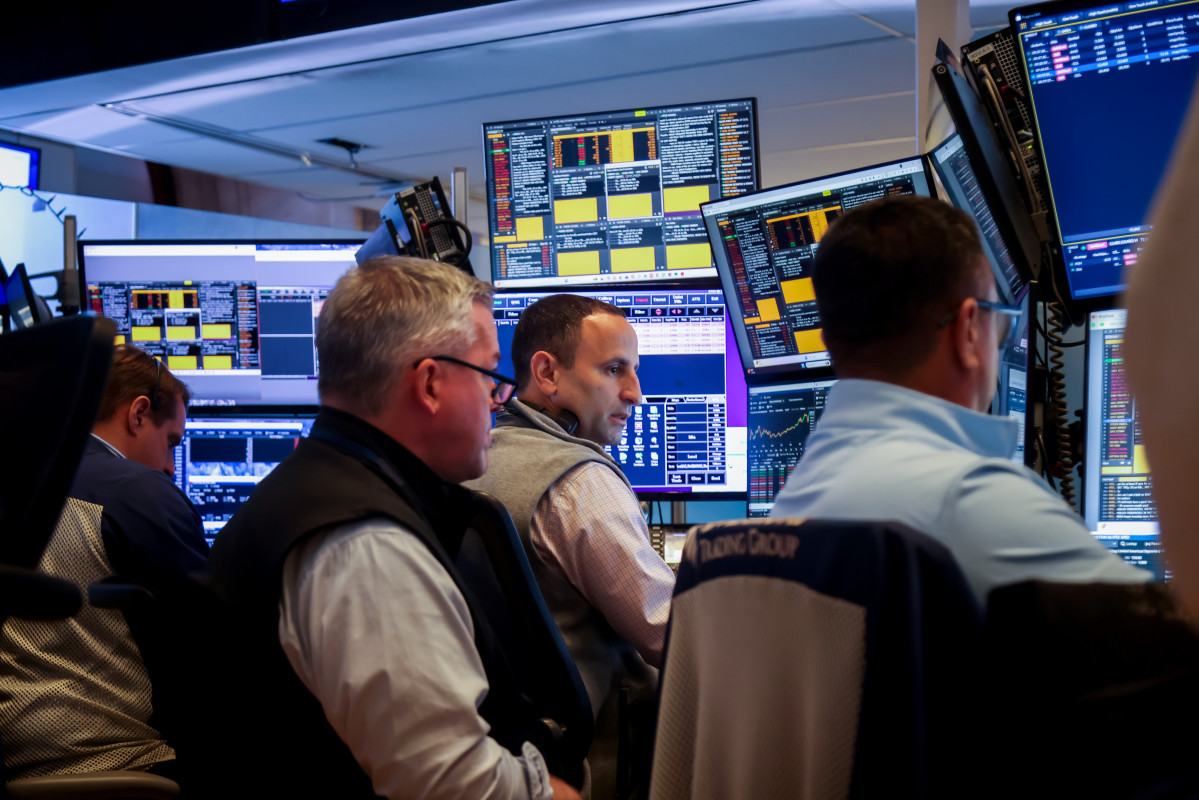 Software stocks had an ‘ugly week,’ an analyst said.
CIO: It’s been an ugly week
Software-mageddon was a major topic on the Feb. 5 edition of TheStreet Pro’s Stocks & Markets Podcast, as host and contributor Chris Versace spoke with Lindsey Bell, chief investment officer at 248 Ventures and chairperson of BetterInvesting.
“It’s been an ugly week, right?” Bell said, noting that many tech companies reported strong quarterly results. “Everybody knows the demand for AI is there right now. The question is how long it will last, and what the return and profitability will be on all this spending.”
More on tech:
- Morgan Stanley sets jaw-dropping Micron price target after event
- Nvidia’s China chip problem isn’t what most investors think
- Quantum Computing makes $110 million move nobody saw coming
Bell called it a conundrum for some of the bigger names in the space, given their current spending.
“We priced all the good days in,” she said. “Now we’re hanging tight or even taking some money off the table until we have better clarity on profitability.”
“ServiceNow, Google, Microsoft, Palantir — a lot of the beaten-up names,” Versace said, “but their businesses are solid. The quarter’s numbers were very good.”
He added that Jensen Huang, co-founder and CEO of AI chipmaker Nvidia (NVDA), Lisa Su, CEO of semiconductor company AMD (AMD), and Rene Haas, CEO of Arm Holdings (ARM), all addressed the sell-off.
“And they were all saying, ‘this is ridiculous,’” Versace said. “AI is a tool. It will be embedded in software to make better products. It’s not going to eat the world.”
Looking for potential M&A targets
“Some of these companies are embedding AI into their systems right now,” Bell said. “They have strong revenue and profitability. Stocks aren’t falling off a cliff, but they’re getting beaten up like their days are over.”
The Magnificent Seven, including Nvidia, Apple (AAPL), and Microsoft (MSFT), have been on a down streak due to market uncertainty, tariffs, and heavy AI-related capital expenditures, which analysts say could significantly impact cash flow.
“Even though software is tanking and the Mag Seven aren’t holding their own, other parts of tech are performing well,” Bell said. “As the AI trade expands, different types of businesses are needed to facilitate the build-out.”“I think sometimes knee-jerk reactions take over,” Versace said. “We need to step back and assess the data more closely, not assume the worst.”
He acknowledged that not every tech business will be a winner.
“Some software models will get eaten by AI,” he said. “But other enterprise platform companies are well positioned for the long term. Services with direct competitors from OpenAI or Anthropic may face more challenges.”
“Some software stocks have valuable tools or services that could make them M&A targets,” Bell said. “Do big-picture thinking. Connect the data points and realize: More than a handful of these stocks will likely be higher in 12 months, but some are vulnerable.”
Related: Ernst & Young drops blunt reality check on the economy