
Southwest Airlines (LUV) is one of the world’s largest carriers, flying for 54 years and providing its hospitality services at 117 airports across 11 countries. It was founded in March 1967, but took flight in 1971.
The Dallas, Texas-based company is popular for its unique, friendly and customer-focused approach. It is a low-cost carrier offering affordable flights to a wide range of destinations.
💵💰 Don’t Don’t miss the move: Subscribe to TheStreet’sTheStreet’s free daily newsletter💰💵
Since 2010, its stock has returned more than $14.0 billion to shareholders through dividends and share repurchases. In the first quarter, it returned $ 107 million in dividends and $750 million in share repurchases.
In 2024, Southwest carried more than 140 million customers. It flies to over 100 destinations in 42 states, Puerto Rico, Central America, Mexico, and the Caribbean.
The company uses a point-to-point system with a rolling-hub model, which means instead of traditional hubs, it flies out of some airports from which passengers can reach more destinations.
To ensure smooth operation, Southwest employs around 71,000 full-time staff. As a large employer, it pays health claims for its employees and retirees from corporate assets and does not rely on third-party insurance.
Now, it is coming after certain pharmaceutical companies, claiming inflated prices.
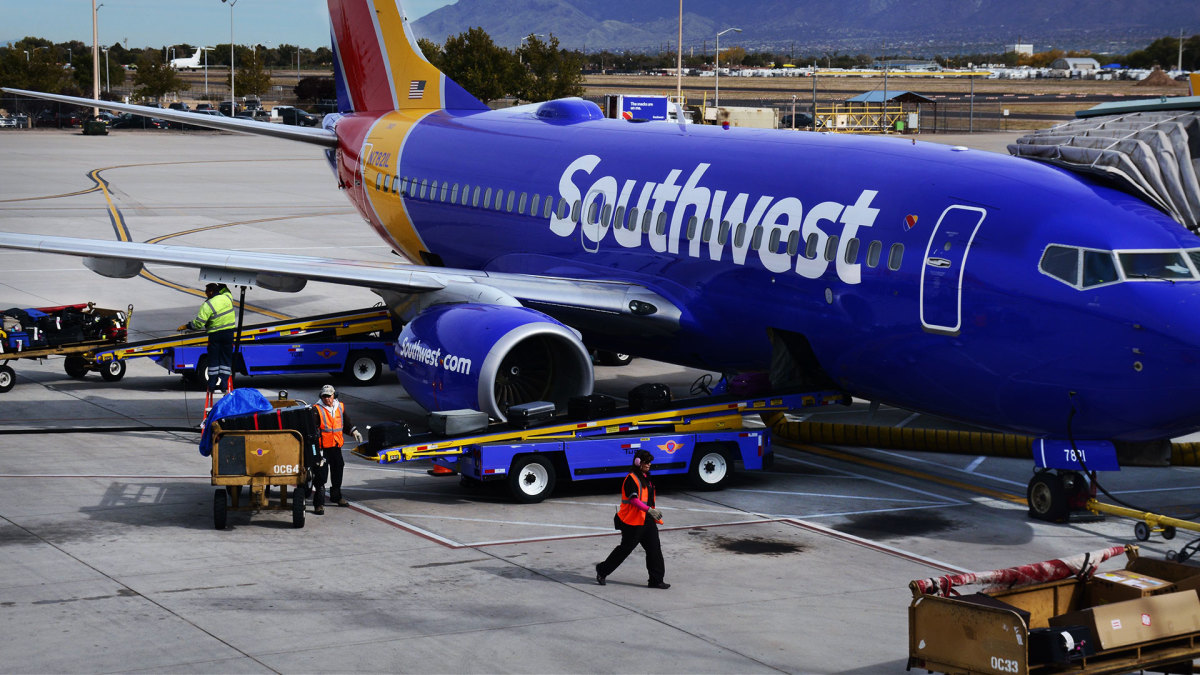 Southwest Arilines is suing multiple generic drugmakers, alleging inflated prices of drugs.
Image source: Robert Alexander/Getty Images
Southwest Airlines sues multiple pharma companies
Southwest Airlines filed a federal lawsuit against several pharmaceutical companies, alleging they had a price-fixing scheme that inflated the price of medications for employees, reported Reuters.
The lawsuit, filed on July 3 in the federal court in Philadelphia, claims generic drugmakers have violated antitrust law by arranging prices together.
Related: Delta flight makes emergency landing after terrifying incident
“This action seeks injunctive relief and damages against the manufacturers of generic drugs for engaging in a wide-ranging conspiracy to fix the prices of their products from at least May 2009 to the present, in violation of numerous state and federal laws,” reads the lawsuit.
Pharmaceutical companies named in the complaint include Teva Pharmaceutical Industries, Sandoz, Sun, Dr. Reddy’s Laboratories, Lupin, and Apotex.
The lawsuit further reads that the goal of the conspiracy was clear: “profits at the expense of purchasers of generic drugs,” by diminishing competition.
“Defendants accomplished this goal by systematically and routinely communicating with each other directly about bids, pricing, and market entries and exits for hundreds of generic drugs and agreeing to divvy up customers to create an artificial equilibrium in the generic drugs market.”
More on travel:
- U.S. government issues serious warning for cruise passengers
- Delta Air Lines makes a baggage change that travelers will like
- United Airlines passenger incident triggers quick response
Southwest is not the only company targeting generic drugmakers. A multistate antitrust case is already in progress, and a class-action suit from wholesalers is pending in Philadelphia.
Previous pharma lawsuits and settlements
This is not the first time some of the pharmaceutical companies named in the lawsuit have been accused of similar actions.
In December, Sandoz settled a similar lawsuit, agreeing to pay $275 million. The generic drugmaker and its subsidiaries entered into a settlement agreement with the class of end player plaintiffs regarding the multi-district litigation (In re Generic Pharmaceuticals Pricing Antitrust Litigation) in the U.S. District Court for the Eastern District of Pennsylvania.
Related: Spirit Airlines is going viral on TikTok for a surprising reason
Sandoz also established a $265 million provision to cover potential additional settlement costs related to the antitrust litigation. The settlement included no admission of wrongdoing and covered alleged actions between 2009 and 2019.
Also, last year, Apotex and Heritage Pharmaceuticals agreed to pay close to $50 million to settle claims by Connecticut and other states that accused them of artificially inflating prices. These settlements were part of a multidistrict litigation that started in 2016 and included three related lawsuits by U.S. states related to dozens of generic drugs, reported Reuters.
Huge employers such as American Airlines, Target, and General Motors also sued many of the same pharma companies Southwest Airlines did, claiming billions of dollars in overcharges.
Related: Veteran fund manager unveils eye-popping S&P 500 forecast