
The S&P 500 pushed to a new record high above 6,900 as U.S. stocks drifted higher into a shortened Christmas Eve session, following four straight days of gains.
According to Investopedia’s markets wrap and Reuters reporting, the index recently closed at a record around 6,909 and has since tagged fresh intraday highs near 6,921 in light holiday trading.
This latest move extends what Bloomberg and Barron’s describe as a steady grind toward records, as investors absorb stronger‑than‑expected U.S. growth data with only modest pullbacks along the way.
Trading volume has been thin — Bloomberg highlighted “record high on thin volume” —but the price action still reflects broad optimism heading into year’s end.
Why the S&P 500 is climbing
We’re seeing a classic combination: better macro data, easier policy expectations, and a market still hooked on Big Tech and AI.
The U.S. economy grew at about a 4.3% annualized pace in the third quarter, beating forecasts and reinforcing a narrative of economic resilience, according to government data cited by Yahoo Finance and other outlets.
At the same time, labor cost and inflation readings have cooled enough that traders feel confident the Federal Reserve can keep easing without choking off growth.
That sets up what analysts call a “Goldilocks” backdrop. This is growth strong enough to support earnings, but inflation tame enough to justify lower rates and higher stock valuations.
Recent commentary from Bloomberg notes that futures markets are now pricing Fed cuts in 2026, after the central bank delivered three quarter‑point reductions this fall, bringing the funds rate down into roughly the mid‑3% range.
Those lower borrowing costs particularly benefit growth and tech names, which are heavily represented in the S&P 500.
The tech and AI engine behind the market rally
This record is not evenly earned across all 500 stocks — a handful of giants are doing a lot of the lifting. Reports from multiple market notes such as Reuters say Nvidia, Alphabet, Amazon, and Broadcom have been among the biggest drivers of the S&P 500’s latest breakout, often adding 1% to 3% in a single session.
Gotrade’s summary, citing AP News, specifically called Nvidia the “MVP” of the move above 6,909.
Under the surface, the index has become increasingly concentrated in companies whose business models are built around AI and cloud computing, not just using these tools at the margins.
One year‑end analysis pegs the S&P 500’s forward price‑to‑earnings ratio near 24 times, with bulls arguing that a projected wave of $5 trillion to $8 trillion in AI‑related capital spending through 2030 can justify those premium multiples.
That concentration cuts both ways: It boosts returns when tech is in favor, but raises the risk if sentiment ever turns against the sector.
What a record market high means for your money
When the S&P 500 is at an all‑time high, you’re not just looking at today’s price — you’re looking at what the market expects from tomorrow’s earnings, growth, and interest rates.
According to a year‑end analysis of 2025 returns, the index is now up more than 17% year to date and has logged three consecutive years of double‑digit gains, a historically uncommon stretch.
Historically, strong multi‑year runs rarely go on forever at the same pace; they’re often followed by more modest returns or bumpier paths, even if the long‑term direction is still up.
At the same time, the so‑called “Santa Claus rally” is clearly in play, with Barron’s and other outlets noting that, since 1950, the market has risen in the last trading days of December and the first two of January more than three‑quarters of the time.
That seasonal strength is nice if you’re already invested, but it’s not a timing tool investors should rely on for short‑term bets. For long‑term savers, the bigger takeaway is that time in the market matters far more than nailing a perfect entry point.
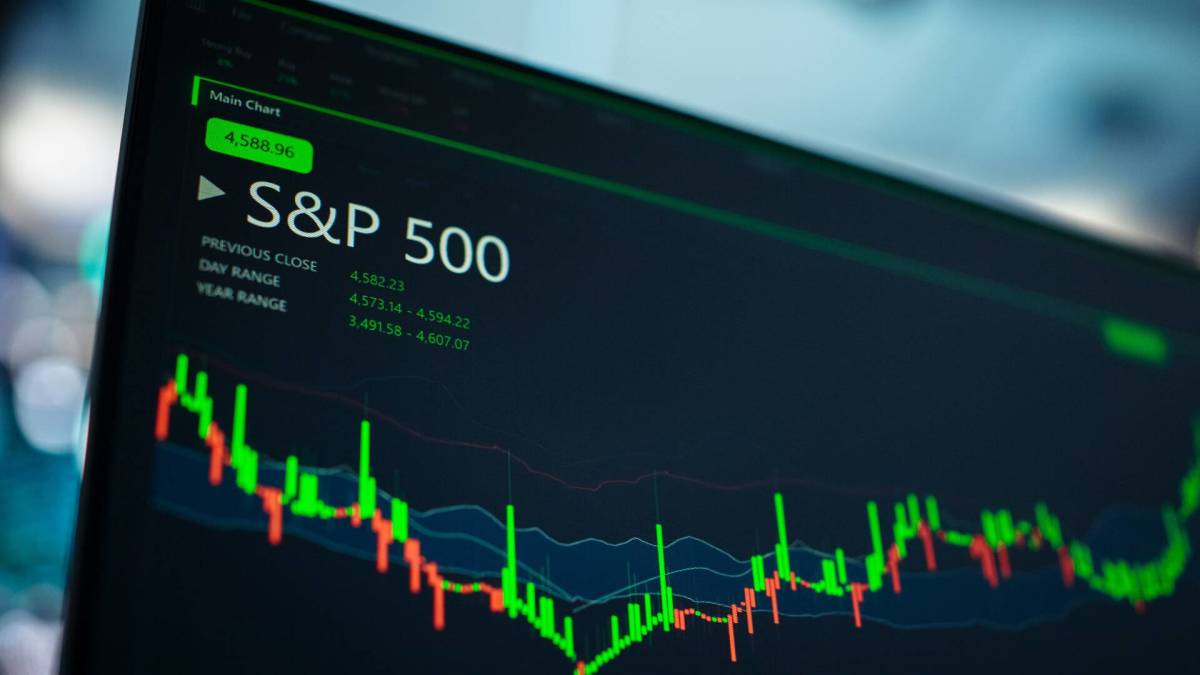 Although a small cluster of mega‑caps has dominated S&P 500 gains, many other stocks have lagged behind.
Shutterstock
The risks hiding behind the S&P 500 euphoria
The headlines look great, but the signals underneath are messy, and that matters if you’re adding fresh money at record levels.
Gotrade’s market wrap and Yahoo Finance coverage both stress that inflation remains “sticky” in places, and that recent data have actually tempered hopes for very rapid Fed cuts, even as GDP growth looks strong.
Consumer confidence has softened as households absorb higher prices and tariff‑related uncertainty, which can hit earnings if spending slows from here.
Market structure is another concern. Analysts quoted by CNBC, Reuters, and others warn that market breadth remains relatively narrow, with a small cluster of mega‑caps dominating gains while many stocks lag behind.
More Wall Street
- Analyst who nailed 2023 bull run sets S&P 500 target for 2026
- Longtime fund manager sends blunt message on P/E ratios
- Nasdaq’s near 24-hour trading plan sparks Wall Street backlash
- Analysis: Why ‘cheap stocks to buy now’ is the wrong investing idea
Technical gauges like the Relative Strength Index are edging into overbought territory, and some strategists point out that thin holiday volume can exaggerate moves in both directions.
Put together, that means you should be prepared for sharper pullbacks or sideways periods, simply because expectations and valuations have climbed so far, so fast.
How you can invest through new S&P 500 highs
Here’s a cheat sheet for my recommended approach.
- Treat the record high as a headline, not a strategy shift. Your written plan and time horizon should still drive your moves, not today’s index level.
- If you’re in a diversified S&P 500 index fund, assume this rally has already padded your account and focus on rebalancing. Trim positions that have grown too large and add to areas that lag your target mix.
- Use systematic rebalancing to “sell high, buy relatively low” without trying to call the exact top. This lets you lean into your plan rather than your emotions.
- If you hold a lot of individual tech names or growth ETFs, use the current strength to ask whether you’re overexposed to the mega‑cap winners driving today’s S&P 500 highs.
- Recognize that U.S. equities are still treated as a global safe haven, but that concentration risk has rarely been higher, as noted in recent coverage of the latest S&P 500 record.
What savvy investors need to watch heading into 2026
From here, your next catalysts are earnings and the Fed. As 2026 approaches, strategists at major firms cited in year‑end outlooks are lifting their S&P 500 targets into the 7,500 range, with the most bullish calling for 8,000 by the end of next year.
Those targets assume that earnings keep growing, AI spending stays robust, and the Fed can cut rates without reigniting inflation — assumptions you should monitor, not blindly trust.
In the nearer term, watch how the index behaves around the 7,000 level and how markets react to any surprise in inflation, jobs, or consumer‑spending data.
Interactive Brokers and other trading desks note that futures are already signaling a quieter, more cautious tone after the initial break to new highs.
For your money, that means staying invested, staying diversified, and remembering that every record high in the S&P 500, so far, has eventually been followed by another.
Related: Stock Market Today: S&P 500 Closes At Record After GDP Surprise