
Friday, June 5, handed S&P 500 investors their roughest session in eight months.
A stronger-than-expected jobs report landed before the open. Bond yields jumped, and the chip and tech names that carried the market to record highs all year suddenly led it lower.
By the close, the S&P 500 (SPY) had dropped 2.6%, its worst day since October 2025.
But the headline number hid something useful for everyday investors.
If you held the index through a popular fund like SPY or VOO, you felt the full 2.6% drop. If you held the equal-weight version, you barely noticed.
That difference in outcomes reveals key signals for anyone deciding on how to own the S&P 500.
Why SPY and VOO fell hard while equal-weight RSP held up
The damage was concentrated, not broad.
The SPDR S&P 500 ETF (SPY) and the Vanguard S&P 500 ETF (VOO) weight companies by market cap, so the largest stocks move the fund the most.
A small group of trillion-dollar tech names now makes up roughly a third of that index.
More Wall Street:
- Citi quietly resets S&P 500 price target for the rest of 2026
- Wall Street sees huge upside as Novo Nordisk backs biotech company
- 5-star analyst revamps Broadcom stock price target after earnings
When those names fall together, a cap-weighted fund falls with them.
The Invesco S&P 500 Equal Weight ETF (RSP) does the opposite. It gives all roughly 500 companies the same weight, so Apple counts no more than a mid-sized bank.
On Friday, stocks across the index were close to evenly split between winners and losers.
That even split is why RSP fell only a fraction of what SPY and VOO did.
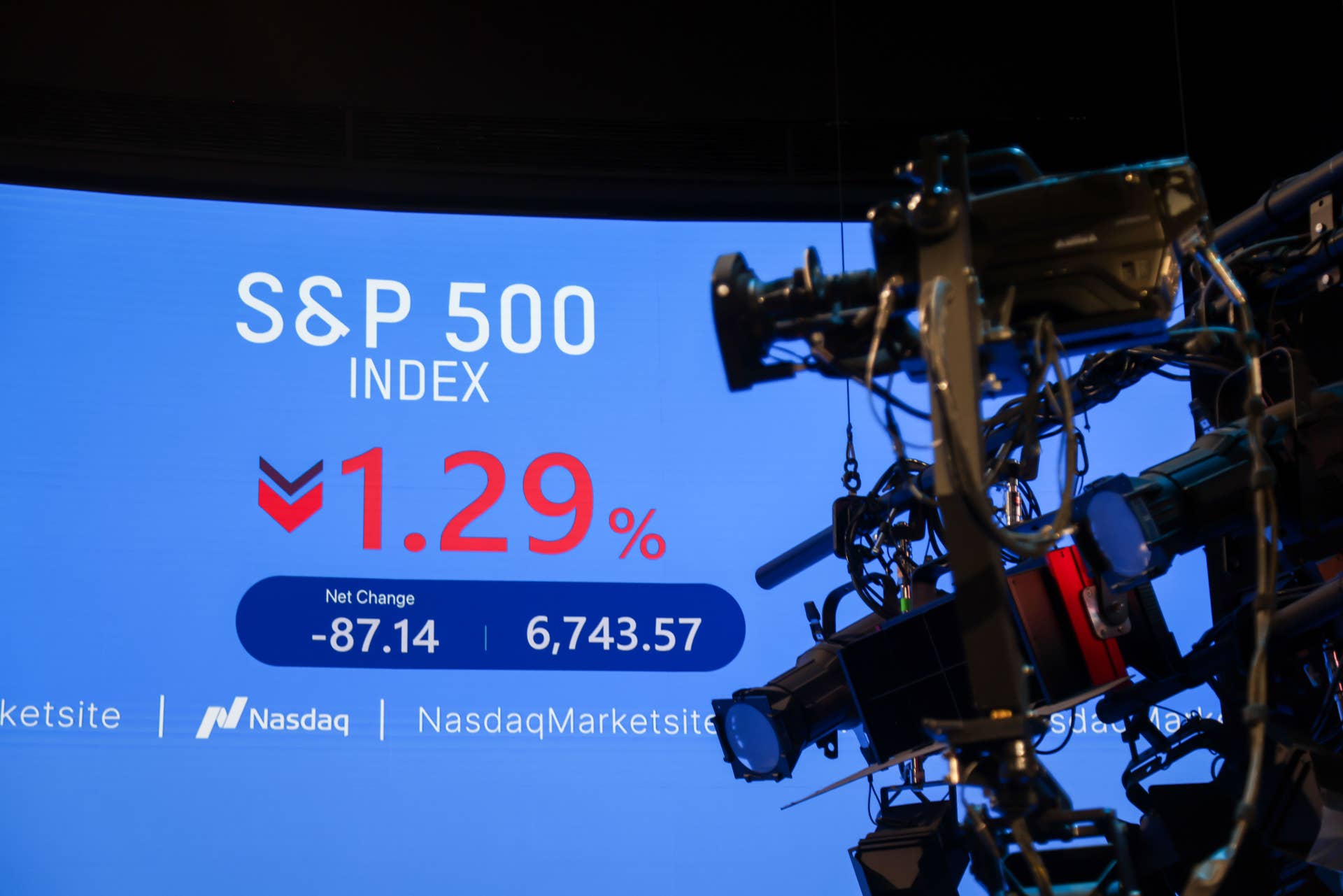 The S&P 500 fell 2.6% on June 5, its worst day since October.
What SPY, VOO, and RSP actually track
All three funds hold the same 500 companies. The difference is how much of each they own.
SPY and VOO are cap-weighted, meaning a stock’s slice of the fund matches its market value. The bigger the company, the bigger its pull on your returns.
RSP is equal-weighted, so it trims the giants and leans on the average company instead. That gives it a tilt toward industrials, financials, and mid-sized names, Invesco’s fund data shows.
The trade-off runs both ways.
According to 24/7 Wall St., RSP has outpaced SPY by close to five points in 2026 by sidestepping the mega-cap tech crowd. In years when those same giants surge, it lags.
The non-Magnificent Seven stocks that got hit hardest
The selloff centered on richly valued chipmakers, not the broad market. The hardest hits came from names outside the Magnificent Seven.
Friday’s biggest non-Mag-7 decliners:
- Micron (MU) sank 13.3%, the worst drop in the S&P 500, BNN Bloomberg reported.
- Marvell (MRVL) fell more than 16% after running up about 223% on the year.
- Broadcom (AVGO) dropped 7.9% after its AI revenue guidance failed to clear sky-high expectations.
- Lululemon (LULU) slid 8.6% on a cut to its full-year sales and profit forecast.
Marvell’s price-to-earnings ratio, a measure of how much investors pay for each dollar of profit, sat near 90 going in, according to GuruFocus.
Stocks priced that richly have little cushion when sentiment cracks.
What the hot jobs report did to rate-cut hopes
The trigger was the labor market, not the companies themselves.
The economy added a surprise 172,000 jobs in May, the Labor Department reported, far above forecasts, and strong hiring gives the Federal Reserve less reason to cut rates.
Related: What is the S&P 500? Definition, importance & FAQ
Bond yields climbed in response, with the 10-year Treasury rising to 4.54%.
The market now sees a better than 60% chance the Fed hikes rates by year-end and little chance of a cut, according to the CME FedWatch Tool.
That math hurts expensive growth stocks the most.
When yields rise, profits expected years from now are worth less today, so the priciest names fall first.
Rate-cut hopes were “effectively eliminated” by the report, Lazard strategist Ronald Temple said.
What the split means for your portfolio next
The lesson here is on concentration, and you can act on it without overhauling your portfolio.
A cap-weighted fund like SPY or VOO is a strong long-term holding, but it now carries a heavy tech bet whether you want one or not.
Equal weight spreads that risk, which is exactly why it cushioned Friday’s drop.
For investors worried that the AI tech trade is stretched, here are a few practical steps:
- Check how much of your “diversified” index fund is really mega-cap tech.
- Treat RSP as a complement to SPY or VOO, not a replacement.
- Remember equal weight lags when the giants lead, so it is no free lunch.
One bad day does not mean the market has peaked.
The Federal Reserve meets June 16-17, its first meeting under new chair Kevin Warsh.
If the Fed signals it is in no rush to raise rates, bond yields could ease back down, and the tech stocks that fell hardest Friday could bounce back fast.
Until then, the takeaway is simple: owning the S&P 500 is only half the decision. The version you pick, regular or equal-weight, decides how much tech risk you take on.