
Spirit Airlines served a vital role as a check on full-price airlines.
It might not have been your favorite airline. In fact, it had the lowest rating on the annual American Customer Satisfaction Index (ACSI) survey, but the airline wasn’t built so you would like it, or even want to fly on it.
The airline used a no-frills, a la carte model. If you just needed to get somewhere cheaply, you could choose to not pay for a seat assignment, a carry-on, or checked bags, or even water, soda, snacks or alcohol.
“The rest of the industry — including JetBlue — has been forced to respond to Spirit’s innovations and low prices. Spirit estimates that when it starts flying a route, average fares fall by 17%; JetBlue estimates that when Spirit stops flying a route, average fares go up by 30%,” according to a Justice Department Lawsuit.
Now, the airline has closed, grounded all its planes, laid off its staff, and begun the liquidation process.
A buyer has not stepped up hoping to take over the airline, but experts see a lot of challenges for that to happen in a way that actually restores the airline.
What the offer for Spirit looks like
Texas-based Mooney International has submitted a bid to acquire Spirit Airlines and related assets, CBS News reported.
Mooney International said its proposal would combine operations involving Spirit Airlines, Mooney International, and SEAir under what it described as a shared focus on affordable and accessible air travel.
“Our objective is not only to preserve the Spirit Airlines legacy, but to create a new chapter focused on operational excellence, enhanced customer experience, expanded route connectivity, sustainable aviation initiatives, and long-term growth,” the company said in its announcement.
Spirit Airline’s Chapter 11 bankruptcy was filed in New York’s Southern Bankruptcy court, which would have to make a ruling on the offer.
And, while there have been significant doubts about the veracity of the Mooney offer, according to Live and Let’s Fly, that’s not all that’s stopping Spirit Airlines from coming back.
Spirit Airlines no longer exists
Once Spirit Airlines filed for bankruptcy, a number of things happened that make putting the pieces back together challenging, if not impossible.
First, Spirit had 114 Airbus A320 planes, and 66 of them were leased, according to a court filing. The process of repossessing those planes began as soon as the airline shut down, and while a new airline, or a new Spirit, could lease them back, they would be doing that on the open market.
The airlines could be leased elsewhere or sold off for parts.
“The engines that were operational will be very welcomed,” Stuart Hatcher, IBA’s chief economist told CNBC. “The turnaround time at the shops is still probably close to double what it should be.”
Airplane parts have been in heavy demand since Covid-related supply chain shortfalls.
In addition to its airplane problem, Spirit’s pilots became free agents as soon as the airline shut down, and some of them will be hired quickly by rivals.
Delta, for example, has a pilot shortage, and is turning to Spirit’s released pilots to solve it. The airlines cancellations from pilot staffing are up more than tenfold over historical levels, according to a company memo released late last week, the Atlanta Journal-Constitution reported.
The airline had paused pilot hiring last year, but it has resumed adding new pilots and the Spirit shutdown gives them a ready pool of available candidates.
In addition the airline no longer controlling many of its planes, or any of its pilots, the process of auctioning off its airport slots has already begun.
Spirit began preparing auctions of key remaining assets, including LaGuardia slots, its loyalty program, operating equipment, and corporate real estate as part of the liquidation process, according to court filings.
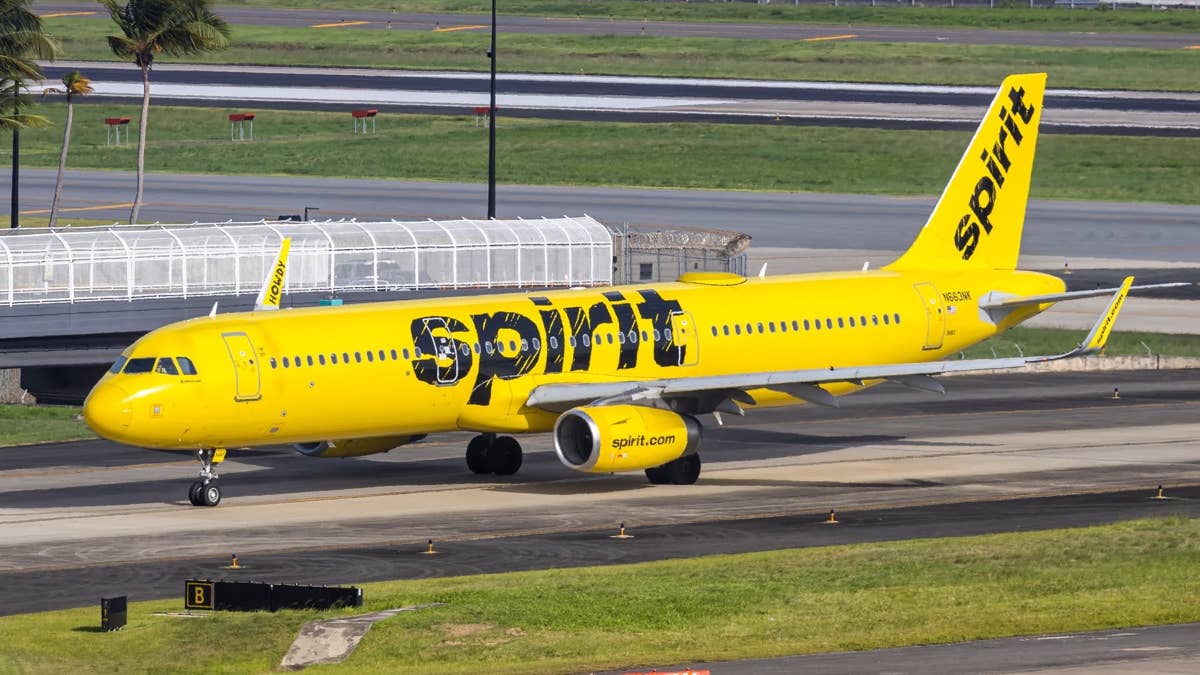 Many Spirit planes have already been returned to the companies they were leased from.
Shutterstock
Spirit Airlines has a fuel problem
While putting the pieces of the airline back together would be challenging, the underlying reason for its collapse — that it could not make money — has not changed. That’s a situation made worse by elevated fuel prices.
The fuel spike appears to have accelerated the collapse of an airline that was already on the brink.
Spirit’s lawyer, Marshall Huebner of Davis Polk, told a bankruptcy court that the jump in jet fuel prices following the U.S.-Israel attacks on Iran in February left the carrier with no choice but to shut down. That added $100 million in incremental costs for Spirit in March and April, he said, CNBC reported.
Dave Davis, Spirit’s CEO, cited “the sudden and sustained rise in fuel prices in recent weeks” as the reason for the company’s closure, according to CBS News.
“Sustaining the business required hundreds of millions of additional dollars of liquidity that Spirit simply does not have and could not procure,” he said in the company’s statement. “This is tremendously disappointing and not the outcome any of us wanted.”
According to J.P. Morgan analysts cited by the Wall StreetJournal, if fuel prices remained elevated, Spirit’s costs would have risen by $360 million by the end of the year.
Department of Transportation Secretary Sean Duffy noted that while fuel costs may have been the final blow, it was not why the airline closed.
More Bankruptcy:
- Outdoor retail giant closes 59 stores in Chapter 11 bankruptcy
- Luxury retail chain wins court approval, exits bankruptcy
- Popular breakfast chain franchisee files Chapter 11 bankruptcy
“Spirit was in dire straits long before the war with Iran,” Duffy said, according to CBS News adding that the airline’s low-cost model “wasn’t working.”
By the time of Spirit’s first bankruptcy filing in November 2024, the company had lost more than $2.5 billion since the start of 2020. In 2025, Spirit cut almost 4,000 jobs and 200 underperforming routes, ending the year with about 7,500 employees, including 2,000 pilots and 3,000 flight attendants, according to its latest annual report.
Flyers will pay the price
As a frequent flyer with 30 years of covering the travel industry, Spirit Airlines was one of my airlines of last resort. It was never my first choice, but sometimes, like a last-minute flight to Las Vegas to see a concert last year, it was the only affordable option.
The airline’s low fares acted as a check on its rivals.
A Business Insider analysis of domestic airline schedules and fare data from the aviation analytics company Cirium found that airfares rose an average of about $19, or 14%, across the roughly 90 routes Spirit exited between 2024 and 2025, as consumers faced fewer options,” Business Insider reported.
Its shutdown has likely led to fare increases. “When any airline leaves a market, it results in a drop in the supply of seats,” Mike Arnot, an airline industry consultant, told Business Insider. “That generally means that airfare will increase, and it doesn’t much matter which airline departs a market.”
Skift spelled it out in simple terms.
“Spirit Airlines may have been the butt of jokes — and even hated by some — but there’s no doubt it drove down airfares,” the website posted.
Related: 36-year-old theme park closing down after summer season